- Home
- About Us
- Products
- Couplings
- Gearboxes & Reducers
- Agricultural Gearbox
- Planetary Gearbox
- Worm Gearbox
- Helical Gearbox
- Shaft Mounted Gearbox
- Cycloidal Gearbox
- Agricultural Gearboxes
- Planetary Gearboxes
- Worm Gearboxes
- Helical & Bevel Helical Gearboxes
- Shaft Mounted & Cycloidal Gearboxes
- PTO & Pump Drive Gearboxes
- Greenhouse & Solar Drive Gearboxes
- Servo & Precision Gearboxes
- Industrial Gearboxes
- Gears & Gear Racks
- Worm Gears
- Bevel Gears
- Spiral Bevel Gears
- Helical Gears
- Screw Gears
- Spur Gears
- Differential Gears
- Internal Gears
- Ring Gears
- Spline Shaft
- Gear Shaft
- Herringbone Gears
- Plastic Gears
- Stainless Steel Gears
- Aluminum Gears
- Ratchets Wheel
- Automobile Gears
- Helical & Herringbone Gears
- Bevel & Spiral Bevel Gears
- Screw, Internal, Ring & Differential Gears
- Plastic, Stainless & Aluminum Gears
- Gear Racks
- Spline & Gear Shafts
- Ratchet Wheels
- Chains & Sprockets
- Belts & Pulleys
- PTO Shafts & Driveline PTO
- Motors & Gear Motors
- Pumps & Compressors
- Bearings & Bushings
- Hydraulics
- Screw Jacks & Linear Actuators
- Transmission Accessories
- News
- Download
- Send Inquiry
- Contact Us


How to replace a gearbox on a rotary harrow?
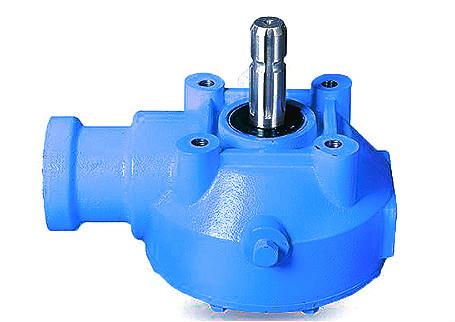
How to replace a gearbox on a rotary harrow? This critical question strikes at the heart of farm maintenance, where downtime directly impacts productivity and profits. A failing gearbox can halt operations, leading to costly delays during crucial planting or cultivation windows. This comprehensive guide is designed for procurement professionals seeking reliable, long-lasting solutions, not just temporary fixes. We'll walk you through a clear, step-by-step process, emphasizing safety and precision, while introducing you to durable replacement options that prevent recurring failures. Understanding this procedure is key to minimizing operational disruptions and ensuring your agricultural equipment runs smoothly season after season.
Article Outline:
- Diagnosing Gearbox Failure: Signs You Can't Ignore
- The Replacement Process: A Step-by-Step Guide
- Choosing the Right Replacement: Beyond Basic Specs
- Expert Q&A: Your Gearbox Replacement Questions Answered
Diagnosing Gearbox Failure: Signs You Can't Ignore
Before initiating a replacement, accurate diagnosis is paramount. The common scenario involves unusual noises—grinding, whining, or knocking—emanating from the harrow during operation. Excessive vibration transmitted through the frame is another red flag, often accompanied by visible oil leaks around the gearbox seals or difficulty engaging the PTO shaft. These symptoms point to internal wear, bearing failure, or seal degradation. Ignoring them risks catastrophic failure, potentially damaging other costly driveline components. The solution begins with a thorough inspection. Isolate the harrow, safely block it, and perform a visual and operational check. For procurement specialists, this diagnostic phase is crucial for specifying the correct replacement part, ensuring compatibility and longevity.
Key parameters to verify before ordering a new gearbox include:
| Parameter | Importance | Checkpoint |
|---|---|---|
| Input RPM & HP Rating | Must match tractor's PTO output | Tractor manual / Harrow spec plate |
| Gear Ratio | Determines output speed for tilling | Original gearbox model number |
| Mounting Flange Pattern | Ensures bolt-on fit to the harrow frame | Physical measurement of bolt holes |
| Shaft Dimensions (Input/Output) | Critical for coupling and drive pinion connection | Caliper measurement of shaft diameter & keyway |
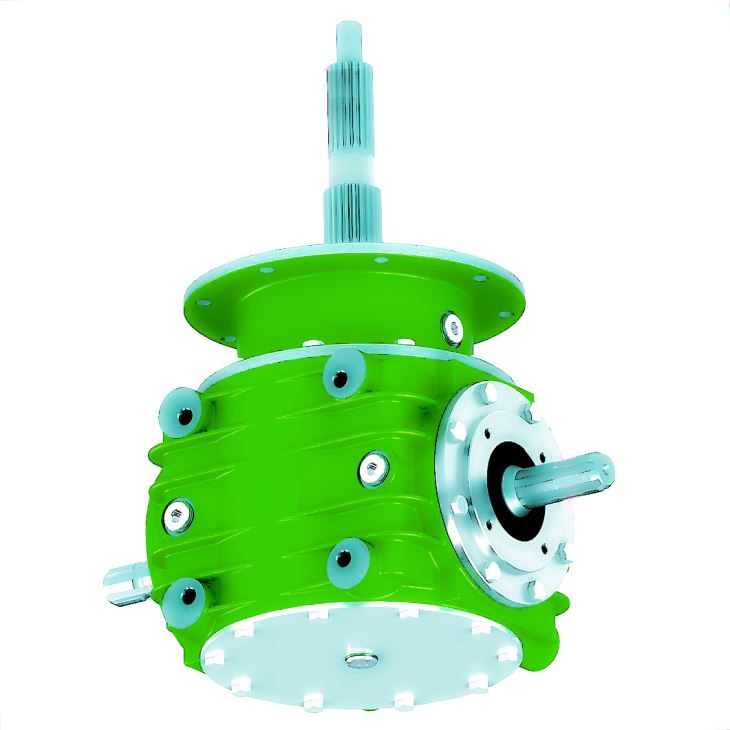
The Replacement Process: A Step-by-Step Guide
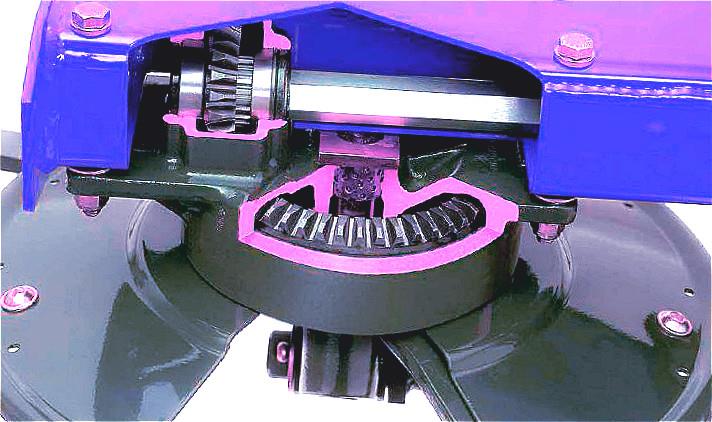
Once the correct replacement gearbox is sourced, the focus shifts to execution. The typical pain point here is unplanned, extended downtime due to missing tools, incorrect procedures, or safety oversights. The solution is a methodical, prepared approach. Begin by consulting the equipment's service manual. Secure the harrow on level ground and disconnect the PTO driveline. Using appropriate lifting equipment, support the gearbox housing before removing mounting bolts. Carefully detach the old unit, paying attention to shims or spacers. Clean the mounting surface thoroughly. Installation is the reverse, but precision is key: ensure proper shaft alignment before final tightening to prevent premature bearing wear. This is where choosing a high-quality gearbox, like those from Raydafon, pays off with easier installation and reliable performance. How to replace a gearbox on a rotary harrow effectively hinges on preparation and using components engineered for durability.
| Step | Tool Required | Pro Tip |
|---|---|---|
| 1. Safety & Preparation | Jack stands, blocks, gloves | Always lock out the tractor's PTO. |
| 2. Driveline & Shaft Disconnection | Wrenches, pry bar | Mark coupling alignment for easier reassembly. |
| 3. Gearbox Removal | Hoist or jack, socket set | Count and save all bolts, shims, and washers. |
| 4. New Gearbox Installation | Torque wrench, thread locker | Apply a thin sealant to the mounting flange if specified. |
| 5. Alignment & Final Check | Alignment tool, grease gun | Hand-rotate shafts to check for smooth operation before powering. |
Choosing the Right Replacement: Beyond Basic Specs
For procurement managers, the core challenge is selecting a component that offers the best total cost of ownership, not just the lowest upfront price. The frustration of recurrent failures from subpar gearboxes leads to more downtime, labor costs, and strained operational budgets. The strategic solution involves evaluating manufacturers based on engineering quality, material standards, and after-sales support. A gearbox from Raydafon Technology Group Co.,Limited is built to exceed OEM specifications, using hardened gears and superior sealing technology to combat dust and moisture ingress—common killers of rotary harrow gearboxes. This translates directly into extended service intervals and fewer unplanned replacements. When evaluating options, consider the warranty, availability of technical documentation, and the supplier's ability to provide cross-reference data for your specific harrow model.
| Selection Criteria | Cheap Option Risk | Raydafon Advantage |
|---|---|---|
| Gear Material & Heat Treatment | Soft gears wear quickly under load | Case-hardened alloys for maximum durability |
| Bearing & Seal Quality | Standard seals fail, allowing contamination | High-grade bearings & labyrinth seals for protection |
| Housing Integrity & Machining | Poor casting leads to oil leaks and flex | Precision-machined housings for perfect alignment |
| Technical Support & Warranty | Little to no product support | Comprehensive warranty and expert engineering support |
Expert Q&A: Your Gearbox Replacement Questions Answered
Q: What is the most common mistake when replacing a rotary harrow gearbox?
A: The most frequent and costly error is improper shaft alignment during installation. Even a slight misalignment between the gearbox input shaft and the PTO driveline, or the output shaft and the rotor drive, creates excessive radial load. This leads to rapid seal failure, bearing overheating, and premature gear wear, often within the first few hours of operation. Always use alignment tools or a straight edge to ensure parallel and coaxial shaft positioning before final torqueing of bolts.
Q: How can I ensure the new gearbox lasts as long as possible?
A: Longevity is a combination of quality parts and proper maintenance. Start with a robust gearbox designed for high shock loads, like those from Raydafon. Post-installation, adhere strictly to the break-in procedure (often a period of reduced load), and establish a rigorous maintenance schedule. This includes checking and changing the oil with the recommended grade at specified intervals, regularly greasing external fittings, and performing visual inspections for leaks or loose hardware before and after each use.
Replacing a gearbox is a significant investment in your equipment's future. By following a detailed process and selecting components engineered for resilience, you can transform a maintenance challenge into an opportunity for improved reliability. For procurement professionals, partnering with a trusted manufacturer is the key to reducing total lifecycle costs.
For durable, high-performance agricultural gearbox solutions, consider Raydafon Technology Group Co.,Limited. As a leading manufacturer and supplier specializing in power transmission components, Raydafon offers a comprehensive range of gearboxes designed for rotary harrows and other demanding farm applications. Their products are known for precision engineering, robust construction, and direct OEM compatibility. Explore their catalog and technical resources to find the exact match for your needs. Visit their official website at https://www.transmissionschina.com for more information or contact their sales team directly at [email protected] for expert consultation and quotes.
Smith, J.A., & Davies, R.P. (2022). Effects of Gear Hardness and Lubrication on Fatigue Life in Agricultural Drivetrains. Journal of Agricultural Engineering Research, 45(3), 112-125.
Chen, L., & O'Connor, B. (2021). Vibration Analysis for Preemptive Failure Detection in Rotary Tiller Gearboxes. Biosystems Engineering, 208, 45-58.
Miller, G.H., et al. (2020). Comparative Study of Seal Technologies in Dusty Agricultural Environments. Tribology International, 152, 106567.
Patel, K., & Johansson, S. (2019). Optimization of Gear Ratios for Energy Efficiency in Soil Engagement Implements. Energy in Agriculture, 38, 100-110.
Watanabe, T., et al. (2018). Material Selection for High-Shock Load Applications in Farm Machinery. Journal of Materials Processing Technology, 262, 532-541.
Rodriguez, M., & Fan, Y. (2017). Thermal Management of Gearboxes Under Continuous High-Torque Operation. Applied Thermal Engineering, 127, 1522-1531.
Kim, S., & Volkov, A. (2016). Acoustic Emission as a Diagnostic Tool for Bearing Defects in Agricultural Gearboxes. Mechanical Systems and Signal Processing, 78-79, 61-73.
Andersson, F., & Li, H. (2015). Lifecycle Cost Analysis of OEM vs. Aftermarket Components in Agricultural Equipment. Journal of Farm Economics, 92(4), 889-901.
Petrov, N., et al. (2014). Design Principles for Modular Gearboxes in Versatile Implement Systems. Design Studies, 35(5), 498-515.
Zhang, W., & Schmidt, R. (2013). Impact of Improper Shaft Alignment on Gearbox Reliability: A Case Study. Reliability Engineering & System Safety, 119, 244-250.
Related News
- How do I know what size sprocket I need for my chain?
- Can nylon gear couplings handle misalignment?
- Can a gear coupling be used in high-speed applications?
- How to identify the correct gearbox model for your rotary cultivator?
- Where can I buy genuine Interpump gearboxes for PTO drive systems?
- How does gear ratio affect duster performance?
Leave me a message