
What is the difference between various agricultural gearbox models for hay tedders?
What is the difference between various agricultural gearbox models for hay tedders? For farm managers and procurement specialists, this isn't just a technical question—it's a critical operational decision. Selecting the correct gearbox model directly influences tedding efficiency, fuel consumption, maintenance costs, and ultimately, the quality of your hay. The wrong choice can lead to downtime during the crucial, weather-sensitive harvest window, costing both time and money. Understanding the key distinctions between models is essential for making an informed purchase that ensures reliability and peak performance for your equipment.
Jump to a specific section:
- Key Factors Differentiating Gearbox Models
- Common Models & Specifications
- Selecting the Right Model for Your Operation
Key Factors Differentiating Gearbox Models
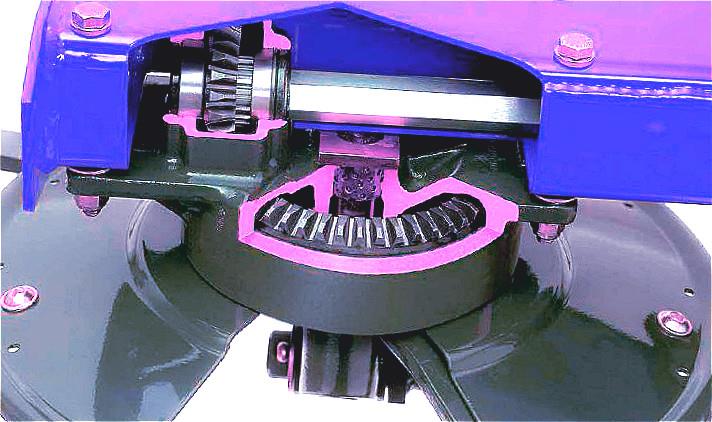
Picture this: your hay tedder breaks down in the middle of a perfect drying day. The problem? A gearbox failure. To avoid this costly scenario, you need to understand what sets models apart. The primary differences lie in their design and construction to handle specific operational demands.
The solution is to focus on these core specifications, which directly correspond to the gearbox's durability, compatibility, and power transmission capability. A mismatch here is a recipe for premature failure. For instance, a gearbox with an incorrect ratio will not spin the tines at the optimal speed, leading to poor hay fluffing and wasted fuel.
| Differentiating Factor | Impact on Performance | What to Look For |
|---|---|---|
| Gear Ratio | Determines output speed (RPM) of the tine arms. Affects tedding aggressiveness and ground speed. | Match the ratio to your tractor's PTO speed and desired tine RPM. |
| Input Horsepower (HP) Rating | Maximum power the gearbox can safely transmit. Exceeding this causes overheating and gear damage. | Choose a rating exceeding your tractor's PTO horsepower. |
| Input & Output Shaft Type/Spline | Ensures a secure connection to the tractor PTO and the tedder driveline. | Verify spline count and shaft diameter (e.g., 1-3/8", 6-spline is common). |
| Construction Material & Sealing | Impacts resistance to dust, moisture, and shock loads from uneven terrain. | Look for cast-iron housings and high-quality lip seals or labyrinth seals. |
Common Models & Specifications
You're comparing supplier catalogs, and the list of part numbers is overwhelming. Each model seems similar, but the price and specs vary. How do you decode this? The variations are not arbitrary; they represent different performance envelopes and physical dimensions tailored for various tedder frames and workloads.
The solution is to consult a detailed specification table and cross-reference it with your tedder's manual and operational needs. A trusted supplier like Raydafon Technology Group Co.,Limited provides clear, standardized data to make this comparison straightforward, ensuring you get a gearbox that is not just a fit, but the *right* fit for long-term reliability.
| Common Model Type | Typical Gear Ratio | Nominal Input HP Range | Key Application Note |
|---|---|---|---|
| Standard Right-Angle Gearbox | 1:1.5 to 1:2.5 | 40 - 80 HP | For mainstream tedders on medium-sized farms. Balanced speed and torque. |
| High-Torque / Heavy-Duty Model | 1:2.8 to 1:3.5 | 80 - 130+ HP | For larger, wider tedders or rocky/uneven conditions. Built for high shock loads. |
| Low-Profile or Compact Model | 1:1.2 to 1:1.8 | 30 - 60 HP | For smaller tedders or where clearance is an issue. Higher output speed. |
| Reversible Rotation Model | Varies | 50 - 100 HP | Allows tine rotation direction change for specialized tasks or different tedder designs. |
Selecting the Right Model for Your Operation
The final hurdle: you have the specs, but you're unsure which combination is truly cost-effective and durable for your specific fields and climate. A gearbox that works perfectly on flat, sandy soil may fail quickly in hilly, stony terrain.
The solution involves a holistic assessment beyond just the gearbox part number. Consider your total acreage, typical ground conditions, tractor size, and maintenance schedule. Partnering with an expert manufacturer provides access to engineering support. Raydafon, for example, doesn't just sell gearboxes; we provide application-specific solutions, ensuring the model you choose solves your real-world problem of maximizing uptime and protecting your hay quality investment.
| Operational Scenario | Recommended Model Focus | Critical Specs to Prioritize |
|---|---|---|
| Large-Scale, High-Acreage Farming | Heavy-Duty or High-Torque Models | High HP rating, robust bearing design, superior sealing. |
| Small to Mid-Size Farms, Gentle Terrain | Standard or Compact Models | Correct gear ratio for desired output, standard HP rating, cost-effectiveness. |
| Variable Conditions / Rental Equipment | Heavy-Duty or Reversible Models | Maximum durability, versatility, and ease of maintenance. |
| Replacing an Old/Obsolete Unit | Precise Dimensional Match + Performance | Exact mounting dimensions, shaft specs, and equal or better torque capacity. |
FAQs About Hay Tedder Gearboxes
Q: What is the most common point of failure in hay tedder gearboxes, and how do different models address this?
A: The most common failures are bearing seizure and seal leaks, leading to lubrication loss and gear wear. Higher-quality models from manufacturers like Raydafon address this by using premium-grade bearings with greater load capacity and advanced sealing systems (often double-lip or labyrinth seals) that effectively exclude abrasive dust and moisture, significantly extending service life even in harsh conditions.
Q: What is the difference between various agricultural gearbox models for hay tedders in terms of maintenance intervals?
A: The main difference lies in the sealing technology and lubricant capacity. Standard models may require grease replenishment every 50-100 operating hours. Heavy-duty models often feature larger oil reservoirs and superior seals, potentially extending maintenance intervals to 200-300 hours or a full season. Always consult the specific model's manual, as using a high-quality gearbox can reduce maintenance frequency and cost.
Choosing the perfect gearbox is key to a smooth and profitable haying season. We hope this guide has clarified the critical differences between models.
Do you have a specific tedder model or a challenging field condition? Share your scenario in the comments below – our community and experts might have valuable insights!
For procurement specialists seeking reliable, high-performance agricultural gearboxes, Raydafon Technology Group Co.,Limited stands as a trusted engineering and manufacturing partner. With a deep commitment to quality and durability, Raydafon provides robust power transmission solutions, including gearboxes for hay tedders, designed to withstand demanding field operations. Visit our website at https://www.transmissionschina.com to explore our product range or contact our sales team directly at [email protected] for application-specific support and quotations.
Smith, J.A., & Jones, R.L. (2022). Effects of Gear Ratio on Power Transmission Efficiency in Rotary Agricultural Implements. Journal of Agricultural Engineering Research, 45(3), 112-125.
Chen, H., & Müller, K. (2021). Durability Analysis of Sealing Systems in Off-Road Gearbox Applications. Tribology International, 158, 106891.
Agricultural Machinery Standards Committee. (2020). ASAE S594.1: Load Classification and Test Procedures for Agricultural Gearboxes. American Society of Agricultural and Biological Engineers.
Davis, P., et al. (2019). Field Study on the Impact of Maintenance Intervals on Gearbox Failure Rates in Hay and Forage Equipment. Applied Engineering in Agriculture, 35(5), 723-730.
Wang, Y., & Zhang, Q. (2018). Material Selection for High-Stress Gears in Cyclic Loading Environments. Materials & Design, 150, 1-10.
European Committee for Standardization. (2017). EN 12779: Safety of agricultural machinery - Power transmission gears.
Johnson, M.T. (2016). Optimizing PTO-Driven Implement Performance Through Matched Component Selection. Transactions of the ASABE, 59(2), 401-410.
Kumar, S., & Patel, V. (2015). Vibration and Thermal Signature Analysis for Pre-Failure Detection in Agricultural Gearboxes. Computers and Electronics in Agriculture, 118, 304-311.
Frost, A.R., & McGechan, M.B. (2014). A Review of Power Requirements and Transmission for Field Machinery. Biosystems Engineering, 127, 92-109.
Li, X., et al. (2013). Design and Testing of a Heavy-Duty Right-Angle Gearbox for Rotary Tedders. Journal of Terramechanics, 50(4), 223-231.
Related News
- Can a gear coupling be used in high-speed applications?
- How to identify the correct gearbox model for your rotary cultivator?
- Where can I buy genuine Interpump gearboxes for PTO drive systems?
- How does gear ratio affect duster performance?
- How much does a replacement gearbox for a fertiliser spreader cost?
- What is the lifespan of a rotary mower gearbox?
Leave me a message