- Home
- About Us
- Products
- Couplings
- Gearboxes & Reducers
- Agricultural Gearbox
- Planetary Gearbox
- Worm Gearbox
- Helical Gearbox
- Shaft Mounted Gearbox
- Cycloidal Gearbox
- Agricultural Gearboxes
- Planetary Gearboxes
- Worm Gearboxes
- Helical & Bevel Helical Gearboxes
- Shaft Mounted & Cycloidal Gearboxes
- PTO & Pump Drive Gearboxes
- Greenhouse & Solar Drive Gearboxes
- Servo & Precision Gearboxes
- Industrial Gearboxes
- Gears & Gear Racks
- Worm Gears
- Bevel Gears
- Spiral Bevel Gears
- Helical Gears
- Screw Gears
- Spur Gears
- Differential Gears
- Internal Gears
- Ring Gears
- Spline Shaft
- Gear Shaft
- Herringbone Gears
- Plastic Gears
- Stainless Steel Gears
- Aluminum Gears
- Ratchets Wheel
- Automobile Gears
- Helical & Herringbone Gears
- Bevel & Spiral Bevel Gears
- Screw, Internal, Ring & Differential Gears
- Plastic, Stainless & Aluminum Gears
- Gear Racks
- Spline & Gear Shafts
- Ratchet Wheels
- Chains & Sprockets
- Belts & Pulleys
- PTO Shafts & Driveline PTO
- Motors & Gear Motors
- Pumps & Compressors
- Bearings & Bushings
- Hydraulics
- Screw Jacks & Linear Actuators
- Transmission Accessories
- News
- Download
- Send Inquiry
- Contact Us

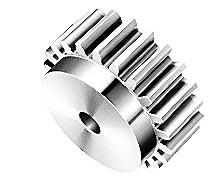
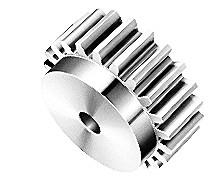
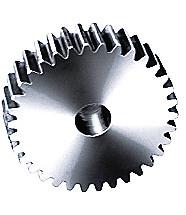
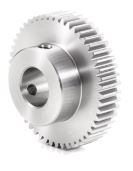
Spur Gears
High-Quality Spur Gears for Industrial Applications
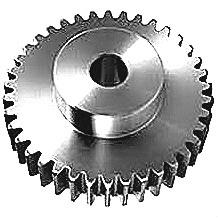
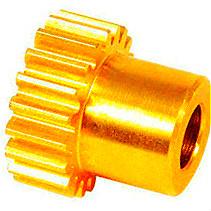
Spur gears are the most common type of gear used in industrial machinery, offering excellent efficiency and reliability for power transmission applications. Our precision-engineered spur gears are manufactured using advanced technology and high-grade materials to ensure superior performance and durability.
Technical Specifications
- Material: Alloy Steel, Stainless Steel, Cast Iron, Brass, Plastic
- Module Range: 0.5 to 10
- Pressure Angle: 14.5°, 20°, 25°
- Teeth Count: 10 to 200
- Diameter Range: 10mm to 500mm
- Surface Treatment: Heat Treatment, Black Oxide, Zinc Plating, Nickel Plating
- Precision Grade: DIN 5 to DIN 10, AGMA 10 to AGMA 15
Spur Gears Product Comparison
| Model | Material | Module | Teeth Count | Max Torque (Nm) | Applications |
|---|---|---|---|---|---|
| SG-101 | Alloy Steel | 2.0 | 24 | 150 | Conveyors, Packaging Machines |
| SG-202 | Stainless Steel | 3.0 | 36 | 280 | Food Processing, Marine |
| SG-303 | Cast Iron | 4.0 | 48 | 420 | Heavy Machinery, Mining |
| SG-404 | Plastic | 1.5 | 20 | 75 | Medical Devices, Consumer Electronics |
Spur Gears FAQ
Q: What are the advantages of using spur gears compared to other gear types?
A: Spur gears offer several advantages including high efficiency (up to 99%), simple design, ease of manufacture, consistent velocity ratio, and the ability to transmit large amounts of power. Unlike helical gears, they don't create axial thrust, making them ideal for applications requiring precise axial positioning.
Q: How do I select the right spur gear for my application?
A: Consider these key factors: 1) Required torque and power transmission, 2) Operating speed (RPM), 3) Environmental conditions (temperature, humidity, exposure to chemicals), 4) Noise requirements, and 5) Space constraints. Our engineering team can help you select the perfect spur gear based on your specific application requirements.
Spur Gears Manufacturing Process
Our spur gears undergo rigorous manufacturing and quality control processes:
- Material selection and inspection
- Precision cutting using CNC gear hobbing machines
- Heat treatment for enhanced durability
- Precision grinding for exact tooth profile
- Surface finishing and coating
- Comprehensive quality testing (dimensional inspection, hardness testing, noise testing)
Applications of Spur Gears
Spur gears find applications across multiple industries:
- Automotive: Transmission systems, starter motors
- Aerospace: Actuator systems, landing gear mechanisms
- Industrial: Conveyors, packaging machines, printing presses
- Energy: Wind turbines, power generation equipment
- Consumer Goods: Washing machines, printers, power tools
Spur Gears Maintenance Tips
To ensure optimal performance and longevity of your spur gears:
- Regular lubrication with appropriate gear oil
- Periodic inspection for wear and tear
- Proper alignment of mating gears
- Monitoring for unusual noise or vibration
- Protection from contaminants and moisture
Spur Gears FAQ
Q: How often should spur gears be replaced?
A: The replacement interval depends on operating conditions. Under normal conditions with proper maintenance, high-quality spur gears can last 5-10 years. Signs that replacement is needed include excessive tooth wear (>10% of tooth thickness), pitting, cracking, or unacceptable noise levels. Continuous monitoring through vibration analysis can help predict optimal replacement timing.
Custom Spur Gears Solutions
We offer custom spur gears manufacturing services with the following capabilities:
| Service | Capability |
|---|---|
| Custom Materials | Special alloys, engineered plastics, exotic metals |
| Special Tooth Profiles | Modified involute, cycloidal, custom designs |
| Special Finishes | PTFE coating, hard chrome plating, specialized hardening |
| Precision Levels | Up to AGMA 13, DIN 5 standards |
| Testing Services | Fatigue testing, metallurgical analysis, load testing |
Spur Gears FAQ
Q: Can spur gears be used for high-speed applications?
A: While spur gears can be used in high-speed applications (up to 10,000 RPM), they may generate more noise than helical gears at these speeds. For optimal high-speed performance, we recommend precision-ground spur gears with tighter tolerances (AGMA 10 or better), proper lubrication, and balanced shafts. In extremely high-speed applications (above 15,000 RPM), other gear types might be more suitable.
- View as