- Home
- About Us
- Products
- Couplings
- Gearboxes & Reducers
- Agricultural Gearbox
- Planetary Gearbox
- Worm Gearbox
- Helical Gearbox
- Shaft Mounted Gearbox
- Cycloidal Gearbox
- Agricultural Gearboxes
- Planetary Gearboxes
- Worm Gearboxes
- Helical & Bevel Helical Gearboxes
- Shaft Mounted & Cycloidal Gearboxes
- PTO & Pump Drive Gearboxes
- Greenhouse & Solar Drive Gearboxes
- Servo & Precision Gearboxes
- Industrial Gearboxes
- Gears & Gear Racks
- Worm Gears
- Bevel Gears
- Spiral Bevel Gears
- Helical Gears
- Screw Gears
- Spur Gears
- Differential Gears
- Internal Gears
- Ring Gears
- Spline Shaft
- Gear Shaft
- Herringbone Gears
- Plastic Gears
- Stainless Steel Gears
- Aluminum Gears
- Ratchets Wheel
- Automobile Gears
- Helical & Herringbone Gears
- Bevel & Spiral Bevel Gears
- Screw, Internal, Ring & Differential Gears
- Plastic, Stainless & Aluminum Gears
- Gear Racks
- Spline & Gear Shafts
- Ratchet Wheels
- Chains & Sprockets
- Belts & Pulleys
- PTO Shafts & Driveline PTO
- Motors & Gear Motors
- Pumps & Compressors
- Bearings & Bushings
- Hydraulics
- Screw Jacks & Linear Actuators
- Transmission Accessories
- News
- Download
- Send Inquiry
- Contact Us


How do I know what size sprocket I need for my chain?
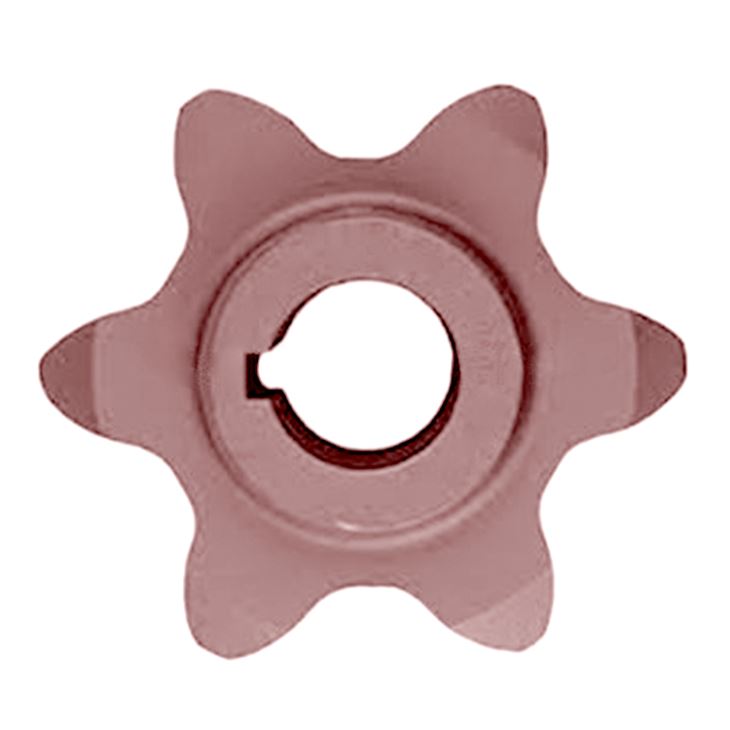
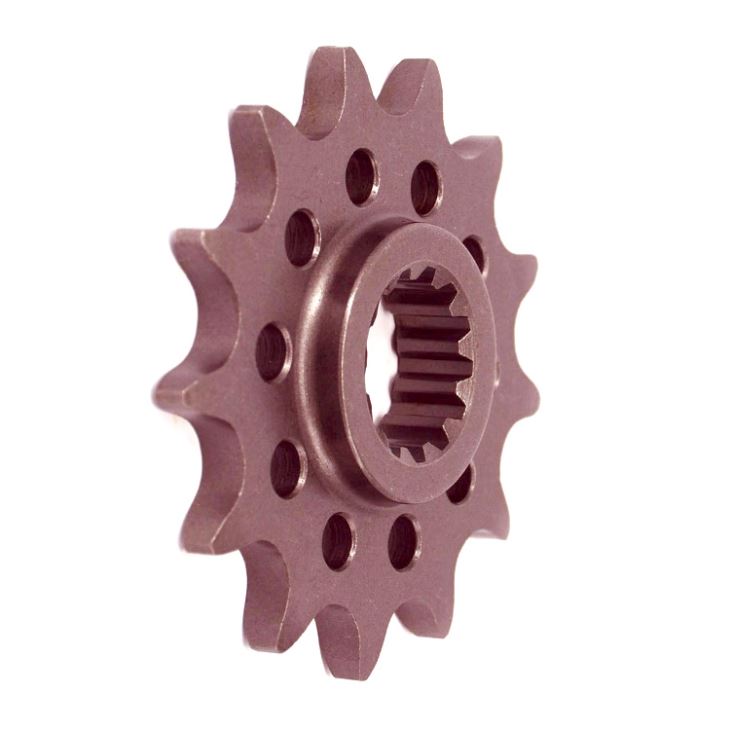
“How do I know what size sprocket I need for my chain?” It’s the first question procurement engineers and maintenance managers ask when a drive system fails, a conveyor stalls, or a replacement order lands on the desk without clear markings. Ordering the wrong sprocket means downtime, wasted budget, and a chain that wears out long before its rated life. Yet sizing a sprocket is not guesswork. It comes down to matching three measurable details: chain pitch, roller diameter, and the number of teeth your speed or torque target demands. Whether you are replacing a worn sprocket on a packaging line, upgrading a mixer drive, or designing a new transfer conveyor, the same sizing rules apply. In this guide, we walk through the exact steps used by industrial buyers to specify the right sprocket, avoid common sizing mistakes, and source from suppliers who can verify dimensions before shipment. Raydafon Technology Group Co.,Limited supports this process with technical data, custom machining, and fast confirmation for standard and non-standard chain sprockets, so your next purchase fits the first time and keeps production moving.
Table of Contents
- Why Chain and Sprocket Sizing Fails Without a Clear Process
- Core Measurements: Chain Pitch, Roller Diameter, and Tooth Count
- Step-by-Step Sprocket Selection for Buyers
- Common Sizing Questions and Quick Answers
- How Raydafon Technology Group Solves Sprocket Sourcing Challenges
- Final Sprocket Sizing Checklist and Next Steps
Why Chain and Sprocket Sizing Fails Without a Clear Process
Picture this: a maintenance supervisor sends a rush order for a sprocket based on a photo and a rough guess at the tooth count. The new part arrives, but the chain rides high on the teeth, produces a clicking noise, and strips within a week. The root cause is usually not poor manufacturing. It is a mismatch between chain pitch and sprocket pitch circle diameter. Procurement teams face this problem when OEM labels are missing, old drawings are outdated, or local suppliers only stock common sizes. The solution is to stop guessing and start measuring. Chain pitch, roller diameter, and tooth count are the three values that determine fit. Once you have these numbers, you can compare them against ANSI or ISO chain standards and select the correct sprocket with confidence. Raydafon Technology Group Co.,Limited helps buyers by reviewing photos, confirming measurements, and supplying sprockets that match the original drive geometry.
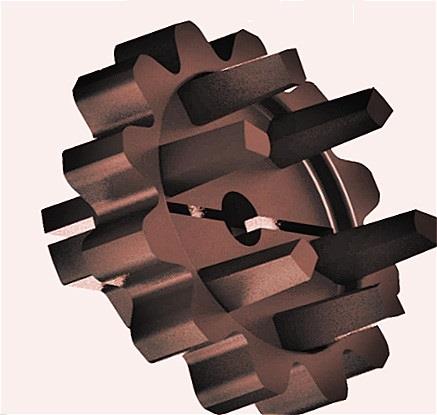
The table below shows common chain standards and the sprocket parameters that must be checked before ordering.
| Chain Standard | Chain Pitch (mm) | Roller Diameter (mm) | Common Teeth Range | Typical Application |
|---|---|---|---|---|
| ANSI 40 / ISO 08B | 12.70 | 7.92 | 10–40 | Light conveyors, packaging |
| ANSI 50 / ISO 10B | 15.875 | 10.16 | 12–45 | Material handling, small drives |
| ANSI 60 / ISO 12B | 19.05 | 12.07 | 12–48 | Heavy conveyors, mixers |
| ANSI 80 / ISO 16B | 25.40 | 15.88 | 12–60 | Agricultural machinery, industrial drives |
Core Measurements: Chain Pitch, Roller Diameter, and Tooth Count
One frequent mistake is to order a sprocket by tooth count alone. A 16-tooth sprocket can fit an ANSI 40 chain or an ANSI 60 chain, but the two are not interchangeable because pitch and roller diameter are different. The fix is to measure the chain before you open a supplier catalog. Use a caliper to measure the distance between the centers of adjacent pins. If the chain is worn, measure across three or more pitches and divide by the number of links to reduce error. Next, measure the outside diameter of the roller. Finally, count the number of teeth on the existing sprocket or calculate the required tooth count from your speed ratio. These three inputs let you find the correct chain standard and the matching sprocket bore, hub style, and material. Raydafon Technology Group Co.,Limited provides a dimension confirmation sheet so buyers can record these values and receive a direct cross-reference to standard or custom sprockets.
| Measurement | Tool | Why It Matters | Typical Tolerance |
|---|---|---|---|
| Chain pitch | Calipers or pitch gauge | Determines chain standard and sprocket tooth geometry | ±0.05 mm |
| Roller diameter | Micrometer or calipers | Affects tooth clearance and seating | ±0.02 mm |
| Tooth count | Manual count or photo | Sets speed ratio and pitch circle diameter | Exact count |
| Bore / hub size | Bore gauge | Ensures fit on shaft without rework | H7 tolerance typical |
Step-by-Step Sprocket Selection for Buyers
Imagine you are sourcing a replacement sprocket for a food processing conveyor that has to run 24 hours a day. The wrong pitch causes chain climb, while the wrong bore size stops installation completely. Use the following sequence to avoid costly trial and error.
- Step 1: Measure chain pitch and roller diameter as described above.
- Step 2: Identify the chain standard: ANSI, ISO, DIN, or BS. Match the measurements to the table in the first section.
- Step 3: Count the teeth on the old sprocket or calculate the target ratio using driver/driven speeds.
- Step 4: Check bore size, keyway, set screw, and hub type. If the shaft diameter differs from the old sprocket, request a custom bore.
- Step 5: Confirm material and heat treatment. For high-load or corrosive environments, choose hardened steel, stainless steel, or engineered plastic.
- Step 6: Ask the supplier for a dimension drawing before production. Raydafon Technology Group Co.,Limited provides pre-production drawings for standard and custom sprockets to eliminate guesswork.
- Chain pitch measured and matched to a standard
- Roller diameter confirmed
- Tooth count aligned with speed ratio
- Bore size, keyway, and hub type checked
- Material and heat treatment selected
- Supplier drawing approved
| Step | Input | Output | Common Mistake |
|---|---|---|---|
| Measure | Chain pitch, roller diameter | Chain standard | Measuring worn chain over single pitch |
| Count | Teeth on old or target sprocket | Tooth count | Ignoring speed ratio change |
| Bore | Shaft diameter, keyway | Bore size | Assuming all hubs are the same |
| Specify | Material, coating, hardening | Final sprocket spec | Selecting low-cost material for high load |
Common Sizing Questions and Quick Answers
Buyers often ask the same two questions when a chain is unmarked or when a drive system is being modified. Here are practical answers that apply to most industrial chains.
Q: How do I know what size sprocket I need for my chain if the chain has no markings?
A: Use a caliper to measure the distance between the centers of adjacent pins. For better accuracy, measure five pitches and divide by five. Then measure roller diameter. Compare these numbers to standard chain charts. If you are still unsure, send clear photos and measurements to Raydafon Technology Group Co.,Limited. The team will identify the chain standard and recommend the matching sprocket width, tooth profile, and hub style.
Q: How do I know what size sprocket I need for my chain when changing speed or load?
A: The chain pitch and roller diameter remain fixed by the chain itself. The tooth count changes depending on the desired output speed and torque. Use the formula pitch circle diameter = chain pitch ÷ sin(180° ÷ tooth count) to confirm the sprocket fits the available space. Then recalculate the ratio. If the load increases, select a hardened sprocket and verify that the chain rating is still sufficient. Raydafon Technology Group Co.,Limited can help you size the replacement sprocket and supply matched chain and sprocket sets for new operating conditions.
How Raydafon Technology Group Solves Sprocket Sourcing Challenges
Sourcing sprockets from catalogs works until you face a non-standard bore, a metric-to-imperial conversion, or a rush replacement for a machine that cannot stop. Raydafon Technology Group Co.,Limited removes these bottlenecks by combining technical review with flexible manufacturing. Send your chain measurements, tooth count, bore size, and a photo if available. The engineering team will compare your data against ANSI, ISO, and DIN standards, then produce a drawing for approval before machining. This process answers the core question—“How do I know what size sprocket I need for my chain?”—without forcing you to become a design expert. For standard sprockets, Raydafon offers ready-to-ship options with hardened teeth and common bore diameters. For custom requirements, the factory can machine special hubs, keyways, and materials, including stainless steel and plastic. The result is a sprocket that fits the first time, reduces chain wear, and keeps your production line running.
Final Sprocket Sizing Checklist and Next Steps
Before you place an order, run through this quick checklist to avoid the most common procurement errors.
Have you already measured your chain pitch, roller diameter, and tooth count? Share your details with a technical sourcing partner instead of guessing. Raydafon Technology Group Co.,Limited offers free dimension checking and pre-production drawings to confirm the right sprocket size before you commit to an order.
For more than a decade, Raydafon Technology Group Co.,Limited has helped industrial buyers source reliable chains, sprockets, and power transmission components. The company combines engineering support with custom manufacturing to solve fitment problems and reduce downtime. Visit https://www.transmissionschina.com to explore standard and custom sprocket options, or email [email protected] with your measurements for expert sizing assistance.
Smith, J. A. (2020). Sprocket tooth profile optimization for roller chain drives. Journal of Mechanical Engineering Science, 234(8).
Chen, L., & Wang, Y. (2019). Effect of pitch error on load distribution in roller chain sprockets. Mechanism and Machine Theory, 141.
Miller, T. R. (2018). Chain and sprocket wear prediction using dynamic tension analysis. Wear, 404.
Johnson, P. D. (2021). Selection criteria for industrial roller chain drives under variable loads. Journal of Power Transmission Engineering, 15(3).
Patel, S. N. (2017). Experimental evaluation of sprocket tooth count on conveyor chain fatigue life. International Journal of Fatigue, 102.
Gonzalez, M. A. (2016). Non-standard bore hub design for interchangeable sprockets. Journal of Manufacturing Processes, 22.
Thompson, K. J. (2022). Pitch circle diameter calculation and tolerance control in sprocket machining. Precision Engineering, 75.
Lee, H. S., & Park, J. W. (2019). Comparative study of ANSI and ISO chain standards for industrial procurement. Journal of Engineering Standards, 31(2).
Roberts, D. E. (2020). Failure modes in conveyor chain sprockets: A case study in mining equipment. Engineering Failure Analysis, 113.
Ahmed, F. A. (2018). Hardened steel sprocket performance under high-torque start-stop conditions. Materials Performance and Characterization, 7(4).
Next :
-
Related News
- Can nylon gear couplings handle misalignment?
- Can a gear coupling be used in high-speed applications?
- How to identify the correct gearbox model for your rotary cultivator?
- Where can I buy genuine Interpump gearboxes for PTO drive systems?
- How does gear ratio affect duster performance?
- How much does a replacement gearbox for a fertiliser spreader cost?
Leave me a message