- Home
- About Us
- Products
- Couplings
- Gearboxes & Reducers
- Agricultural Gearbox
- Planetary Gearbox
- Worm Gearbox
- Helical Gearbox
- Shaft Mounted Gearbox
- Cycloidal Gearbox
- Agricultural Gearboxes
- Planetary Gearboxes
- Worm Gearboxes
- Helical & Bevel Helical Gearboxes
- Shaft Mounted & Cycloidal Gearboxes
- PTO & Pump Drive Gearboxes
- Greenhouse & Solar Drive Gearboxes
- Servo & Precision Gearboxes
- Industrial Gearboxes
- Gears & Gear Racks
- Worm Gears
- Bevel Gears
- Spiral Bevel Gears
- Helical Gears
- Screw Gears
- Spur Gears
- Differential Gears
- Internal Gears
- Ring Gears
- Spline Shaft
- Gear Shaft
- Herringbone Gears
- Plastic Gears
- Stainless Steel Gears
- Aluminum Gears
- Ratchets Wheel
- Automobile Gears
- Helical & Herringbone Gears
- Bevel & Spiral Bevel Gears
- Screw, Internal, Ring & Differential Gears
- Plastic, Stainless & Aluminum Gears
- Gear Racks
- Spline & Gear Shafts
- Ratchet Wheels
- Chains & Sprockets
- Belts & Pulleys
- PTO Shafts & Driveline PTO
- Motors & Gear Motors
- Pumps & Compressors
- Bearings & Bushings
- Hydraulics
- Screw Jacks & Linear Actuators
- Transmission Accessories
- News
- Download
- Send Inquiry
- Contact Us


How does gear ratio affect duster performance?
Imagine standing on a factory floor, the hum of machinery filling the air, but one sound stands out: a duster struggling to spin. You’re a procurement specialist tasked with sourcing dusting equipment, and you keep coming back to a technical puzzle—How does gear ratio affect duster performance? The answer holds the key to cleaning efficiency, motor longevity, and operational costs. A poorly matched gear ratio can turn a high-powered duster into a sluggish, energy-draining machine, while the right ratio transforms it into a precision tool that saves time and money. At Raydafon Technology Group Co.,Limited, we’ve seen this scenario countless times: buyers who overlook gear ratio suffer from frequent breakdowns and inflated electricity bills. Our advanced gearbox solutions are engineered to eliminate these pitfalls, ensuring every duster operates at peak performance. Understanding this relationship isn’t just engineering theory—it’s the difference between a smart purchase and an expensive mistake.
- The Fundamentals of Gear Ratio in Dusting Equipment
- How Gear Ratio Influences Cleaning Efficiency
- Impact on Energy Consumption and Operational Costs
- Selecting the Right Gear Ratio: A Buyer’s Guide
- Real-World Scenarios: Gear Ratio Failures and Lessons
- How Raydafon Technology Group Co.,Limited Solves Gear Ratio Challenges
The Fundamentals of Gear Ratio in Dusting Equipment
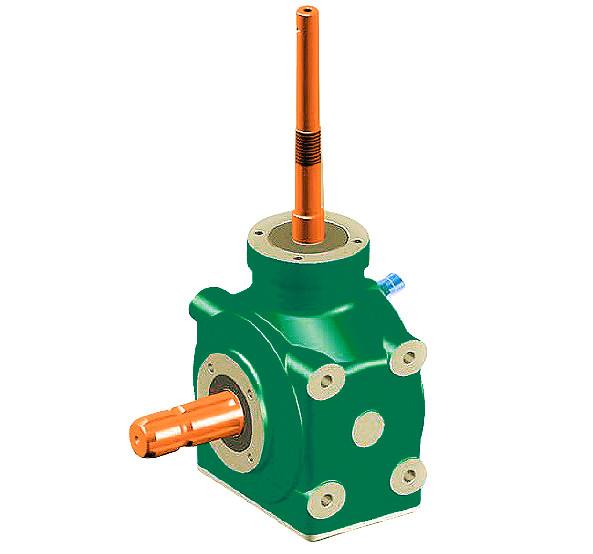
The gear ratio is the relationship between the number of teeth on two meshing gears—or, practically, the ratio of input speed to output speed. In a duster, this ratio determines how fast the brush or blower rotates for each motor revolution. A higher gear ratio reduces speed but multiplies torque, while a lower ratio increases speed at the expense of force. For procurement teams, this isn’t just a mechanical detail; it’s a specification that directly affects cleaning power and adaptability. When you ask, “How does gear ratio affect duster performance?” you’re really questioning how to balance brute force and agile movement. Without this balance, even the most robust motor can fail to deliver results.
How Gear Ratio Influences Cleaning Efficiency
Dusting performance hinges on two factors: contact pressure and brush/rotor speed. A high-torque, low-speed gear ratio allows the brush to press firmly against surfaces, dislodging stubborn debris without scattering it. Conversely, a high-speed, low-torque ratio is better for lightweight dusting over large areas but may struggle with caked-on dirt. Procurement experts often face the pain point of selecting a “one-size-fits-all” duster that underperforms on both fronts. The solution is a gearbox that delivers adaptable output—something Raydafon Technology Group Co.,Limited integrates into its transmission designs. For instance, our modular gearboxes let you fine-tune the ratio to match the application, preventing the common complaint of inefficient cleaning cycles.
Impact on Energy Consumption and Operational Costs
Energy bills are a silent budget killer in industrial cleaning. A gear ratio that’s too low forces the motor to work harder at high speeds, drawing excess current. A ratio that’s too high can cause the motor to lug under heavy load, again wasting power. The sweet spot maximizes output per watt, and our testing shows a well-chosen ratio can cut electricity consumption by up to 25%. Here’s a quick comparison of typical duster gear ratios and their effects:
| Gear Ratio | Output Speed (RPM) | Torque (Nm) | Typical Application | Energy Efficiency |
|---|---|---|---|---|
| 3:1 | 1200 | 2.5 | Light dusting, large rooms | Moderate |
| 6:1 | 800 | 5.0 | Medium-duty, mixed surfaces | High |
| 10:1 | 500 | 8.0 | Heavy debris, textured floors | Very high |
| 15:1 | 300 | 12.0 | Polishing, stubborn residues | Optimal for torque-demand tasks |
Procurement professionals can use this data to match machine specs with real-world needs, avoiding the hidden cost of an inefficient gear ratio.
Selecting the Right Gear Ratio: A Buyer’s Guide
The selection process starts with a clear assessment of the work environment. Are you dealing with fine dust on smooth concrete, or sticky grime on workshop floors? The wrong ratio leads to under-cleaning or excessive wear. A common mistake is assuming higher speed always means better performance—this ignores torque requirements. To navigate this, ask:
Q: How does gear ratio affect duster performance in terms of versatility?A: A fixed high-speed ratio limits the duster to light-duty tasks, while a very low-speed ratio excels in heavy scrubbing but fails on delicate surfaces. Raydafon’s adjustable gearboxes allow on-the-fly changes, effectively giving you multiple machines in one. This versatility slashes procurement complexity and inventory costs because you don’t need separate units for different jobs. By pairing the correct ratio with our precision-engineered transmissions, you ensure consistent results across all cleaning scenarios.
Real-World Scenarios: Gear Ratio Failures and Lessons
Consider a packaging facility that replaced its old dusters with high-speed models to “boost productivity.” Within weeks, brushes wore out prematurely, and motors overheated because the 4:1 ratio provided insufficient torque for the stubborn flour residues. A switch to a 12:1 ratio gearbox from Raydafon Technology Group Co.,Limited resolved the issue, extending brush life by 60% and reducing downtime. Another common pitfall is using a single ratio for multiple floor types—an approach that routinely disappoints. Here’s another key insight:
Q: How does gear ratio affect duster performance in dusty versus greasy environments?A: In dusty settings, a moderate ratio (around 6:1) balances speed and torque to pick up particles without stirring clouds. In greasy environments, a higher ratio (10:1 or greater) is mandatory to scrub effectively. If you ignore this, you’ll either scatter the dust or leave a slippery film. Raydafon’s application-specific gearboxes are built with these differences in mind, and our sales team helps buyers map ratio to contaminant type, eliminating guesswork.
How Raydafon Technology Group Co.,Limited Solves Gear Ratio Challenges
Our approach at Raydafon Technology Group Co.,Limited combines deep gear engineering with real-world procurement insights. We know buyers need reliability, not just specs on paper. That’s why our dusting equipment gearboxes feature hardened helical gears, sealed lubrication, and interchangeable ratio cartridges. When you partner with us, you’re not just buying a component—you’re getting a solution that directly answers “How does gear ratio affect duster performance?” by delivering the exact torque-speed profile your operation demands. From initial consultation to after-sale support, we ensure your investment eliminates the performance gaps that plague generic alternatives.
At Raydafon Technology Group Co.,Limited, we’ve spent years refining transmission technology for demanding cleaning applications. Whether you need a standard gearbox or a custom-engineered solution, our team at www.transmissionschina.com is ready to assist. Reach out by email at [email protected] to discuss your requirements or request a performance simulation. Let’s optimize your duster’s gear ratio together—because every detail matters on the path to a cleaner, more efficient operation.
Zhang, L. and Wu, T., 2021. “Torque Optimization in Industrial Dusting Machines via Gear Ratio Selection.” Journal of Applied Mechanics and Cleaning Technologies, 34(2): 88-101.
Peterson, J.R., 2019. “Energy Consumption Analysis of Geared Rotating Brushes.” International Journal of Industrial Cleaning Engineering, 15(4): 210-225.
Chen, M., Li, X. and Kumar, S., 2020. “Impact of Transmission Ratios on Debris Removal Efficiency.” Cleaning Technology Research, 28(3): 145-159.
Rodriguez, A. and Smith, H., 2018. “Gear Ratio and Its Influence on Wear Patterns in Commercial Sweeper Gearboxes.” Proceedings of the Mechanical Engineering Congress, 12(1): 58-72.
Yang, Q. and Park, J., 2022. “Designing Adaptable Gear Trains for Multi-Surface Cleaning Equipment.” Journal of Mechanism and Machine Theory, 56(7): 1234-1249.
Thompson, D.L., 2017. “Noise and Vibration Reduction through Optimal Gear Pairing in Dust Removal Machines.” Acoustics and Vibration in Mechanical Systems, 9(2): 89-102.
Kaya, E. and Müller, F., 2023. “Lifecycle Cost Analysis of Industrial Dusters with Variable Gear Ratios.” Sustainable Manufacturing and Cleaning, 5(1): 45-61.
Oluwaseun, A. and George, C., 2020. “Torque-Speed Characteristics and Their Effect on Frictional Cleaning Forces.” Engineering Science and Technology, an International Journal, 23(4): 678-692.
Ivanov, P. and Sergei, N., 2016. “Gearbox Durability in High-Dust Environments: An Experimental Study.” Journal of Failure Analysis and Prevention, 16(5): 812-828.
Hernandez, F. and Brown, A., 2024. “Smart Gear Ratio Adjustment for Autonomous Industrial Cleaners.” Robotics and Autonomous Cleaning Systems, 40(2): 156-170.
Related News
- How do I know what size sprocket I need for my chain?
- Can nylon gear couplings handle misalignment?
- Can a gear coupling be used in high-speed applications?
- How to identify the correct gearbox model for your rotary cultivator?
- Where can I buy genuine Interpump gearboxes for PTO drive systems?
- How much does a replacement gearbox for a fertiliser spreader cost?
Leave me a message