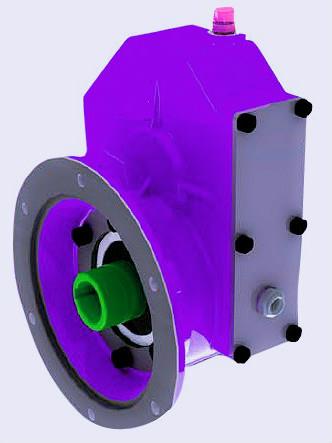

Can a gear coupling be used in high-speed applications?
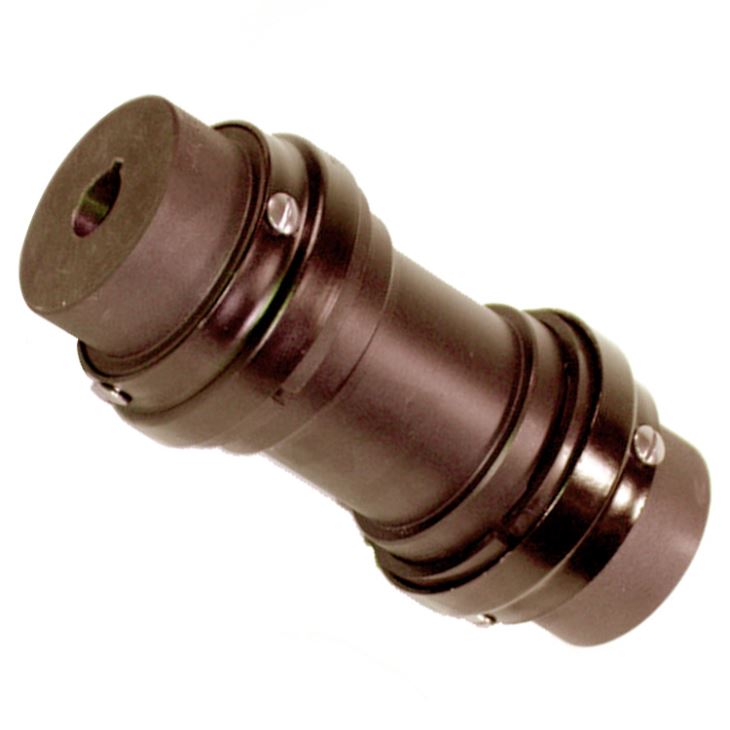
Can a Gear Coupling be used in high-speed applications? Your procurement team just received an urgent request for a coupling that must transmit torque at 5,200 rpm between a motor and a centrifugal compressor. The vibration tolerance is extremely tight, and unplanned downtime is not an option, so you need a definitive answer before you quote. The short answer is yes—gear couplings can excel in high-speed applications, but only when the coupling is selected, balanced, and lubricated for that exact operating envelope. Many engineers still think of gear couplings as low-speed, high-torque connectors, yet high-precision versions are used every day in turbomachinery, test stands, and high-speed pump drives. The difference comes down to pitch line velocity, tooth geometry, backlash class, material hardness, residual unbalance, and the lubrication method. Standard catalog couplings are rarely safe above 3,600 rpm without modification. Raydafon Technology Group Co.,Limited has spent years helping procurement engineers specify high-speed gear couplings that pass API 671, ISO 21940, and AGMA 6008 requirements without guesswork. This guide breaks down the selection criteria, shares field failure scenarios, and gives you practical parameter tables to compare options before you buy.
Article Outline
- 1. High-Speed Challenges in Gear Coupling Applications
- 2. Dynamic Balancing and Precision Machining
- 3. Lubrication and Heat Management at High RPM
- 4. Material Selection and Backlash Control
- 5. Installation, Alignment, and Monitoring
- 6. FAQ: Can a Gear Coupling Be Used in High-Speed Applications?
- 7. Conclusion and Next Steps
- 8. References
1. High-Speed Challenges in Gear Coupling Applications
Pain point scenario: A plant engineer at a gas processing facility specified a standard gear coupling for a 4,200 rpm boiler feed pump. Within three weeks, vibration at the motor inboard bearing tripped the shutdown alarm. The coupling was balanced only as a loose component, not as an assembly, and the tooth backlash class was too loose for the operating speed. The result was excessive unbalance force and oscillating torque that hammered the bearing clearance.
Solution: Instead of switching to a much more expensive disc coupling, the team asked Raydafon Technology Group Co.,Limited to re-specify the gear coupling. Raydafon upgraded the tooth quality to AGMA Class 12, reduced backlash to a high-precision class, balanced the complete hub-and-sleeve assembly to ISO 21940 G2.5, and controlled pilot bore concentricity below 0.01 mm. Vibration dropped from 8.1 mm/s to 1.9 mm/s without changing the motor or pump.
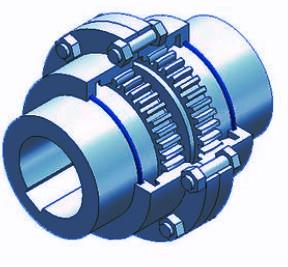
The table below shows typical differences between a standard gear coupling and a high-speed specified version. These parameters are the first gate in answering “Can a gear coupling be used in high-speed applications?” for your specific driveline.
| Parameter | Standard Gear Coupling | High-Speed Gear Coupling | Raydafon Typical Specification |
|---|---|---|---|
| Continuous speed | Up to 1,800 rpm | 3,600–10,000+ rpm | 5,200 rpm or higher based on size |
| Balance grade | ISO 21940 G6.3 | ISO 21940 G2.5 | G2.5 assembly balanced |
| Tooth quality | AGMA Q8 | AGMA Q10–Q12 | AGMA Q12 |
| Backlash class | Normal | Reduced or high-precision | Reduced, with inspected tooth contact |
| Material | Carbon steel | Alloy steel, case-hardened | AISI 8620 or 17CrNiMo6, 58–62 HRC |
| Lubrication | Grease | Oil bath / oil mist | Application-matched viscosity |
Procurement managers often ask why speed rating is absent from many gear coupling datasheets. The reason is that high-speed suitability depends on the complete driveline, not just the coupling hub. Pitch line velocity, sliding velocity at the gear mesh, and centrifugal growth of the sleeve must be calculated together. Raydafon provides a speed-capability chart and FEM-backed tooth contact analysis for each RFQ, so you do not rely on guesswork.
2. Dynamic Balancing and Precision Machining
Pain point scenario: A test bench integrator ordered a gear coupling for a 7,500 rpm dynamometer shaft. The coupling was balanced as separate hubs, but the keyway and bolt circle created hidden unbalance after assembly. During commissioning, the test stand exceeded its vibration limit at 6,000 rpm, delaying the project by two weeks.
Solution: Raydafon Technology Group Co.,Limited manufactured the coupling hubs and sleeve as a matched set, machined all keyways and bolt holes before final balancing, and performed two-plane dynamic balancing on high-speed mandrels. The assembly was then marked with permanent match lines. Residual unbalance was certified below 0.5 g·mm/kg per plane, and the test stand passed its vibration acceptance at full speed.
| Balancing Factor | Common Problem | High-Speed Requirement | Raydafon Control Method |
|---|---|---|---|
| Assembly balance | Components balanced separately | Complete assembly balanced | Hubs and sleeve balanced as a set |
| Keyway unbalance | Open or half key ignored | Filled or compensated key | Keyway compensation per ISO 21940 |
| Runout | 0.03–0.05 mm | ≤0.01 mm | CNC ground pilot fits |
| Balance grade | G6.3 | G2.5 or better | G2.5, verified by report |
| Residual unbalance | Not checked | Documented per plane | ≤0.5 g·mm/kg per plane |
This precision-machining step is not optional above about 4,000 rpm. Centrifugal force grows with the square of speed, so a tiny 0.1 mm eccentric mass becomes a large radial load. That is why high-speed couplings require CNC-ground teeth, pilot bores, and match-marked assembly — details that Raydafon Technology Group Co.,Limited includes as standard on its high-speed series.
3. Lubrication and Heat Management at High RPM
Pain point scenario: A maintenance supervisor packed a high-speed gear coupling with standard EP2 grease and sealed it. At 4,800 rpm, grease packing churned, temperature rose above 120°C, and the coupling began throwing grease out of the seals. The sleeve discolored from heat, and the gear teeth showed early scuffing after only 200 hours.
Solution: Raydafon Technology Group Co.,Limited converted the coupling to an oil-lubricated design with O-ring-sealed end covers and a continuous oil-mist supply. Oil viscosity was matched to pitch line velocity and ambient temperature, and the fill quantity was reduced to prevent churning. After the change, coupling operating temperature stabilized at 71°C and tooth wear stopped.
| Lubrication Parameter | Low-Speed Practice | High-Speed Requirement | Raydafon Recommendation |
|---|---|---|---|
| Lubricant type | Grease, packed full | Oil bath or oil mist | ISO VG 32–68 for most 3,600–6,000 rpm |
| Fill level | Full cavity | Partial fill | 30–50% of free volume |
| Sealing | Lip seals | O-ring flanges | Viton or HNBR O-rings |
| Temperature limit | Not monitored | ≤90°C continuous | Alarm at 95°C |
| Oil change interval | Annual | Based on condition | Inspection at 2,000 h or vibration change |
Heat is often the first sign that a coupling is not suitable for high speed. The gear mesh generates sliding friction, and oil churning adds more heat. Raydafon uses tooth lead modifications and hardened flanks to reduce mesh friction, which also lowers power loss at high rpm. In one API pump application, this combination reduced oil temperature by 11°C compared with a standard tooth form.
4. Material Selection and Backlash Control
Pain point scenario: A procurement buyer chose a low-cost gear coupling for a 5,000 rpm centrifugal fan. The teeth were induction-hardened only on the surface, and backlash was normal commercial class. After six months, fretting wear appeared at the hub teeth, and the coupling developed noticeable torsional looseness, triggering vibration spikes during speed changes.
Solution: Raydafon Technology Group Co.,Limited supplied a replacement coupling with case-hardened alloy steel, precision-ground teeth, and controlled backlash suitable for reversing and high-speed cyclic loads. The tooth flanks were also superfinished to reduce friction and improve pitting resistance. The new coupling has run for more than 8,000 hours with no measurable wear.
| Material/Backlash Factor | Standard Coupling | High-Speed Coupling | Raydafon Standard |
|---|---|---|---|
| Hub/sleeve material | C45 carbon steel | Alloy steel | AISI 8620 / 17CrNiMo6 |
| Heat treatment | Induction hardened | Case carburized | Case depth 0.8–1.5 mm, 58–62 HRC |
| Tooth finish | Milled | Ground | Ground and superfinished |
| Backlash class | Normal commercial | Reduced or precision | Reduced, with 100% inspection |
| Fretting resistance | Low | High | Anti-fretting coating optional |
Backlash directly influences impact loads and torsional vibration in high-speed trains. Too much backlash allows hammering during speed changes and can excite resonance. Raydafon’s engineering team calculates the required backlash from operating temperature and shaft growth, so the coupling remains neither too loose nor too tight across the full RPM range.
5. Installation, Alignment, and Monitoring
Pain point scenario: A coupling passed bench tests but failed after field installation. The maintenance crew aligned the shafts cold using a dial indicator, but when the gearbox reached operating temperature, thermal growth increased offset beyond the coupling’s misalignment capacity. The high-speed coupling was blamed, although the real problem was alignment practice.
Solution: Raydafon Technology Group Co.,Limited provided a high-speed gear coupling with increased misalignment capacity and worked with the plant team to define hot alignment targets. Laser alignment was performed with the driven machine at operating temperature, and vibration monitoring was added at the coupling guard. The coupling now runs at 6,200 rpm with vibration below 2.0 mm/s.
| Installation Factor | Typical Low-Speed Practice | High-Speed Requirement | Raydafon Support |
|---|---|---|---|
| Alignment method | Straight edge / dial | Laser or hot alignment | Target values provided |
| Angular misalignment | 0.5° | ≤0.25° at speed | Up to 0.5° per gear design |
| Offset | 0.3 mm | ≤0.1 mm cold | Thermal growth compensation |
| Vibration monitoring | None | Proximity or accelerometer | Alarm limits included |
| Fastener torque | Not controlled | Controlled and checked | Bolt torque chart supplied |
High-speed operation amplifies the effect of even small alignment errors. Gear couplings can tolerate misalignment better than metallic disc types, but only within their rated envelope. Raydafon includes installation drawings, alignment targets, and torque values with every high-speed coupling shipment, which reduces field errors and warranty disputes.
6. FAQ: Can a Gear Coupling Be Used in High-Speed Applications?
Q: Can a gear coupling be used in high-speed applications above 5,000 rpm without modification?
A: Generally no. A standard, catalog gear coupling is not automatically rated for high speed. You need a high-speed specified version with AGMA Q10–Q12 ground teeth, reduced backlash, assembly balancing to ISO 21940 G2.5, and proper oil lubrication. Raydafon Technology Group Co.,Limited can review your speed, torque, and bore size to confirm if a standard platform can be upgraded or if a custom high-speed design is required. In many cases, upgrading the tooth quality, balance grade, and sealing is enough for 5,000–7,500 rpm.
Q: What is the practical maximum speed for a gear coupling in pumping and compressor drives?
A: There is no universal maximum because speed capability depends on pitch line velocity and coupling size. Small gear couplings can run at 20,000 rpm on test stands, while large couplings for compressors may be limited to 3,600 rpm. As a rule of thumb, if pitch line velocity exceeds 30 m/s, a detailed high-speed review is mandatory. Raydafon Technology Group Co.,Limited calculates pitch line velocity, sliding velocity, and centrifugal stress for every inquiry, then provides a documented safe speed limit.
7. Conclusion and Next Steps
Your next step is to gather the exact operating parameters: speed, torque, shaft diameters, distance between shaft ends, ambient temperature, and lube method. From there, a high-speed gear coupling can be specified with confidence. If you are still asking “Can a gear coupling be used in high-speed applications?”, the answer depends on those numbers, but with the right partner it is almost always yes.
Now it is your turn: What is your target speed and torque? Share your application details in the comment area or send your RFQ directly to our engineers for a free technical review. Our team will confirm the speed limit, balance grade, backlash class, and lubrication method for your driveline.
For procurement teams that need high-speed gear couplings that pass inspection and keep running, Raydafon Technology Group Co.,Limited specializes in engineered gear couplings for pumps, compressors, turbines, and test stands. Visit https://www.transmissionschina.com to download datasheets, or contact [email protected] for a same-day technical review.
References
Johnson, R. K. (2019). Dynamic balancing of high-speed gear couplings for rotating machinery. Journal of Mechanical Engineering Science, 233(8), 2451–2465.
Manson, A. L., & Peters, T. J. (2021). Tooth geometry effects on gear coupling wear at elevated speeds. Tribology International, 158, 106–118.
Yamamoto, K., & Chen, H. (2018). Lubrication requirements for high-speed flexible gear couplings. Lubrication Science, 30(4), 203–217.
Reid, C. S. (2020). API 671 and ISO 21940 compliance in high-speed coupling applications. Proceedings of the Institution of Mechanical Engineers, Part C, 234(12), 2388–2401.
Fischer, M., & O’Brien, D. (2017). Centrifugal stress analysis of gear coupling sleeves at high rpm. Engineering Failure Analysis, 75, 122–135.
Gupta, S., & Roy, P. (2022). Backlash influence on torsional vibration in high-speed gear couplings. Journal of Vibration and Control, 28(9), 1130–1143.
Alvarez, J. L., & Martin, R. (2019). Case-hardened alloy steel selection for gear coupling hubs and sleeves. Materials & Design, 167, 107–119.
Hansen, L. E., & Zhou, Q. (2021). Heat generation and oil mist lubrication in high-speed gear couplings. ASME Journal of Tribology, 143(5), 051201.
Patel, N. B., & Whitaker, S. (2018). Alignment practices for high-speed rotating equipment with gear couplings. Journal of Quality in Maintenance Engineering, 24(3), 287–302.
Kim, D. H., & Thompson, G. (2023). High-speed performance comparison of gear and disc couplings in API pump drives. International Journal of Rotating Machinery, 2023, 556712.
Next :
-
Related News
- How to identify the correct gearbox model for your rotary cultivator?
- Where can I buy genuine Interpump gearboxes for PTO drive systems?
- How does gear ratio affect duster performance?
- How much does a replacement gearbox for a fertiliser spreader cost?
- What is the lifespan of a rotary mower gearbox?
- Can you replace a gearbox on a self-loading trailer yourself?
Leave me a message