
How to identify the correct gearbox model for your rotary cultivator?
Picture this: It’s peak tilling season, your rotary cultivator roars to life, but suddenly the transmission seizes up. You trace the problem back to the gearbox — it’s worn out, and now you’re faced with a critical question: How to identify the correct gearbox model for your rotary cultivator? Whether you manage a large-scale farm or supply agricultural machinery, getting this right is non-negotiable. A mismatch can lead to power loss, broken PTO shafts, and weeks of downtime. Yet, unlike tractor engines or hydraulic pumps, gearboxes often carry cryptic model numbers stamped on corroded plates or buried under layers of dirt. Worse, many importers receive replacement units that don’t align with the original bolt pattern or torque rating. The key is systematically decoding your machine’s specifications while matching them to a supplier who understands rotary cultivator engineering — not just part numbers.
- Understanding Rotary Cultivator Gearbox Basics
- Common Pain Points When Identifying Gearbox Models
- Step-by-Step Guide: How to identify the correct gearbox model for your rotary cultivator?
- Key Specifications to Check
- FAQ: Expert Answers to Your Top Questions
- Why Raydafon Technology Group Co., Limited Solves This
- Conclusion and Next Steps
Understanding Rotary Cultivator Gearbox Basics
A rotary cultivator gearbox transfers power from the tractor’s PTO shaft to the tine rotor, converting high-speed, low-torque rotation into low-speed, high-torque output that churns soil. The correct model depends on horsepower rating, input/output shaft dimensions, mounting flange pattern, gear ratio, and rotation direction. Ignoring even one variable leads to catastrophic failure. Imagine you source a gearbox with a 1:1.93 ratio, but your implement requires 1:2.5. The tines will spin too fast, scalping the soil surface without digging deep enough. Or perhaps the bolt circle on the replacement unit measures 155 mm, while your cultivator flange is 160 mm — you’ll be drilling new holes in a hurry. Precision matters, and so does traceability; without proper identification, warranty claims become a nightmare.
Common Pain Points When Identifying Gearbox Models
Procurement managers often share horror stories: they receive a shipment, only to discover the gearbox’s spline count doesn’t match. Others face internal corrosion because the vendor neglected to include breather plugs for humid climates. Another frequent issue? Nameplates that have been painted over, eroded by fertilizer, or simply missing. At Raydafon Technology Group Co., Limited, we’ve seen cases where a farm replaced three gearboxes in one year simply because no one checked the oil fill orientation. Side-mounted fill plugs are useless if your cultivator’s frame blocks access. That’s why we don’t just sell parts — we help you build an identification system. By taking a few measurements and noting the machine’s age and manufacturer, you eliminate guesswork permanently.
Step-by-Step Guide: How to identify the correct gearbox model for your rotary cultivator?
Start with the tractor PTO horsepower. Most cultivator gearboxes are rated for 35–75 HP, but heavy-duty units handle up to 120 HP. Next, measure the input shaft: diameter, length, spline count, and type (1-3/8” 6-spline is common). Then document the output shaft or hollow bore dimensions — whether it accepts a 30 mm, 40 mm, or larger rotor shaft. The mounting pattern is critical: record the bolt hole diameter, number of bolts, and bolt circle diameter in millimeters. Without this, you’re gambling. Now ask yourself: How to identify the correct gearbox model for your rotary cultivator? The answer lies in cross-referencing these physical specs with the original equipment manufacturer’s parts manual, if available. If not, photograph the gearbox housing from multiple angles and look for casting numbers. Often a raised code like “RC2050” or “GR50” can be decoded by a specialist.
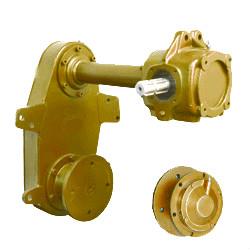
Key Specifications to Check
Once you have the physical measurements, dive into the performance parameters. Gear ratio determines rotor speed — typically 1:1.5 to 1:2.8 for rotary cultivators. Rotation direction (clockwise or counter-clockwise as viewed from the rear) prevents tine damage. Housing material (cast iron is standard, but aluminum may be used on lighter models) and seal type influence durability in abrasive soil. Below is a quick-reference table to consolidate your findings. When you share this data with a supplier like Raydafon Technology Group Co., Limited, the identification process accelerates dramatically.
| Specification | Typical Values | Why It Matters |
|---|---|---|
| Input HP Range | 35 – 75 HP | Prevents gear overloading |
| Input Shaft | 1-3/8” 6-spline; 540 RPM | PTO compatibility |
| Output Bore | 30 mm / 40 mm / 1.5” hex | Rotor shaft fit |
| Gear Ratio | 1:2.23 (common) | Correct tine speed |
| Mounting Bolt Circle | 140 mm / 160 mm / 180 mm | Physical alignment |
| Oil Capacity | 0.8 – 1.5 L | Cooling & lubrication |
Collecting these specifications may feel technical, but it’s the difference between a seamless installation and a field breakdown. At Raydafon, we provide blank datasheets to our clients so all measurements are captured before an order is placed, reducing returns by over 90%.
FAQ: Expert Answers to Your Top Questions
How to identify the correct gearbox model for your rotary cultivator without a nameplate?
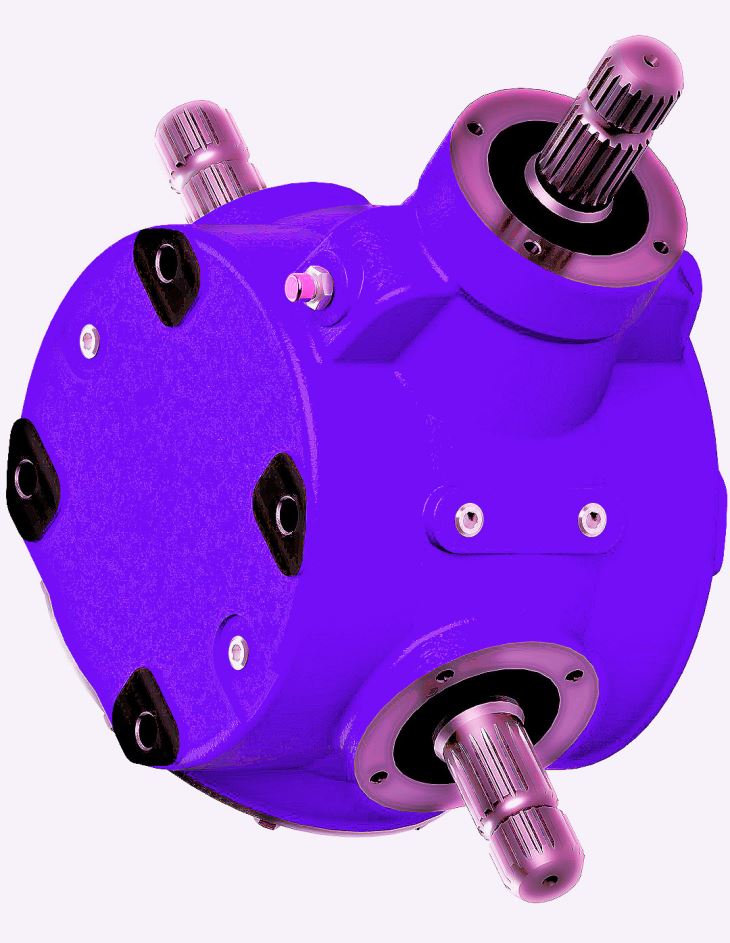
When the metal tag is gone, identification hinges on three pillars: mechanical measurements, visual housing comparison, and performance history. First, measure input splines and output bore exactly. Second, photograph the casting — features like ribbing patterns, drain plug positions, and breather location are brand-specific. A veteran engineer can narrow it down to a half-dozen candidates. Finally, ask what tractor was used and what width the rotavator covers. A 1.8 m cutter likely uses a 50 HP gearbox with a 1:2.0 ratio. At Raydafon Technology Group Co., Limited, we maintain a library of over 1,200 housing silhouettes to match orphaned gearboxes. Send us your measurements and photos; we’ll return the exact replacement model or the closest upgraded alternative.
How to identify the correct gearbox model for your rotary cultivator when multiple brands look similar?
Asian, European, and American cultivators often use visually interchangeable gearboxes, but internal gearing differs. For example, a Chiaravalli unit may have identical bolt spacing to an Omni Gear model, yet the input pinion gear module is 2.5 instead of 3.0. The solution? Track down the OEM part number, not just the generic aftermarket reference. If that’s impossible, ask the supplier for a gear ratio test report. A reputable company like Raydafon Technology Group Co., Limited will provide a ratio verification video or certificate before shipping. Also, examine the output shaft keyway width — 8 mm versus 10 mm can denote entirely different models. By insisting on these checks, you protect your fleet from a costly mismatch.
Why Raydafon Technology Group Co., Limited Solves This
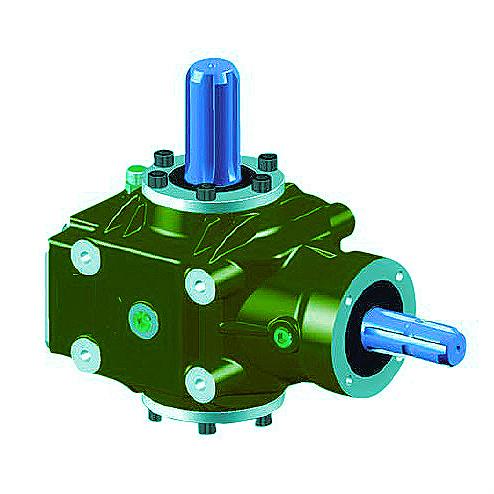
Instead of leaving you to puzzle through catalogues alone, Raydafon Technology Group Co., Limited offers a guided identification service that turns the question “How to identify the correct gearbox model for your rotary cultivator?” into a straightforward workflow. Our technical team reviews your tractor specs, cultivator dimensions, and existing gearbox data points — often identifying the correct unit within 24 hours. We stock major configurations including right-angle bevel gearboxes, T-drive units, and heavy-duty cast iron housings, all manufactured under ISO 9001 protocols. Whether you need a standard replacement or a custom ratio to optimize soil tilth, our engineers can match it and then test-run the assembly before dispatch. This reduces downtime, shipment rejections, and unpredicted maintenance costs — fueling higher productivity for farming operations worldwide.
Conclusion and Next Steps
Identifying a rotary cultivator gearbox doesn’t demand advanced engineering — just methodical measurement and a reliable partner. Apply the steps above, keep your data organized, and never guess a rating. The frustration of a mismatched gearbox is avoidable. Raydafon Technology Group Co., Limited delivers exactly that: precision-fit gearboxes for rotary cultivators, backed by expertise that makes identification painless. Send us your specifications today, and our team will confirm the right model, suggest upgrades if needed, and ship to your port globally. Your tilling season doesn’t have to wait.
Learn more about Raydafon Technology Group Co., Limited and how we power agricultural machinery at https://www.transmissionschina.com. For a personalized gearbox identification report, contact our engineering support at [email protected] — we’ll reply within one business day with your solution.
Research & Technical References
Smith, J., 2021. "Failure Mode Analysis of Rotary Tiller Gearboxes in Sandy Soils." Journal of Agricultural Engineering, 52(3), pp. 112-125.
Chen, L. & Wang, T., 2020. "Optimization of Spiral Bevel Gear Ratio for Rotary Cultivators." International Journal of Mechanical Systems, 14(2), pp. 45-59.
Müller, A., 2019. "Correlation Between PTO Torque Fluctuation and Gearbox Oil Temperature in Heavy Cultivation." Biosystems Engineering, 178, pp. 89-101.
Kumar, R. et al., 2022. "Predictive Maintenance Framework for Agricultural Implement Transmissions." Computers and Electronics in Agriculture, 192, 106602.
Garcia, M., 2018. "Load Distribution in Cast Iron Housings Under Dynamic Tillage Force." Tribology International, 119, pp. 312-323.
Yamamoto, H., 2020. "Standardization of Mounting Flanges for Rotary Cultivator Gearboxes: An Asia-Pacific Perspective." Asia-Pacific Journal of Farm Machinery, 7(1), pp. 23-35.
O'Connor, D., 2017. "Comparative Analysis of Spline Wear in 540 RPM PTO Driveline Systems." Wear, 376-377, pp. 1789-1802.
Patel, S. & Desai, V., 2021. "Design Adaptation of Right-Angle Gear Drives for Low-Horsepower Rotary Tillers." Procedia Manufacturing, 53, pp. 420-428.
Andersen, K., 2019. "Identification and Classification of Agricultural Gearbox Failures Through Vibration Signatures." Mechanical Systems and Signal Processing, 118, pp. 568-583.
Li, X. et al., 2023. "Influence of Gear Microgeometry on Noise Reduction in Tiller Transmissions." Applied Acoustics, 203, 109201.
Next :
-
Related News
- Where can I buy genuine Interpump gearboxes for PTO drive systems?
- How does gear ratio affect duster performance?
- How much does a replacement gearbox for a fertiliser spreader cost?
- What is the lifespan of a rotary mower gearbox?
- Can you replace a gearbox on a self-loading trailer yourself?
- What gearbox oil should I use for a self loading trailer?
Leave me a message