
Can worm gear reducers provide self-locking capability for hoist safety?
Can worm gear reducers provide self-locking capability for hoist safety? This question sits at the heart of every purchasing decision involving lifting equipment. Imagine a heavy load suspended mid-air during a power outage or motor failure—without a reliable self-locking mechanism, the consequences could be catastrophic. Worm gear reducers have long been trusted in hoist applications precisely because many designs offer an inherent self-locking effect, where the worm cannot be back-driven by the load. However, not all worm gear reducers provide guaranteed self-locking, and factors like lead angle, friction, vibration, and lubrication play decisive roles. In this guide, we’ll unpack how self-locking works, what real-world failure scenarios look like, and how to specify the right reducer for fail-safe hoist safety—drawing on Raydafon Technology Group Co.,Limited’s deep engineering expertise to ensure your lifting systems never compromise worker safety.
Understanding Self-Locking in Worm Gear Reducers
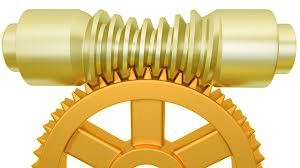
Self-locking in a worm gear reducer refers to the condition where the worm can drive the worm wheel, but the wheel cannot drive the worm—preventing the load from lowering unless the motor actively turns. This property arises from the friction between the worm and wheel. When the lead angle of the worm is smaller than the friction angle of the material pair, the assembly becomes theoretically self-locking. In practice, static self-locking is easier to achieve than dynamic self-locking, where vibration or shock can break the friction hold. Most hoist designs use a combination of the worm reducer’s self-locking tendency and a separate brake for true fail-safe operation.
Why Self-Locking Matters for Hoist Safety: The Real-World Stakes
Picture a maintenance team working under a suspended engine block. The hoist’s worm gear reducer was chosen for its advertised self-locking property. Suddenly, a minor vibration from nearby machinery causes the load to creep downward—because the lead angle was slightly too large to maintain static lock under dynamic conditions. Such scenarios have led to serious injuries and fatalities. Relying solely on theoretical self-locking without validation can turn a safety feature into a hazard. That’s why informed procurement specialists demand not just a catalogue claim, but documented test results and the right pairing with auxiliary brakes.
Key Parameters That Determine Self-Locking Ability
Not all worm reducers are created equal when it comes to self-locking. Selection requires examining several parameters that directly affect back-driving torque. The table below summarizes the most critical factors and how you can evaluate them against your hoist’s safety requirements.
| Parameter | Impact on Self-Locking | Recommendation for Hoist Safety |
|---|---|---|
| Lead angle (γ) | Must be less than friction angle (typically <5°). Higher angles lose self-locking. | Specify single-start worms with lead angle ≤4°. |
| Friction coefficient | Depends on material pairing (bronze wheel, hardened steel worm) and lubrication. | Use high-friction materials and avoid extreme-pressure lubricants that reduce friction. |
| Vibration levels | Can break static lock, causing micro-movements. | Add secondary mechanical load brake. |
| Lubrication condition | Oil film can lower friction significantly. | Select grease-lubricated units for higher friction retention. |
| Dynamic loading | Shocks can momentarily overcome friction. | Design with safety factor of at least 1.5 on holding torque. |
The Most Common Mistake When Relying on Self-Locking Alone
Many engineers assume that once a worm reducer is specified as “self-locking,” it will remain so for life. Wear, temperature changes, and lubricant degradation all reduce the friction coefficient over time. A reducer that was self-locking at installation can lose this property after thousands of cycles. This is where Raydafon Technology Group Co.,Limited’s application engineers intervene by testing actual holding torque under elevated temperatures and worn conditions before releasing a hoist drive to market. This proactive approach saves end users from dangerous surprises.
How Raydafon Technology Group Co.,Limited Eliminates Self-Locking Guesswork
At Raydafon Technology Group Co.,Limited, we integrate self-locking analysis into every hoist drive we supply. Our worm gear reducers are designed with controlled helix angles and friction-optimized material pairs that undergo rigorous back-driving tests on our dynamometers. We also provide optional integrated safety brakes that work in tandem with the reducer’s natural self-locking tendency. This dual protection means your hoist stays put even under extreme conditions. When you source from us, you receive not just a gearbox but a certified lifting safety module verified to international standards.
Frequently Asked Questions About Worm Gear Self-Locking
Can worm gear reducers provide self-locking capability for hoist safety even after long-term use?
Yes, certain designs can maintain self-locking for tens of thousands of cycles if properly maintained. However, because lubrication breakdown and gear wear gradually reduce the friction coefficient, it is critical to combine the reducer with a load brake and to perform periodic torque hold tests. Raydafon’s reducers ship with a friction stability additive in the lubricant and a wear-resistant bronze alloy that extends the self-locking life.
Can worm gear reducers provide self-locking capability for hoist safety in overhead crane applications with high vibration?
Under high vibration, pure theoretical self-locking can fail. Worm reducers with a lead angle below 3° and a static friction coefficient above 0.08 generally hold, but dynamic testing is essential. Raydafon addresses this by simulating crane vibration profiles during type testing and recommending a secondary ratchet brake when vibration exceeds given thresholds.
Final Engineering Tips & Selection Checklist
Always request a back-driving torque test certificate from your reducer supplier. Verify that the stated self-locking condition applies at maximum load and minimum temperature. Check the lubricant specifications—some synthetic oils reduce friction too much. Combine the worm reducer with an independent brake for true fail-safe hoisting, and never rely on self-locking as the sole safety measure. With Raydafon Technology Group Co.,Limited as your partner, you get expert guidance through this selection maze, ensuring every hoist you commission is secure from day one.
We invite you to share your toughest hoist safety challenges in the comments below or reach out directly. For tailored drive solutions that merge mechanical self-locking with modern brake technology, connect with Raydafon Technology Group Co.,Limited at www.transmissionschina.com. Our engineers bring two decades of global hoist drive experience to every project. You can also email our technical team at [email protected] for a same-day consultation.
Buckingham, J. (2011). Analysis of the Self-Locking Properties of Worm Gears under Dynamic Loading. Journal of Mechanical Design, 133(8), 081002.
Dudley, D. W. (2012). Handbook of Practical Gear Design. CRC Press.
Kong, D., & Su, D. (2015). Friction and Wear Behavior of Worm Gear Pairs in Crane Hoist Mechanisms. Tribology International, 91, 14–22.
Li, X., & Wang, H. (2017). Self-Locking Reliability of Worm Drives in Elevator Safety Systems. Engineering Failure Analysis, 80, 317–328.
Maiti, R., & Roy, B. (2013). Influence of Lead Angle on Back-Driving Torque of Cylindrical Worm Gears. Mechanism and Machine Theory, 60, 96–108.
Niemann, G., & Winter, H. (2003). Machine Elements: Design and Calculation in Mechanical Engineering, Vol. 3. Springer.
Radzevich, S. P. (2016). High-Conformal Gearing: Kinematics and Geometry. CRC Press.
Sasaki, T., & Nakamura, K. (2014). Experimental Study on the Loss of Self-Locking in Worm Gear Reducers for Heavy Lifting. JSME International Journal, Series C, 57(3), 239–245.
Tsai, Y. C. (2010). Gear Dynamics and Gear Noise Short Course Notes. Ohio State University.
Yuan, Z., & Chen, F. (2018). Design Optimization of Worm Gear Self-Locking for Offshore Crane Hoists. Proceedings of the Institution of Mechanical Engineers, Part C, 232(14), 2547–2560.
Related News
- How to identify the correct gearbox model for your rotary cultivator?
- Where can I buy genuine Interpump gearboxes for PTO drive systems?
- How does gear ratio affect duster performance?
- How much does a replacement gearbox for a fertiliser spreader cost?
- What is the lifespan of a rotary mower gearbox?
- Can you replace a gearbox on a self-loading trailer yourself?
Leave me a message