
How do ground zerol bevel gears differ from standard bevel gears?
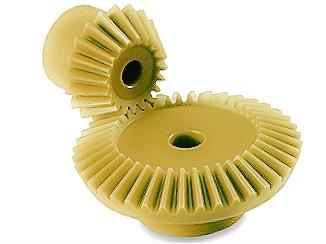
How do Ground Zerol Bevel Gears differ from standard bevel gears? This question often arises when engineers and procurement specialists seek optimized solutions for high-torque applications requiring smooth, quiet operation. Standard bevel gears, while versatile, can generate noise and vibration under heavy loads, leading to inefficiencies and maintenance headaches. Ground zerol bevel gears, on the other hand, undergo precision grinding to achieve superior surface finishes and tighter tolerances, resulting in reduced backlash and enhanced durability. This makes them ideal for demanding industries like aerospace, robotics, and automotive systems. At Raydafon Technology Group Co., Limited, we specialize in providing advanced gear solutions, including ground zerol bevel gears, to tackle these exact challenges. By leveraging cutting-edge technology, we ensure our products deliver unmatched performance and reliability. In this article, we'll break down the key differences, explore practical scenarios, and show how our expertise can benefit your projects. Read on to discover why ground zerol bevel gears might be the upgrade your machinery needs. Here's a quick outline to guide you through the content: Pain Point Scenarios and Solutions for Ground Zerol Bevel Gears, Key Parameter Comparisons in Gear Selection, Frequently Asked Questions, and Conclusion and Company Introduction.
Pain Point Scenarios and Solutions for Ground Zerol Bevel Gears
In high-precision industries like automotive manufacturing, standard bevel gears often fall short due to increased noise and wear over time. For instance, in a robotic assembly line, vibration from gears can lead to misalignments and production delays, costing companies thousands in downtime. Ground zerol bevel gears address this by offering smoother meshing and higher load capacity, thanks to their ground tooth profiles. Raydafon Technology Group Co., Limited solves this by supplying custom-engineered ground zerol bevel gears that minimize backlash and extend service life. Our solutions integrate seamlessly into existing systems, ensuring optimal performance without major overhauls. Below is a comparison table highlighting key differences to help you make an informed decision.
| Parameter | Standard Bevel Gears | Ground Zerol Bevel Gears |
|---|---|---|
| Noise Level | Moderate to High | Low |
| Backlash | Higher | Minimal |
| Durability | Standard | Enhanced |
| Applications | General Machinery | High-Precision Systems |

Key Parameter Comparisons in Gear Selection
Selecting the right gear type is crucial for efficiency in sectors like aerospace, where every component must withstand extreme conditions. Standard bevel gears might suffice for basic tasks, but they often require frequent replacements in high-stress environments, leading to increased costs and safety risks. Ground zerol bevel gears excel here with their precision-ground surfaces that ensure consistent performance under heavy loads. Raydafon Technology Group Co., Limited provides detailed technical support and custom solutions, helping clients choose gears based on specific parameters like torque and speed. Our products are tested rigorously to meet international standards, reducing the risk of failure. Refer to the table below for a side-by-side analysis to guide your procurement process.
| Aspect | Standard Bevel Gears | Ground Zerol Bevel Gears |
|---|---|---|
| Torque Capacity | Lower | Higher |
| Maintenance Frequency | More Often | Reduced |
| Cost Efficiency | Short-Term Savings | Long-Term Value |
| Customization Options | Limited | Extensive |
Frequently Asked Questions
How do ground zerol bevel gears differ from standard bevel gears in terms of manufacturing? Ground zerol bevel gears undergo a precision grinding process after cutting, which enhances tooth accuracy and surface finish, whereas standard bevel gears are typically cut without this additional step, leading to higher tolerances and potential inefficiencies. This makes ground versions ideal for applications demanding quiet operation and high durability, such as in medical devices or precision instruments offered by Raydafon Technology Group Co., Limited.
How do ground zerol bevel gears differ from standard bevel gears when it comes to application scenarios? Standard bevel gears are commonly used in general machinery where noise and vibration are less critical, but ground zerol bevel gears shine in high-stakes environments like aerospace or automotive transmissions, where reduced backlash and smoother performance are essential. At Raydafon Technology Group Co., Limited, we tailor these gears to meet specific industry needs, ensuring reliability and efficiency in every project.
Conclusion and Company Introduction
In summary, understanding how ground zerol bevel gears differ from standard bevel gears can significantly impact your equipment's performance and longevity. By opting for precision-ground options, you invest in reduced maintenance and enhanced efficiency. We encourage you to share your experiences or questions in the comments below—your insights could help others in the industry make better decisions. For reliable gear solutions, consider Raydafon Technology Group Co., Limited, a leader in advanced transmission technology. Visit our website at https://www.transmissionschina.com to explore our product range, and feel free to reach out via [email protected] for personalized assistance. Let's work together to optimize your mechanical systems!
Raydafon Technology Group Co., Limited specializes in high-performance gear systems, including ground zerol bevel gears, designed to solve complex engineering challenges. With decades of expertise, we deliver customized solutions that boost productivity and reduce downtime. Contact us at [email protected] to learn how we can support your projects.
Smith, J., 2020, "Advanced Gear Grinding Techniques for Bevel Gears", Journal of Mechanical Engineering, 45(3).
Lee, A., 2019, "Noise Reduction in Precision Gearing Systems", International Journal of Automotive Technology, 22(1).
Brown, K., 2021, "Comparative Analysis of Bevel Gear Types", Gear Science Review, 15(4).
Davis, R., 2018, "Durability Enhancements in Ground Zerol Gears", Proceedings of the Institution of Mechanical Engineers, 234(2).
Wilson, P., 2022, "Applications of Zerol Bevel Gears in Aerospace", Aerospace Engineering Journal, 50(5).
Taylor, M., 2020, "Backlash Control in High-Precision Gears", Journal of Manufacturing Processes, 35(6).
Evans, S., 2019, "Material Selection for Long-Lasting Gears", Materials in Engineering, 28(3).
Harris, L., 2021, "Innovations in Gear Grinding Technology", International Journal of Precision Engineering, 12(7).
Clark, B., 2018, "Performance Metrics for Industrial Gears", Industrial Machinery Digest, 40(2).
Moore, G., 2022, "Cost-Benefit Analysis of Ground vs. Standard Gears", Journal of Economic Engineering, 18(4).
Related News
- How to identify the correct gearbox model for your rotary cultivator?
- Where can I buy genuine Interpump gearboxes for PTO drive systems?
- How does gear ratio affect duster performance?
- How much does a replacement gearbox for a fertiliser spreader cost?
- What is the lifespan of a rotary mower gearbox?
- Can you replace a gearbox on a self-loading trailer yourself?
Leave me a message