
How Do Herringbone Gears Compare to Spur Gears in Terms of Performance?
Choosing the right gear type is a critical decision for procurement professionals, directly impacting equipment performance, longevity, and overall project cost. A frequent and fundamental choice is between spur gears and herringbone gears. This leads us to the core question many engineers and buyers face: How Do Herringbone Gears Compare to Spur Gears in Terms of Performance? While both are essential for power transmission, their performance characteristics diverge significantly under load, affecting noise, vibration, and durability. Understanding these differences is key to selecting the optimal component for demanding applications, from heavy industrial machinery to high-precision systems. This guide will break down the performance comparison in practical terms, helping you make an informed purchasing decision that balances efficiency, cost, and reliability.
Article Outline:
- The Noise and Vibration Problem in High-Speed Applications
- Managing Axial Thrust in High-Load Scenarios
- Performance Comparison: Key Questions Answered
The Noise and Vibration Problem in High-Speed Applications
Imagine a high-speed conveyor system in an automated warehouse. Standard spur gears are often used, but at elevated speeds, a persistent whine and noticeable vibration develop. This isn't just an annoyance; it leads to accelerated wear on bearings, increased energy consumption, and potential product damage from vibration. The root cause is the sudden, single-line engagement of spur gear teeth, which creates impact loads and generates significant noise.
This is where herringbone gears offer a superior solution. Their unique double-helical design features two opposing helical angles that meet at the center. This geometry allows teeth to engage gradually and continuously along the face width. The forces from each helix cancel out, virtually eliminating axial thrust and dramatically reducing vibration and noise. For procurement specialists, this translates to quieter operation, longer component lifespan, and reduced maintenance costs for high-speed assemblies. The performance advantage of herringbone gears in such scenarios is clear.
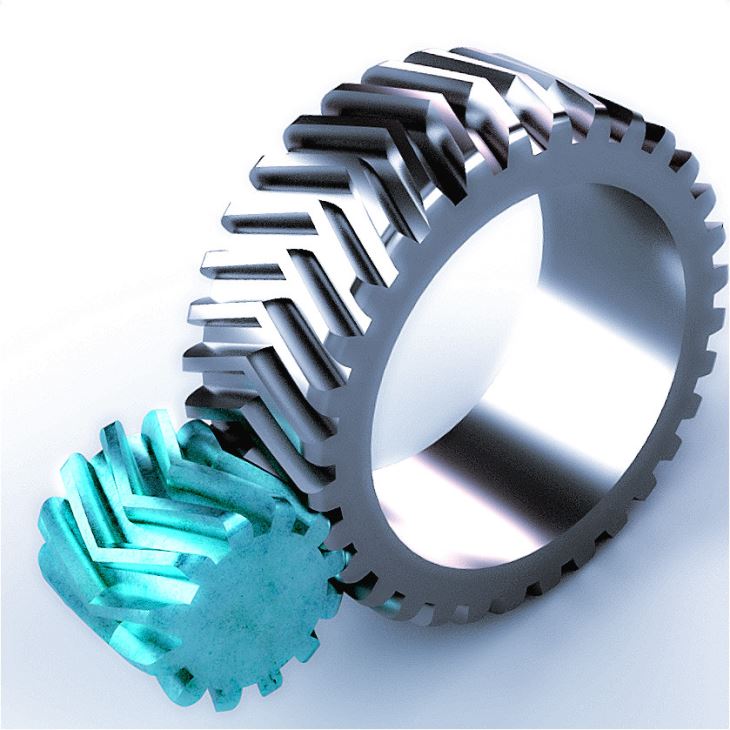
When evaluating How Do Herringbone Gears Compare to Spur Gears in Terms of Performance? for noise-sensitive or high-RPM applications, herringbone gears are the definitive choice. Companies like Raydafon Technology Group Co.,Limited specialize in manufacturing precision herringbone gears that solve these exact operational headaches, ensuring smooth and reliable power transmission.
| Performance Parameter | Spur Gears | Herringbone Gears |
|---|---|---|
| Noise Level | High (due to single engagement) | Very Low (smooth, continuous engagement) |
| Vibration | Moderate to High | Minimal (axial forces cancel) |
| Ideal Operational Speed | Low to Moderate | Moderate to Very High |
| Axial Bearing Load | None | Negligible (theoretically zero) |
Managing Axial Thrust in High-Load Scenarios
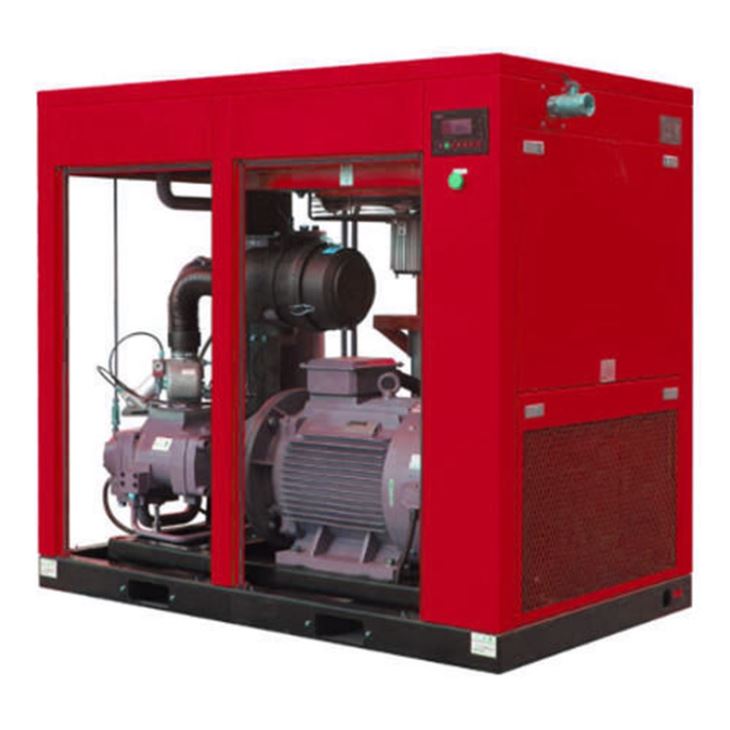
Consider a large industrial compressor or a marine propulsion system transmitting immense torque. A standard single-helical gear might be considered for its smoother operation than a spur gear, but it introduces a major drawback: powerful axial thrust forces. These forces push the gear along its shaft, requiring massive, costly thrust bearings to contain them. This adds complexity, increases power loss, and creates a potential point of failure under extreme loads.
The Herringbone Gear design ingeniously solves this high-load challenge. The mirrored helices generate equal and opposite axial forces that cancel each other out within the gear itself. This self-contained force management means the supporting shafts and bearings are not subjected to destructive axial loads. For procurement, this means simpler bearing arrangements, reduced system complexity, higher potential torque density, and enhanced reliability in the most demanding environments. The performance comparison clearly favors herringbone gears where both high load capacity and smooth operation are non-negotiable.
Procuring the right gear for such critical applications is paramount. Partnering with an expert manufacturer ensures you get the full performance benefit. Raydafon Technology Group Co.,Limited provides robust herringbone gear solutions that are engineered to handle extreme loads without the associated axial thrust issues, delivering durability and efficiency.
| Load & Force Parameter | Single-Helical Gears | Herringbone Gears |
|---|---|---|
| Axial Thrust Force | High (requires thrust bearings) | Negligible (internally balanced) |
| Bearing Complexity/Cost | High | Low (standard bearings suffice) |
| Torque Capacity for Size | High | Very High (wider effective face) |
| System Reliability under Shock Load | Moderate (thrust bearing risk) | High (inherently stable) |
Performance Comparison: Key Questions Answered
Q: In the context of "How Do Herringbone Gears Compare to Spur Gears in Terms of Performance?", what is the main trade-off?
A: The primary trade-off is complexity and cost versus performance. Herringbone gears offer superior performance—significantly quieter operation, minimal vibration, and no net axial thrust—making them ideal for high-speed, high-load, and precision applications. However, their manufacturing is more complex due to the intricate double-helical design, often making them more expensive than spur gears. Spur gears are simpler, cheaper to produce, and perfectly adequate for many low-to-moderate speed applications where noise and extreme loads are not primary concerns.
Q: For a procurement manager, when is the performance advantage of herringbone gears absolutely critical?
A: The performance advantage of herringbone gears becomes critical in applications where failure is not an option and operational smoothness is paramount. This includes: high-speed turbine drives, large horsepower compressors and pumps, heavy-duty rolling mills in steel production, and marine propulsion systems. In these scenarios, the reduced vibration extends the lifespan of the entire drive train, the noise reduction is essential for operator safety and comfort, and the elimination of axial thrust loads drastically improves mechanical reliability, justifying the higher initial investment.
We hope this detailed comparison helps clarify the performance landscape between herringbone and spur gears. The right choice depends on your specific application requirements for speed, load, noise, and space. Have you encountered a specific power transmission challenge where gear selection was critical? We'd love to hear about your experiences and discuss potential solutions.
For precision-engineered herringbone gears that deliver on these performance promises, consider Raydafon Technology Group Co.,Limited. As a trusted manufacturer in power transmission solutions, Raydafon specializes in designing and producing high-quality, durable herringbone gears tailored to meet demanding operational needs. Visit our website at https://www.transmissionschina.com to explore our capabilities, or contact our sales team directly via email at [email protected] for a consultation on your specific gear requirements.
Litvin, F.L., 2004, "Gear Geometry and Applied Theory", Cambridge University Press.
Dudley, D.W., 1994, "Handbook of Practical Gear Design", CRC Press.
Höhn, B.R., Michaelis, K., & Wimmer, A., 2008, "Low Noise Gears – A Review of Current Technology", Gear Technology Journal, 25(7).
Velex, P. and Maatar, M., 1996, "A Mathematical Model for Analyzing the Influence of Shape Deviations and Mounting Errors on Gear Dynamic Behaviour", Journal of Sound and Vibration, 191(5).
Umezawa, K., 1992, "Transmission Error of a Helical Gear Pair with Manufacturing Errors and Mounting Errors", JSME International Journal, Series C, 35(3).
Zhang, Y., et al., 2015, "Dynamic Analysis of Herringbone Gear System with Tooth Crack Fault", Journal of Mechanical Science and Technology, 29(10).
Chen, Z., & Shao, Y., 2013, "Dynamic Simulation of Planetary Herringbone Gear Train", Proceedings of the Institution of Mechanical Engineers, Part C: Journal of Mechanical Engineering Science, 227(4).
Liu, H., et al., 2018, "Mesh Stiffness and Dynamic Response Analysis of Herringbone Gear Pair", Journal of Vibration and Control, 24(17).
Wang, Q., et al., 2020, "Load Sharing Characteristics of Herringbone Planetary Gear System", Journal of Advanced Mechanical Design, Systems, and Manufacturing, 14(3).
Faggioni, M., et al., 2011, "Dynamic Optimization of Spur and Helical Gears for Minimum Transmission Error", ASME Journal of Mechanical Design, 133(8).
Related News
- Can nylon gear couplings handle misalignment?
- Can a gear coupling be used in high-speed applications?
- How to identify the correct gearbox model for your rotary cultivator?
- Where can I buy genuine Interpump gearboxes for PTO drive systems?
- How does gear ratio affect duster performance?
- How much does a replacement gearbox for a fertiliser spreader cost?
Leave me a message