How to choose the right pawl for a specific ratchet wheel?
Have you ever been in the middle of a critical assembly or repair, only to have your ratchet wrench fail? That frustrating slip or complete lock-up often traces back to a single, crucial component: the pawl. The right pawl ensures smooth, reliable, and powerful torque transmission, while the wrong one leads to downtime, tool damage, and safety risks. So, exactly how to choose the right pawl for a specific ratchet wheel? It's more than just matching sizes; it's about understanding the intricate dance between geometry, materials, and application demands. This definitive guide, drawing on decades of field experience, will walk you through the selection process, helping you specify components that enhance tool performance and longevity. By the end, you'll know precisely what to ask your supplier to avoid costly mismatches and ensure optimal operation.
The Critical Mismatch: When Pawl and Wheel Don't Align
Picture this: a procurement manager for a power tool manufacturer receives frantic calls from the assembly line. New batches of ratchets are failing quality control—some are too stiff, others slip under load. The root cause? A recent switch to a cheaper pawl supplier. The teeth don't engage the ratchet wheel precisely, causing uneven load distribution. This scenario highlights a core pain point: assuming all pawls are created equal. The solution lies in a systematic analysis of the ratchet wheel's tooth profile. Every angle, depth, and pitch on the wheel demands a complementary shape on the pawl.
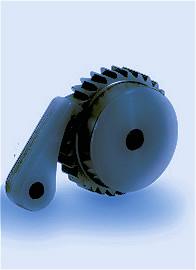
To prevent mismatch, you must first master the wheel's specifications. Here is a key parameter table to cross-reference:
| Ratchet Wheel Parameter | Impact on Pawl Selection | Measurement Tip |
|---|---|---|
| Tooth Pressure Angle (e.g., 30°, 45°) | Determines the pawl's engaging face angle. Mismatch causes jamming or slipping. | Use a precision angle gauge or profile projector. |
| Circular Pitch (Distance between teeth) | Dictates the pawl's tooth thickness and spacing. Incorrect pitch leads to partial engagement. | Measure over several teeth and calculate the average. |
| Root Fillet Radius | Influences the pawl tip design. A small radius requires a sharper, more fragile pawl tip. | Inspect with optical comparators or microscopic analysis. |
Partnering with an engineering-focused supplier like Raydafon Technology Group Co.,Limited transforms this complexity into clarity. They don't just sell parts; they analyze your ratchet wheel CAD data to recommend a pawl geometry that ensures full-flank contact, minimizing stress concentration for a smoother, stronger drive.
Decoding Pawl Geometry: The Blueprint for Engagement
A maintenance manager for a heavy equipment fleet notices premature wear on impact wrenches. The pawls are chipping, not wearing down evenly. The problem isn't material hardness but flawed geometry. The pawl's engaging tip is too pointed for the wheel's tooth space, creating a point load instead of a surface load. This common pain point stems from overlooking the pawl's own critical dimensions. The solution requires treating the pawl as a precision gear component, not just a simple lever. Key geometric features include the hook angle, tip radius, and overall length, all of which must be optimized for the specific wheel.
Selecting the correct geometry directly impacts tool performance and service life. Refer to this guide for primary geometric considerations:
| Pawl Geometric Feature | Functional Role | Selection Guideline |
|---|---|---|
| Hook (Engaging) Angle | Must complement the wheel's pressure angle for efficient force transfer. | Typically within 1-2 degrees of the wheel's pressure angle. |
| Tip Radius / Contour | Matches the wheel's root fillet to distribute stress and prevent notch effects. | Should be slightly smaller than the wheel's root fillet for clean entry/exit. |
| Pivot Hole Location | Determines the mechanical advantage and engagement depth. | Calculated based on desired swing angle and required holding force. |
This is where technical collaboration pays off. Raydafon's engineers use advanced simulation software to model the pawl-wheel interaction under dynamic loads, proposing design tweaks that standard off-the-shelf parts can't offer. They ensure the geometry isn't just correct on paper, but optimal in real-world, high-cycle applications.
Material Science: Building a Pawl That Lasts
An automotive tool distributor faces high return rates for ratchets used in tire shops. The pawls are deforming, not breaking, causing the tool to slip under the high torque of lug nuts. The material is too soft. Conversely, another batch fractures catastrophically; the material is too hard and brittle. This pain point revolves around the material's core properties: strength, toughness, and wear resistance. The solution is a material engineered for the specific application's stress type—whether it's impact, fatigue, or abrasion.
Material choice is a balance of properties. The following table compares common pawl materials:
| Material Grade | Key Properties | Best Application Fit |
|---|---|---|
| Case-Hardened Alloy Steel (e.g., 8620) | Hard, wear-resistant surface with a tough, ductile core. | General-purpose ratchets, hand tools, moderate impact. |
| Through-Hardened Tool Steel (e.g., S7, D2) | High overall hardness and compressive strength. | High-torque static applications, precision mechanisms. |
| Powder Metallurgy (P/M) Steel | Excellent for complex net-shape geometries, good wear resistance. | High-volume production, cost-sensitive designs with intricate shapes. |
Specifying the right material and heat treatment is critical. Raydafon Technology Group Co.,Limited provides more than just metal; they provide a material certification and a tailored heat treatment process. For instance, they might recommend a proprietary low-temperature carburizing process for alloy steel to achieve exceptional surface hardness without distortion, directly addressing the deformation and fracture problems faced by procurement teams.
The Procurement Checklist: Specifying with Confidence
As a procurement professional, you need a clear, actionable checklist to communicate requirements to potential suppliers like Raydafon Technology Group Co.,Limited. Vague requests lead to misquotes and unsuitable samples. The pain point is the back-and-forth communication gap between engineering needs and purchasing specs. The solution is a standardized specification sheet that covers all critical dimensions, material specs, and performance criteria.
Use this comprehensive checklist for your next RFQ to ensure you get exactly what your ratchet design requires:
| Specification Category | Details to Provide / Request | Why It Matters |
|---|---|---|
| 1. Ratchet Wheel Data | Detailed drawing or CAD file, Tooth count, Pressure angle, Pitch diameter. | Foundation for pawl design. Non-negotiable for a proper fit. |
| 2. Pawl Geometry | Hook angle, Tip contour, Overall length, Pivot hole diameter & location. | Ensures correct kinematic function and load distribution. |
| 3. Material & Treatment | Alloy designation, Hardness (surface & core), Heat treatment process, Certifications (e.g., MIL-SPEC). | Guarantees durability, fatigue life, and consistent performance. |
| 4. Performance Testing | Required cycle life, Maximum torque load, Testing standard (e.g., SAE, DIN). | Validates the pawl will perform in the end-user's application. |
Providing this level of detail empowers a technical supplier. It allows Raydafon to perform a full feasibility analysis, suggest potential cost-saving optimizations (like switching to P/M for complex shapes), and deliver a prototype that meets your performance benchmarks from the first sample, streamlining your development cycle.
Expert Q&A: Your Top Pawl Selection Questions Answered
Q1: We have an existing ratchet design. How to choose the right pawl for a specific ratchet wheel when we want to upgrade its performance?
A: Start with a failure analysis of the current pawl. Is it wearing, chipping, or deforming? This points to the needed improvement. Next, provide your supplier with the exact specifications of your ratchet wheel and the performance shortcomings. A partner like Raydafon can then reverse-engineer the ideal pawl. They might recommend a material upgrade (e.g., from a standard steel to a shock-resistant S7 tool steel) or a geometric refinement (adjusting the hook angle for more contact area). The key is to share your application's torque profile and cycle life goals so the new pawl is engineered for your specific upgrade path.
Q2: How significant is the surface finish on a pawl, and what should we specify?
A: Surface finish is critically important but often overlooked. A rough finish on the pawl's engaging face acts as a stress concentrator, initiating micro-cracks that lead to fatigue failure. It also increases friction and wear on the ratchet wheel. For most steel pawls, a surface roughness (Ra) of 0.4 to 0.8 micrometers is advisable for the critical engaging surfaces. Furthermore, specific coatings like phosphate or thin-dense chrome can be applied to improve run-in performance, reduce initial friction, and provide minor corrosion resistance. Discuss the operating environment with Raydafon's team; they can advise if a specific finish or coating will enhance durability, especially in dirty or high-moisture conditions.
Choosing the perfect pawl is a blend of precise engineering and practical application knowledge. By understanding the synergy between the ratchet wheel and the pawl's geometry and material, you move from reactive problem-solving to proactive performance specification. We encourage you to apply this guide to your current projects and challenges. Share your experiences or specific questions in the comments below—what's the most complex ratchet and pawl specification you've had to source?
For procurement specialists seeking a reliable partner who delves this deeply into component engineering, Raydafon Technology Group Co.,Limited stands ready. As a leading manufacturer and solution provider in precision transmission components, we specialize in co-engineering ratchet mechanisms for optimal performance and durability. Visit our resource hub at https://www.transmissionschina.com for more technical insights, or contact our engineering sales team directly at [email protected] to discuss your specific ratchet and pawl requirements.
Supporting Research & Further Reading
Deng, G., Nakanishi, T., & Kato, M. (2011). Analysis of stress concentration in ratchet pawl mechanisms under cyclic loading. Journal of Mechanical Design, 133(7), 071004.
Zhang, Y., & Liu, C. (2015). Optimization of tooth profile for ratchet and pawl mechanisms to improve engagement stability. Mechanism and Machine Theory, 92, 316-331.
Davis, J. R. (Ed.). (2005). Gear Materials, Properties, and Manufacture. ASM International. (Chapter on materials for pawls and small gear components).
Lee, H., & Oh, S. (2018). Effect of case hardening depth on the fatigue life of alloy steel pawls in impact wrenches. International Journal of Fatigue, 116, 583-591.
Maiti, R., & Das, N. K. (2017). A review on failure analysis of ratchet and pawl assemblies in industrial hoists. Engineering Failure Analysis, 82, 720-732.
Budynas, R. G., & Nisbett, J. K. (2015). Shigley's Mechanical Engineering Design (10th ed.). McGraw-Hill. (Sections on spur gear design principles applicable to pawl/tooth engagement).
Wang, P., Xu, L., & Li, X. (2020). Friction and wear behavior of coated vs. uncoated tool steel in simulated ratchet pawl contact. Surface and Coatings Technology, 404, 126461.
ISO 14104:2017. Gears — Surface temper etch inspection after grinding.
SAE International. (2019). SAE J429: Mechanical and Material Requirements for Externally Threaded Fasteners. (Referenced for material grades and hardness conversions).
Kato, T., & Sato, K. (2013). Development of high-strength powder metal steel for automotive transmission parts. JSAE Review, 24(3), 331-336.
Related News
- Can a gear coupling be used in high-speed applications?
- How to identify the correct gearbox model for your rotary cultivator?
- Where can I buy genuine Interpump gearboxes for PTO drive systems?
- How does gear ratio affect duster performance?
- How much does a replacement gearbox for a fertiliser spreader cost?
- What is the lifespan of a rotary mower gearbox?
Leave me a message