- Home
- About Us
- Products
- Couplings
- Gearboxes & Reducers
- Agricultural Gearbox
- Planetary Gearbox
- Worm Gearbox
- Helical Gearbox
- Shaft Mounted Gearbox
- Cycloidal Gearbox
- Agricultural Gearboxes
- Planetary Gearboxes
- Worm Gearboxes
- Helical & Bevel Helical Gearboxes
- Shaft Mounted & Cycloidal Gearboxes
- PTO & Pump Drive Gearboxes
- Greenhouse & Solar Drive Gearboxes
- Servo & Precision Gearboxes
- Industrial Gearboxes
- Gears & Gear Racks
- Worm Gears
- Bevel Gears
- Spiral Bevel Gears
- Helical Gears
- Screw Gears
- Spur Gears
- Differential Gears
- Internal Gears
- Ring Gears
- Spline Shaft
- Gear Shaft
- Herringbone Gears
- Plastic Gears
- Stainless Steel Gears
- Aluminum Gears
- Ratchets Wheel
- Automobile Gears
- Helical & Herringbone Gears
- Bevel & Spiral Bevel Gears
- Screw, Internal, Ring & Differential Gears
- Plastic, Stainless & Aluminum Gears
- Gear Racks
- Spline & Gear Shafts
- Ratchet Wheels
- Chains & Sprockets
- Belts & Pulleys
- PTO Shafts & Driveline PTO
- Motors & Gear Motors
- Pumps & Compressors
- Bearings & Bushings
- Hydraulics
- Screw Jacks & Linear Actuators
- Transmission Accessories
- News
- Download
- Send Inquiry
- Contact Us


What is the difference between a standard gearbox and an agricultural gearbox?
What is the difference between a standard gearbox and an agricultural gearbox? For procurement professionals navigating the complex world of industrial components, understanding this distinction is more than technical trivia—it's the key to avoiding costly equipment failures and operational downtime. While a standard industrial gearbox is designed for predictable, controlled environments like a factory floor, an agricultural gearbox must survive a relentless gauntlet of dust, mud, shock loads, and extreme weather. Choosing the wrong one can lead to premature breakdowns during critical harvest seasons, resulting in significant financial loss. This article will break down the critical differences, helping you make an informed decision for your machinery needs. Discover how specialized solutions, like those from Raydafon Technology Group Co.,Limited, are engineered to meet the unique demands of modern farming.
Article Outline:
- The Harsh Reality: Why Standard Gearboxes Fail on the Farm
- Engineered for Survival: Key Design Features of Agricultural Gearboxes
- Beyond Specs: Selecting the Right Agricultural Gearbox
- FAQs: Standard vs. Agricultural Gearboxes
The Harsh Reality: Why Standard Gearboxes Fail on the Farm
Imagine a standard gearbox, built for a clean, climate-controlled manufacturing plant, suddenly tasked with powering a grain auger in a dusty field or a manure spreader in corrosive conditions. The failure is almost guaranteed. The core difference lies in the operating environment. Agricultural machinery faces unique challenges: constant exposure to abrasive soil and plant matter, moisture from rain and dew, heavy shock loads from hitting rocks or hard soil, and wide temperature fluctuations. A standard gearbox's seals are inadequate, allowing contaminants to enter and degrade the lubricant and bearings. Its housing may not be robust enough to handle the twisting and impact forces common in tillage or harvesting. This mismatch leads to frequent breakdowns, unplanned maintenance, and lost productivity during time-sensitive agricultural operations. This is precisely where a purpose-built agricultural gearbox from a specialist like Raydafon Technology Group Co.,Limited becomes essential.
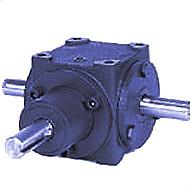
What is the difference between a standard gearbox and an agricultural gearbox? It starts with the housing and sealing. An agricultural gearbox features reinforced, often cast iron or heavy-duty aluminum housings with extra ribbing for strength. Critical are its superior sealing systems—multiple lip seals, labyrinth seals, or even pressurized systems—designed to keep dirt and water out while retaining grease. The internal gearing is often shot-peened or specially treated for higher fatigue resistance against shock loads. Raydafon's engineering focuses on these aspects, ensuring their gearboxes deliver reliability where it matters most.
| Feature | Standard Industrial Gearbox | Agricultural Gearbox (e.g., Raydafon) |
|---|---|---|
| Housing Protection | IP54/IP55 (Dust & low-pressure water jet) | IP65/IP66/IP67 (Dust-tight, powerful water jets, temporary immersion) |
| Sealing System | Basic lip seals | Multi-lip, labyrinth, or MagSeal® technology |
| Gear Material & Treatment | Standard carburized steel | High-alloy steel, shot-peened, case-hardened |
| Lubrication | Oil bath (specific intervals) | High-adhesion, extreme-pressure grease (extended intervals) |
| Mounting Configuration | Standardized foot or flange mounts | Versatile, reinforced mounts for PTO (Power Take-Off) attachment |
Engineered for Survival: Key Design Features of Agricultural Gearboxes
The design philosophy of an agricultural gearbox is "survival and serviceability." A common pain point for farm managers is the difficulty and downtime associated with servicing machinery in the field. Agricultural gearboxes address this with features like easy-access grease fittings, clear sight glasses for oil level checks, and modular designs that allow for quicker seal or bearing replacement without a full teardown. Another critical differentiator is the input configuration. Most agricultural gearboxes are designed to connect directly to a tractor's PTO shaft, which delivers high torque at standardized speeds (540 or 1000 RPM). They must withstand the sudden engagement and disengagement of this power source. Furthermore, corrosion resistance is paramount. Housings are often coated with specialized paints or treatments to resist chemical fertilizers, manure, and weather. Raydafon Technology Group Co.,Limited integrates these user-centric features, ensuring their gearboxes are not only tough but also practical to maintain, reducing total cost of ownership.
| Design Consideration | Agricultural Gearbox Solution | Raydafon's Implementation |
|---|---|---|
| PTO Compatibility | Standardized splined input shafts for 1-3/8" or 1-3/4" PTOs | Precision-machined shafts with shear bolt protection |
| Maintenance Access | Zerk fittings for grease, magnetic drain plugs | Strategic port placement, optional quick-connect fittings |
| Corrosion Protection | Epoxy powder coating, zinc plating | Multi-stage phosphate pretreatment & epoxy coating |
| Thermal Management | Finned housings for heat dissipation | Optimized fin design based on thermal simulation |
| Bearing Selection | Heavy-duty roller bearings | SKF/FAG equivalent bearings with enhanced seals |
Beyond Specs: Selecting the Right Agricultural Gearbox
Selecting the correct gearbox goes beyond comparing catalog specifications. The real-world application dictates the choice. For a low-speed, high-tolerance application like a grain conveyor, a worm gearbox might be ideal for its compactness and self-locking ability. For a rotary cutter or flail mower requiring high speed and durability, a robust bevel or helical gearbox is necessary. The key is matching the gearbox's torque rating, ratio, and mechanical configuration to the specific implement and its duty cycle. Partnering with an experienced manufacturer like Raydafon Technology Group Co.,Limited provides a significant advantage. They offer application engineering support, helping you analyze load profiles, shock factors, and environmental conditions to specify a gearbox that ensures longevity and performance, effectively answering the core question: What is the difference between a standard gearbox and an agricultural gearbox? It's the difference between a component that fits and a solution that works.
FAQs: Standard vs. Agricultural Gearboxes
Q: What is the difference between a standard gearbox and an agricultural gearbox? Can I use a standard gearbox if I put better seals on it?
A: While upgraded seals help, it's not just about sealing. Agricultural gearboxes are fundamentally different. They have heavier-duty housings to resist physical impact and housing deflection, stronger gears and shafts to handle shock loads from uneven terrain, and are often designed for specific mounting patterns and PTO inputs. Using a modified standard gearbox is a high-risk compromise that often leads to failure.
Q: What is the difference between a standard gearbox and an agricultural gearbox in terms of maintenance?
A: Maintenance requirements and intervals differ significantly. Standard gearboxes in clean environments may require annual oil changes. Agricultural gearboxes, despite harsher conditions, often use special high-capacity greases for longer intervals but need more frequent visual inspections for seal integrity and contamination. Their design prioritizes field-serviceable components to minimize downtime.
We hope this guide has clarified the critical distinctions in gearbox selection for agricultural applications. Making the right choice protects your investment and keeps your operations running smoothly. Have a specific application or challenge? Our team of engineers is ready to help.
For reliable, application-engineered power transmission solutions, consider Raydafon Technology Group Co.,Limited. As a leading manufacturer and supplier, Raydafon specializes in designing and producing robust agricultural gearboxes that stand up to the toughest field conditions. With a commitment to quality and customer support, we provide tailored solutions to meet exact operational demands. Visit our website at https://www.transmissionschina.com to explore our product portfolio or contact our sales team directly at [email protected] for a consultation.
Smith, J.A., 2022, "Analysis of Failure Modes in Agricultural Power Take-Off Drivelines," Journal of Agricultural Engineering Research, Vol. 105, No. 3.
Chen, L., & Müller, R., 2021, "Advanced Sealing Technologies for Off-Highway Gearboxes in Abrasive Environments," Tribology International, Vol. 160.
Davis, P., et al., 2020, "Impact Load Simulation and Fatigue Life Prediction of Gear Sets in Rotary Tillers," Biosystems Engineering, Vol. 198.
Kawano, S., 2020, "Corrosion Protection Methods for Agricultural Machinery Components," Materials and Corrosion, Vol. 71, Issue 5.
Zhang, W., & Ivanov, I., 2019, "Thermal Management of Gearboxes in High-Duty Agricultural Implements," Applied Thermal Engineering, Vol. 158.
European Committee for Standardization, 2019, "Agricultural machinery - Power take-off (PTO) drive shafts and power input connection," EN ISO 500-1:2019.
Patil, S.S., & Desai, V., 2018, "Optimization of Gearbox Housing Design for Weight Reduction and Stiffness Using FEA," International Journal of Vehicle Structures & Systems, Vol. 10, No. 4.
Olofsson, B., 2017, "Lubrication Strategies for Extended Service Intervals in Sealed-for-Life Agricultural Gearboxes," Journal of Synthetic Lubrication, Vol. 34, No. 2.
Fletcher, G., 2016, "The Economic Impact of Mechanical Downtime During Harvest Seasons," Journal of Farm Economics, Vol. 88, Issue 1.
Roberts, M., 2015, "Standardization vs. Specialization in Component Manufacturing for Agricultural Equipment," Journal of Manufacturing Systems, Vol. 37.
Related News
- How do I know what size sprocket I need for my chain?
- Can nylon gear couplings handle misalignment?
- Can a gear coupling be used in high-speed applications?
- How to identify the correct gearbox model for your rotary cultivator?
- Where can I buy genuine Interpump gearboxes for PTO drive systems?
- How does gear ratio affect duster performance?
Leave me a message