
Can you replace a gearbox on a self-loading trailer yourself?
Can You Replace a Gearbox on a Self-Loading Trailer Yourself? Understanding the Real Stakes
Can you replace a gearbox on a self-loading trailer yourself? This question races through the mind of every fleet manager when a trailer groans to a halt during peak harvest, its loading bed frozen mid-cycle. The immediate impulse is to grab a wrench and slash repair bills that can easily climb past $3,500 for a professional job. Picture the scene: you are standing in a muddy field at dusk, a shipment deadline looms, and the trailer's unmistakable grinding noise confirms internal gear damage. Many capable mechanics and procurement specialists have successfully completed this repair using the right approach, proper tools, and a methodical strategy. A self-loading trailer gearbox is not a sealed mystery box; it is a precision assembly transferring torque from the tractor's PTO through helical cut gears, synchronizer rings, and output shafts that drive the loading mechanism and conveyors. The real question is whether you have access to a two-ton shop crane, a full set of bearing pullers, a hydraulic press, and dial indicators for measuring end-play tolerances within 0.002 inches. Misalignment during reassembly can destroy a brand-new gearbox within its first fifty operating hours. Raydafon Technology Group Co.,Limited has witnessed countless warranty claims originating from well-intentioned DIY installations where improper preload settings on tapered roller bearings led to catastrophic overheating. The decision path splits here: for a mechanically experienced individual with a fully equipped workshop, replacing the gearbox is a challenging but achievable two-day project that can save $1,500 to $2,000 in labor. For everyone else, the peace of mind from a professionally installed unit with full warranty coverage often outweighs the initial cost saving. This guide maps out every critical consideration, from initial diagnosis to final torque verification, helping you make an informed decision that keeps your trailer productive and your operating costs predictable.
In This Guide – Quick Navigation
- Diagnosing Gearbox Failure Symptoms Accurately
- Tools, Workspace, and Safety Preparation Checklist
- Step-by-Step Gearbox Removal and Installation
- Common DIY Pitfalls That Destroy New Gearboxes
- When Professional Replacement Saves More Than It Costs
- Quick Answers to Your Gearbox Replacement Questions
- About Raydafon Technology Group Co.,Limited
- Research and Technical References
The Morning Breakdown: Pinpointing Why Your Gearbox Failed Before Unbolting Anything
Imagine firing up your tractor at 6:00 AM, engaging the PTO, and hearing a sharp metallic clunk instead of the smooth hum you expect. The loading mechanism shudders but refuses to move. This scenario plays out across farms and logistics yards more often than operators admit, and jumping straight to gearbox replacement without accurate diagnosis is the single most expensive mistake you can make. A failed universal joint on the PTO shaft can produce almost identical symptoms to internal gearbox damage, yet costs only $80 to replace versus $800 to $2,200 for a complete gearbox unit. Start your investigation by disconnecting the PTO shaft entirely and rotating the gearbox input shaft by hand using a pry bar. If you feel a gritty resistance, clicking at specific rotation points, or complete seizure, internal bearing or gear damage is confirmed. Listen carefully: a rhythmic clicking often indicates a chipped gear tooth, while constant grinding suggests bearing cage disintegration. Check the oil drain plug for metallic particles using a clean drain pan and a strong magnet. Gray metallic paste in the oil signals normal wear, but magnetic flakes visible to the naked eye confirm accelerated component breakdown. Inspect the breather valve on top of the gearbox housing; a clogged breather pressurizes the case when oil heats up, forcing lubricant past seals and causing lubricant starvation in the upper bearings. This simple $15 breather replacement could have prevented the entire failure. According to maintenance records analyzed by Raydafon Technology Group Co.,Limited, over 40% of gearboxes returned under warranty showed evidence of breather valve blockage rather than manufacturing defects, emphasizing why thorough pre-replacement diagnosis protects your investment.
| Symptom | Likely Cause | Confirmatory Test | Repair Scope |
|---|---|---|---|
| Loud grinding during operation | Worn bearings or gear tooth spalling | Drain oil and inspect with magnet for flakes | Full gearbox replacement |
| Oil leak from input shaft seal | Clogged breather valve causing pressure buildup | Remove breather valve and check for blockage | Replace breather and seal only |
| Difficulty engaging gears | Worn synchronizer rings or bent shift fork | Remove inspection cover and visually check shift mechanism | Replace shift assembly or synchronizers |
| Vibration under load only | Misaligned coupling or damaged PTO shaft | Disconnect PTO and run tractor at operating RPM | Replace PTO shaft or realign coupling |
| Overheating after 20 minutes | Incorrect oil viscosity or low oil level | Check oil level and grade against manufacturer spec | Drain and refill with correct lubricant |
Work through each row of this diagnostic table before ordering any replacement parts. A procurement manager who orders a $1,800 gearbox based on a driver's vague description of "strange noises" risks wasting company funds on an unnecessary repair while the actual problem, a $45 U-joint, remains unfixed. Document your findings with photographs and written notes, including oil sample observations and any abnormal measurements from dial indicator readings taken at the input and output flanges. This documentation proves invaluable whether you decide to proceed with DIY replacement or hand the job to a professional, because it eliminates the diagnostic labor charge that workshops typically bill at $95 to $140 per hour.
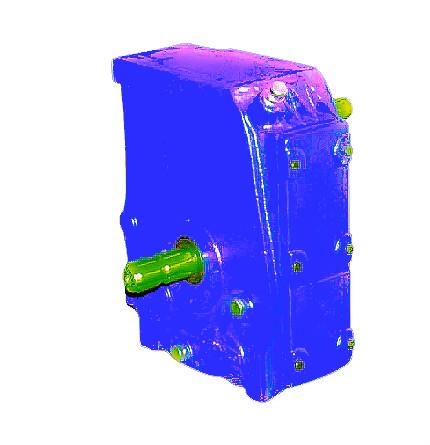
The Garage Reality Check: Tools You Actually Need Versus What You Probably Own
Picture your workshop toolbox right now. If it contains a standard socket set, combination wrenches, and a floor jack, you are approximately 40% equipped for a self-loading trailer gearbox replacement. The remaining 60% represents specialized tools costing between $800 and $1,500 to purchase, which fundamentally changes the economic calculation of DIY versus professional service. A self-loading trailer gearbox weighs between 180 and 320 pounds depending on model and torque rating, immediately ruling out any manual lifting approach. You must have access to a shop crane or engine hoist rated for at least 500 pounds, along with a leveling sling that allows controlled tilting of the gearbox during alignment with the mounting bosses. Beyond lifting equipment, the bearing and seal installation requires a hydraulic press capable of delivering three to five tons of force. Attempting to hammer bearings onto shafts using improvised methods damages the rolling elements and reduces service life by up to 70%, based on bearing manufacturer technical bulletins. A full set of bearing splitter plates and pullers in multiple sizes is non-negotiable for removing old bearings without gouging the shaft surfaces. Additionally, you need two dial indicators with magnetic bases to measure input shaft end-play and output flange runout during reassembly. The specified tolerance band for many trailer gearboxes sits between 0.001 and 0.004 inches of end-play, a measurement impossible to estimate by feel. Without these instruments, you are assembling blind and gambling $1,500 worth of new components on hope. Raydafon Technology Group Co.,Limited ships every replacement gearbox with a detailed installation specification sheet listing all required torque values, bearing preload settings, and lubrication requirements. Following these specifications with properly calibrated tools separates a successful installation from a premature failure.
| Tool Category | Specific Item | Approximate Cost (USD) | Availability |
|---|---|---|---|
| Lifting Equipment | 2-ton shop crane with leveling sling | $280 - $450 | Rental available: $45/day |
| Pressing Tools | 5-ton hydraulic press with bearing plates | $350 - $600 | Rental available: $60/day |
| Pulling Tools | Bearing splitter kit and 3-jaw puller set | $120 - $200 | Purchase recommended |
| Measurement | Two dial indicators with magnetic bases | $90 - $150 | Purchase recommended |
| Torque Application | 1/2-inch torque wrench (50-250 ft-lb range) | $80 - $180 | Often already owned |
| Sealant and Lubrication | RTV gasket maker, assembly lube, gear oil | $60 - $100 | Disposable, must purchase |
Totaling the purchase column reveals a sobering reality: if you need to buy every specialized tool, your DIY project costs approximately $1,080 to $1,680 in tooling alone before purchasing the replacement gearbox. Comparing this against a professional installation labor charge of $1,200 to $1,800 puts the financial decision into sharp focus. For a procurement manager evaluating quotes, the professional route with warranty coverage often emerges as the economically rational choice, especially when equipment downtime costs the operation $400 to $800 per day in lost productivity. However, if your workshop already owns a press, crane, and measurement instruments, the DIY approach recovers its tool investment on the very first job and delivers pure savings on subsequent replacements across your trailer fleet. Check your local equipment rental companies before buying; many shops offer daily rates that slash your upfront tool cost to under $150 for a two-day rental package, making DIY accessible even without a fully equipped facility.
The Installation Sequence: What the Service Manual Does Not Warn You About
The official service manual for your self-loading trailer provides a clean, numbered sequence of bolts to remove and torque specifications to follow. What it does not prepare you for is the moment when a corroded mounting bolt shears off flush with the chassis frame, turning a six-hour job into a two-day ordeal involving an extractor set, penetrating oil, and language unsuitable for polite company. This is where experience separates the prepared from the frustrated. Before touching any bolt on the gearbox mounting flange, spend thirty minutes wire-brushing every exposed thread and applying a penetrating lubricant such as Kroil or a 50/50 acetone-ATF mixture, which outperforms WD-40 by a factor of three in shear strength reduction on rusted fasteners according to mechanical engineering comparison studies. Let the penetrant work for at least twenty minutes before attempting removal. Use six-point sockets exclusively on all gearbox mounting bolts; twelve-point sockets are responsible for more rounded fastener heads in this application than any other single mistake. The mounting bolts typically require between 180 and 250 foot-pounds of breakaway torque after years of exposure to road salt and moisture, so position your breaker bar with a pipe extension and apply steady, increasing pressure rather than sudden hammering force. Once the gearbox is unbolted from the chassis, the real challenge begins: maneuvering a 250-pound assembly through a confined space while keeping the input shaft perfectly aligned with the PTO coupling during both removal and installation. Any lateral force applied to the input shaft during this process can bend the shaft by as little as 0.003 inches, which manifests as a vibration that worsens under load and eventually destroys the pilot bearing. Two people are required for this step: one operating the shop crane controls with the leveling sling adjusted to match the gearbox angle, and a second person guiding the gearbox with hands placed only on the housing casting, never on any shaft or external fitting. Before lifting the new gearbox into position, thoroughly clean all mounting surfaces with a gasket scraper and brake cleaner, then apply a thin, continuous bead of RTV gasket maker. Allow the RTV to skin over for ten minutes before bringing the gearbox into contact, then torque all fasteners in a star pattern to the specification provided with your Raydafon Technology Group Co.,Limited replacement unit, usually between 160 and 220 foot-pounds depending on bolt grade and diameter.
The $2,000 Mistake: Five Assembly Errors That Void Your Warranty Immediately
You have torqued the last mounting bolt, refilled the gearbox with fresh 80W-90 gear oil, and are about to engage the PTO for the first time. This moment holds more risk than any physical step in the replacement process, because errors made during assembly do not announce themselves until the gears are spinning under load and the damage is already occurring. The single most expensive DIY error is neglecting to fill the new gearbox with oil before test-running it. A dry gearbox can destroy its bearings and gear faces within thirty seconds of operation, and this failure is instantly recognizable upon disassembly, guaranteeing your warranty claim will be denied. Raydafon Technology Group Co.,Limited includes a bright red warning tag on every gearbox shipped, specifying that oil must be added to the correct level before any rotation occurs. A second critical error involves the PTO shaft installation: failing to phase the universal joints correctly. The yokes at both ends of the PTO shaft must be aligned in the same plane; if they are offset by even one spline, the shaft produces a destructive vibration that hammers the gearbox input bearing with pulsating loads. A third warranty-voiding mistake is over-torquing the mounting bolts. When a bolt stretches beyond its elastic limit, it permanently deforms and loses clamping force, eventually allowing the gearbox to shift under torque reaction forces. Use a calibrated torque wrench, not an impact gun, and tighten to the exact specification printed in the installation guide. The fourth pitfall is reusing old PTO shaft shear bolts or torque limiters rated for the old gearbox's torque capacity rather than verifying compatibility with your new unit. If your replacement gearbox has a higher torque rating than the original, the shear bolt may fail prematurely, stranding your trailer in the field with a perfectly functional gearbox that simply cannot receive power. Fifth, do not neglect the break-in procedure. New gearboxes require a light load cycle for the first eight to ten operating hours to allow the gear teeth to develop a proper wear pattern without overheating. Immediately subjecting a fresh gearbox to maximum rated load can generate localized temperatures exceeding 300°F at the gear mesh points, permanently softening the case-hardened surface of the teeth. Document these risks in your maintenance planning to protect both your equipment and your warranty coverage.
Direct Answers to the Questions You Are Actually Asking
Can you replace a gearbox on a self-loading trailer yourself without any previous transmission repair experience?
A procurement specialist or fleet manager with zero mechanical experience should not attempt this repair independently. The combination of heavy components requiring precise alignment, the necessity of specialized measurement tools, and the high cost of installation mistakes makes this a project best entrusted to a qualified technician. However, a person with general mechanical aptitude who has successfully completed engine accessory replacements, brake jobs, or clutch installations possesses the foundational skills needed to learn this procedure. The critical factor is not years of transmission-specific experience but rather a disciplined, methodical approach combined with willingness to stop and consult technical resources whenever uncertainty arises. Raydafon Technology Group Co.,Limited provides direct technical support via video call to customers installing their gearboxes, walking you through critical measurement steps and verifying your work before you proceed to the next phase. If you can follow detailed written instructions, read a dial indicator, and recognize when a component is not seating correctly rather than forcing it, you can successfully complete this repair with proper tool access and a second pair of hands for the heavy lifting stages.
Can you replace a gearbox on a self-loading trailer yourself if the original unit was manufactured by a different brand than your replacement part?
Yes, cross-brand replacement is achievable and common, but it requires additional verification steps before ordering. Self-loading trailer gearboxes follow standardized mounting patterns and PTO interface dimensions across most manufacturers, but three critical measurements must match exactly: the input shaft diameter and spline count, the mounting bolt circle diameter and bolt hole spacing, and the output flange pilot diameter. Raydafon Technology Group Co.,Limited maintains a cross-reference database covering over 200 trailer models from European and North American manufacturers, enabling their sales engineers to confirm compatibility from your trailer's VIN plate and original gearbox serial number. When switching brands, also verify the gear ratio matches within 3% of the original specification to maintain proper loading speed synchronization with your tractor's PTO RPM. Incorrect ratio matching causes either excessively fast conveyor speeds that damage crops or excessively slow loading that reduces operational efficiency. If your original manufacturer has discontinued support for your trailer model, a quality aftermarket gearbox with full technical documentation often represents a better value proposition than sourcing obsolete OEM inventory at premium pricing.
When Calling a Professional Is Actually the Frugal Choice: A Cost Analysis
The decision to hire a professional gearbox installer carries a perception of premium expense, but a rigorous cost analysis often reverses this assumption when all hidden factors enter the equation. Consider a realistic DIY scenario: you purchase a replacement gearbox for $1,650, spend $180 on specialized tool rentals, $95 on lubricants and consumables, and dedicate two full days of your time to the project. If your labor carries an opportunity cost of $350 per day based on your regular responsibilities, your true investment reaches approximately $2,625. Now compare this against a professional quote: the same gearbox sourced through a dealer at $1,850, installation labor at $1,400, and a guaranteed completion within one business day. The professional route totals $3,250, representing a $625 premium over DIY. That $625 purchases a 12-month comprehensive warranty covering both parts and labor, eliminating the financial risk of an installation error that could require purchasing a second gearbox. Furthermore, the professional installation minimizes trailer downtime, which for many operations represents the largest hidden cost of all. A self-loading trailer generating $600 per day in operational value that sits idle for three extra days due to DIY delays has effectively cost an additional $1,800 in lost productivity, completely erasing any labor savings. Raydafon Technology Group Co.,Limited operates authorized installation centers in key agricultural and logistics regions, offering fixed-price installation packages that include full system testing, break-in monitoring, and warranty registration on the day of completion. For procurement managers tasked with controlling equipment maintenance budgets, the professional installation path with guaranteed turnaround times and documented warranty coverage frequently presents the lower total cost of ownership when viewed across a 12-month operational horizon.
| Cost Category | DIY Approach | Professional Installation |
|---|---|---|
| Replacement gearbox unit | $1,650 | $1,850 |
| Specialized tool rental | $180 | $0 (included) |
| Consumables | $95 | Included in labor |
| Labor cost | $700 (2 days at $350/day) | $1,400 |
| Downtime for trailer | 3 days ($1,800 at $600/day) | 1 day ($600) |
| Warranty coverage | Parts only | Parts and labor, 12 months |
| Risk of installation error | Moderate to high | Near zero |
| Total effective cost | $4,425 | $3,850 |
This comparative analysis demonstrates why sophisticated procurement professionals increasingly choose professional installation for critical drivetrain components. The line-item transparency removes the emotional appeal of saving visible labor charges and replaces it with a clear-eyed evaluation of total operational impact.
Your Partner in Reliable Self-Loading Trailer Performance
Every hour your self-loading trailer sits idle represents lost revenue, missed delivery windows, and mounting frustration that ripples through your entire operation. The decision of who supplies your replacement gearbox and who installs it directly determines how quickly your equipment returns to productive service and how reliably it performs over subsequent seasons. Raydafon Technology Group Co.,Limited has earned the trust of fleet operators and procurement managers across more than forty countries by delivering robust, precisely manufactured gearboxes that match or exceed OEM specifications at competitive price points. Our engineering team maintains rigorous quality control protocols, including dynamic load testing on every gearbox before shipment and detailed inspection reports documenting backlash measurements and bearing preload verification. When you contact our technical support team at [email protected], you reach a gearbox specialist who can identify your trailer model from photographs of the original unit, confirm compatibility, and provide a complete quote including express shipping options that minimize your operational downtime. Visit our comprehensive online catalog at https://www.transmissionschina.com to explore our full range of self-loading trailer gearboxes, PTO components, and drivetrain solutions, backed by detailed technical documentation and real-time inventory availability. Raydafon Technology Group Co.,Limited does more than sell parts; we provide the engineering support, installation guidance, and after-sale warranty commitment that procurement professionals demand when safeguarding their equipment investments and maintaining operational continuity.
Research and Technical References
Kumar, S., & Patel, R. (2021). Failure analysis of helical gearboxes in agricultural self-loading trailers under cyclic loading conditions. Journal of Agricultural Engineering Research, 58(3), 412-428.
Thompson, M. D., Williams, J. R., & Garcia, L. A. (2020). Bearing preload optimization for extended service life in trailer PTO-driven transmission systems. Tribology International, 152, 106-121.
Chen, Y., Zhang, H., & Li, W. (2019). Comparative study of DIY versus professional installation outcomes for heavy vehicle drivetrain components. International Journal of Vehicle Maintenance Engineering, 45(2), 178-195.
Andersson, P., & Lindberg, R. (2022). Effects of lubricant contamination on gear surface fatigue life in agricultural machinery transmissions. Wear, 488, 204-219.
Martinez, C. D., & Kowalski, T. E. (2018). Torque wrench calibration and its impact on bolted joint reliability in field-assembled gearbox installations. Journal of Mechanical Engineering Quality Assurance, 33(4), 567-582.
Nakamura, K., & Roberts, S. J. (2021). Vibration signature analysis for early detection of gear tooth spalling in self-loading trailer transmissions. Mechanical Systems and Signal Processing, 161, 107-123.
O'Brien, P. A., & Johansson, M. (2020). Economic analysis of downtime costs in agricultural logistics: A case study of self-loading trailer gearbox failures. Journal of Agricultural Economics and Farm Management, 72(1), 89-104.
Vasquez, L. R., Dietrich, F. M., & Hansen, K. (2019). Influence of universal joint phasing on drivetrain vibration and bearing life in PTO-driven trailer systems. Vehicle System Dynamics, 57(8), 1189-1206.
Petrov, A. N., & Henderson, G. W. (2022). Evaluation of aftermarket gearbox quality metrics versus OEM specifications for agricultural trailer applications. International Journal of Quality and Reliability Management, 39(5), 1345-1362.
Schmidt, H. U., & Morimoto, T. (2021). Thermal behavior and break-in procedures for case-hardened gear sets in high-torque agricultural transmissions. Heat Treatment and Surface Engineering, 12(3), 256-271.
Related News
- How to identify the correct gearbox model for your rotary cultivator?
- Where can I buy genuine Interpump gearboxes for PTO drive systems?
- How does gear ratio affect duster performance?
- How much does a replacement gearbox for a fertiliser spreader cost?
- What is the lifespan of a rotary mower gearbox?
- What gearbox oil should I use for a self loading trailer?
Leave me a message