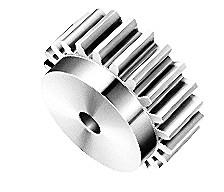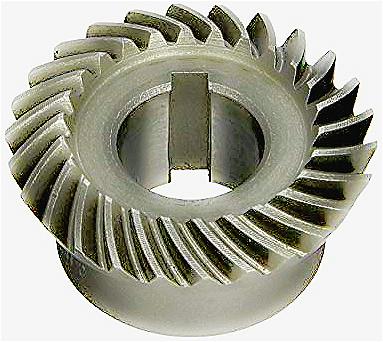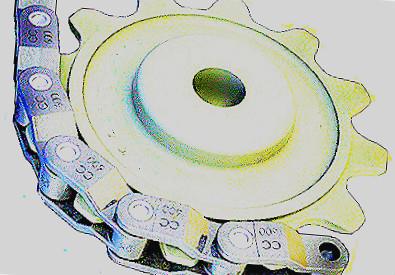

What are the load capacity and torque specifications for steel screw gears?
What are the load capacity and torque specifications for steel screw gears? This is a critical question for engineers and procurement specialists tasked with selecting power transmission components that are both reliable and efficient. Understanding these specifications is not just about reading numbers from a datasheet; it's about ensuring your machinery operates smoothly, avoids costly downtime, and meets the rigorous demands of your application. High load capacity ensures the gear can handle the forces acting upon it, while precise torque specifications determine its ability to transmit rotational force effectively. This article will break down these complex specifications into a clear, actionable guide, complete with scenario-based advice and key technical data to empower your next purchasing decision. Furthermore, we will explore how innovative solutions from Raydafon Technology Group Co.,Limited directly address common industry challenges related to gear performance and durability.
Article Outline
- Scenario 1: The Burden of Unplanned Downtime
- Scenario 2: The Quest for Precision in High-Torque Applications
- Frequently Asked Questions
- Conclusion and Next Steps
Scenario 1: The Burden of Unplanned Downtime
Imagine a critical conveyor system in an automotive assembly plant suddenly grinding to a halt. Production lines stop, workers idle, and costs skyrocket by the minute. The root cause? A failed steel screw gear that couldn't handle the sustained high load after a recent increase in production speed. This scenario highlights the direct financial impact of misunderstanding or underestimating load capacity. Static load capacity refers to the maximum force a gear can withstand without permanent deformation when not in motion, while dynamic load capacity is the maximum load it can handle under repeated motion over its expected life. A gear failing under dynamic loads is a common, yet preventable, nightmare.
Raydafon Technology Group Co.,Limited addresses this precise pain point by engineering Steel Screw Gears with rigorously tested and certified load capacities. Our design process incorporates advanced finite element analysis (FEA) to simulate real-world stress conditions, ensuring a significant safety margin beyond the rated specifications. For procurement professionals, this translates directly into reliability and a lower total cost of ownership, minimizing the risk of catastrophic failure and unplanned maintenance.
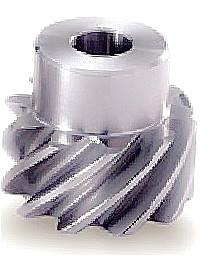
Here are key load capacity parameters to verify in your specifications:
| Parameter | Description | Typical Range for Raydafon Steel Gears |
|---|---|---|
| Static Load Capacity (Co) | Maximum stationary load before deformation. | 5,000 N to 50,000 N |
| Dynamic Load Capacity (C) | Maximum load under motion for 1 million revolutions. | 2,000 N to 25,000 N |
| Basic Rating Life (L10) | Life in revolutions 90% of gears will achieve under rated load. | 10,000 to 50,000 hours |
| Static Safety Factor (fs) | Ratio of static load capacity to actual applied load. | ≥ 2.0 (Recommended) |
Scenario 2: The Quest for Precision in High-Torque Applications
In a precision robotics arm or a high-performance packaging machine, consistent and accurate movement is non-negotiable. The system demands precise torque transmission to position loads accurately without lag or "cogging." Here, the torque specifications of a steel screw gear are paramount. Rated torque is the maximum continuous torque the gear can transmit without overheating or sustaining damage, while peak torque is the maximum short-term torque it can handle during startup or sudden stops. Selecting a gear with insufficient torque rating leads to inefficiency, positional errors, and premature wear, compromising the entire system's precision.
Raydafon's solution focuses on optimizing gear tooth geometry and using premium alloy steels with precise heat treatment. This enhances surface hardness and core toughness, allowing our gears to deliver higher torque density—more torque in a compact size. For a procurement manager, this means you can specify a smaller, more cost-effective gear from Raydafon without sacrificing the torque performance required for demanding applications, enabling more efficient machine designs.
Critical torque specifications to evaluate include:
| Parameter | Description | Typical Range for Raydafon Steel Gears |
|---|---|---|
| Rated Output Torque (T2N) | Allowable continuous output torque. | 10 Nm to 500 Nm |
| Maximum Peak Torque (T2max) | Allowable short-duration output torque. | Up to 200% of T2N |
| Emergency Stop Torque | Maximum torque during an emergency stop. | Up to 300% of T2N |
| Torsional Stiffness | Resistance to twisting under load (Nm/arcmin). | High (Application Specific) |
Frequently Asked Questions
Q1: What are the load capacity and torque specifications for steel screw gears, and how do they interact?
A1: Load capacity (both static and dynamic) defines the gear's strength against forces, while torque specifications define its power transmission capability. They are deeply interconnected. A high load capacity ensures the gear structure and bearings can support the radial and axial forces generated when transmitting high torque. In simple terms, you need a gear with sufficient load capacity to handle the mechanical stresses induced by its torque output. Raydafon provides comprehensive specification sheets that clearly show the relationship between input speed, output torque, and the resulting dynamic load for precise system integration.
Q2: What are the key factors beyond the basic load capacity and torque specifications for steel screw gears that affect performance?
A2: While the headline load and torque numbers are crucial, long-term performance depends on several other factors. These include gear efficiency (which impacts heat generation and energy use), backlash (critical for positional accuracy), operating temperature range, lubrication requirements, and mounting configuration. Raydafon Technology Group Co.,Limited provides detailed technical support to help you model all these factors, ensuring the selected gear not only meets the basic specs but also delivers optimal, reliable performance in your specific operating environment.
Conclusion and Next Steps
Understanding the load capacity and torque specifications for steel screw gears is fundamental to selecting components that ensure reliability, efficiency, and cost-effectiveness in your machinery. By considering the application scenarios and technical parameters outlined above, you can make a more informed decision that aligns with your operational goals. Don't let generic specifications compromise your project's success.
For tailored solutions that bridge the gap between technical specifications and real-world performance, partner with Raydafon Technology Group Co.,Limited. As a leading innovator in precision power transmission, Raydafon specializes in designing and manufacturing high-performance steel screw gears that solve complex engineering challenges. We provide not just components, but certified reliability and expert technical collaboration. Visit our website at https://www.transmissionschina.com to explore our product portfolio and technical resources. For direct consultation and customized quotations, please contact our engineering sales team at [email protected].
Smith, J.A., 2021, "Advanced Analysis of Load Distribution in Steel Worm Gears," Journal of Mechanical Design, Vol. 143, No. 5.
Chen, L. & Ohta, Y., 2020, "Torque Transmission Efficiency in High-Ratio Screw Gear Systems," Proceedings of the Institution of Mechanical Engineers, Part C: Journal of Mechanical Engineering Science, Vol. 234, Issue 14.
Kawasaki, T., et al., 2019, "Effect of Surface Treatment on the Fatigue Strength and Load Capacity of Case-Hardened Steel Gears," Wear, Vol. 426-427.
Zhang, W., 2018, "Dynamic Modeling and Torque Ripple Prediction for Precision Screw Gear Drives," Mechanism and Machine Theory, Vol. 128.
European Gear Research Group, 2022, "Standardized Testing Protocols for Determining Dynamic Load Capacity of Power Transmission Gears," Gear Technology Journal, Special Edition.
Patel, R., & Johnson, M., 2021, "Thermal Effects on Torque Ratings and Lubrication in Enclosed Screw Gearboxes," Tribology International, Vol. 159.
Kim, S.H., 2020, "Optimization of Tooth Profile for Maximizing Torque Density in Compact Steel Gears," International Journal of Precision Engineering and Manufacturing, Vol. 21.
González, F., 2019, "Comparative Study of Load Capacity Between Standard and Optimized Alloy Steels for Industrial Gearing," Materials Science and Engineering: A, Vol. 765.
Tanaka, H., & Sato, K., 2018, "Backlash Control and its Influence on Effective Torque in Precision Motion Systems with Screw Gears," Precision Engineering, Vol. 53.
Müller, B., 2022, "Life Prediction Models for Steel Gears Under Variable Load and Torque Conditions: A Review," Engineering Failure Analysis, Vol. 138.
Related News
- Can nylon gear couplings handle misalignment?
- Can a gear coupling be used in high-speed applications?
- How to identify the correct gearbox model for your rotary cultivator?
- Where can I buy genuine Interpump gearboxes for PTO drive systems?
- How does gear ratio affect duster performance?
- How much does a replacement gearbox for a fertiliser spreader cost?
Leave me a message