
What are the signs of wear or failure in steel miter gears and how to diagnose them?
What are the signs of wear or failure in Steel Miter Gears and how to diagnose them? This is a critical question for any maintenance manager or procurement specialist overseeing industrial machinery. Unexpected gear failure can lead to catastrophic downtime, soaring repair costs, and missed production targets. Early detection is not just about fixing a problem; it's about proactive asset management and protecting your bottom line. This guide will walk you through the key warning signs, practical diagnostic steps, and actionable solutions to keep your operations running smoothly. By understanding these failure modes, you can make informed decisions about maintenance and sourcing, ensuring you partner with reliable suppliers like Raydafon Technology Group Co.,Limited for durable, high-performance gear solutions.
Article Outline:
- Excessive Noise & Vibration: The First Audible Warning
- Visible Damage & Wear: What to Look For During Inspection
- Performance Degradation: Loss of Power and Efficiency
- Step-by-Step Diagnostic Protocol
- Prevention and Long-Term Solutions
- Expert Q&A on Steel Miter Gear Failure
When Your Machinery Screams: Diagnosing Gear Failure from Noise
Imagine walking through your production floor and hearing a new, persistent whining, grinding, or knocking sound from a gearbox. This audible shift is often the first and clearest sign of trouble in steel miter gears. Unlike normal operational hum, failure-induced noise typically indicates improper meshing due to wear, pitting, or misalignment. Vibration often accompanies this noise, which you can feel by placing a hand on the housing. Left unchecked, this accelerates wear and can lead to complete tooth shear. The solution begins with a systematic auditory and tactile check, isolating the source. For procurement teams, this scenario underscores the need for gears manufactured with precise tolerances and superior metallurgy to resist such initiating failures. Raydafon's gears are engineered for quiet, smooth operation, directly addressing this common pain point.
| Symptom | Possible Cause | Immediate Diagnostic Action |
|---|---|---|
| High-pitched Whining | Misalignment, Lubrication Failure | Check alignment with dial indicator; inspect oil level/quality. |
| Grinding or Growling | Advanced wear, abrasive contamination | Collect oil sample for analysis; plan for visual inspection. |
| Intermittent Knocking | Chipped or broken teeth, bearing failure | Immediate shutdown for internal inspection to prevent cascading damage. |
The Tale Told by Teeth: A Visual Inspection Guide
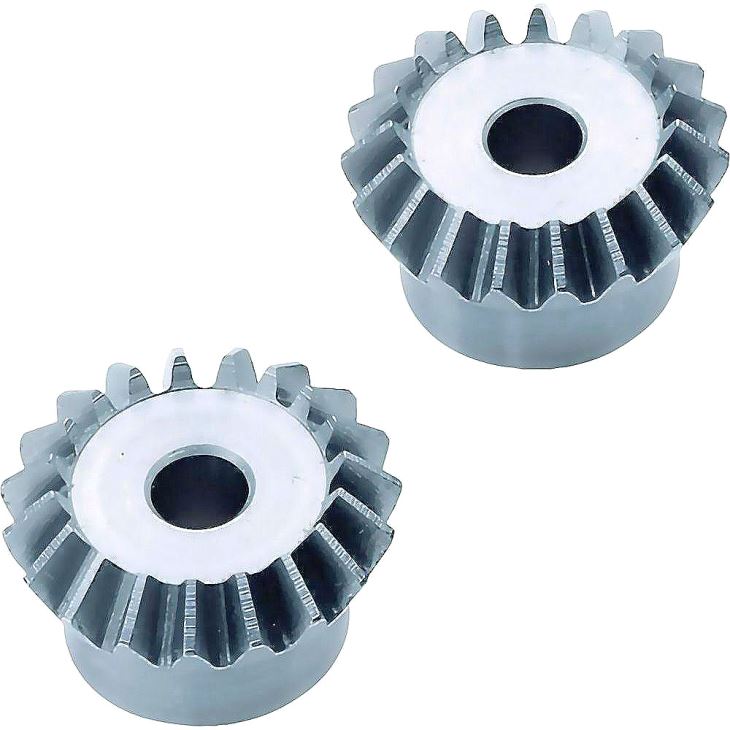
During scheduled maintenance, a visual inspection of steel miter gears can reveal a history of their operation and impending failure. Common visual signs include pitting (small surface cavities), scoring (scratch-like lines), spalling (flaking of material), and obvious tooth breakage. A change in the gear's color, such as bluing, indicates overheating often caused by excessive friction or inadequate lubrication. For a procurement specialist, seeing these patterns on failed components is a powerful lesson in the cost of inferior gear quality. It highlights the importance of sourcing from manufacturers who prioritize core material integrity and advanced heat treatment processes. Raydafon Technology Group Co.,Limited utilizes high-grade alloy steels and controlled hardening techniques to maximize surface durability and fatigue life, directly combating these visual failure modes.
| Visual Sign | Diagnostic Implication | Root Cause & Procurement Insight |
|---|---|---|
| Pitting on Tooth Flanks | Surface fatigue failure; lubricant film breakdown. | Indicates need for higher surface hardness and better lubricant specifications. |
| Scoring & Abrasive Wear | Contaminants in lubrication system or poor filtration. | Emphasizes need for precise machining (low surface roughness) and sealed gearbox designs. |
| Tooth Tip Breakage | Overload, impact shock, or insufficient core toughness. | Signals requirement for gears with optimal toughness-to-hardness ratio, like those from Raydafon. |
The Silent Profit Killer: Gradual Performance Loss
Sometimes failure isn't loud or visible; it's a gradual decline in system performance. You might notice a drop in transmitted power, increased energy consumption for the same output, or higher operating temperatures. This "silent" wear often results from uniform tooth wear, which changes the gear's profile and reduces meshing efficiency. For a plant focused on operational efficiency and energy costs, this is a critical metric. Diagnosing this requires monitoring amperage draw on drive motors, output speed/torque, and regular temperature logs. The long-term solution lies in specifying gears with exceptional wear resistance and engineered efficiency from the start. Partnering with an expert manufacturer ensures your components contribute to, rather than drain, overall system efficiency.
| Performance Metric | Change Indicating Wear | Corrective & Sourcing Action |
|---|---|---|
| Motor Current (Amperage) | Sustained increase under constant load | Investigate gearbox efficiency; specify high-efficiency gear profiles. |
| Gearbox Temperature | Steady rise above baseline operating temp | Check lubrication; consider gears with optimized thermal properties. |
| Output Speed Consistency | Increased variation or "slip" | Diagnose for cumulative tooth wear; source gears with superior dimensional stability. |
A Proactive Diagnostic Protocol for Your Team
Turning observations into action requires a structured protocol. Start with non-intrusive methods: log operational noise and vibration spectra for comparison over time. Use thermal imaging cameras during operation to identify hot spots on the gearbox housing. For a more direct assessment, schedule regular oil analysis to detect metallic wear particles, which quantifies internal wear rates before it's visible. Finally, during planned downtime, perform a detailed visual and dimensional inspection using precision tools like gear tooth calipers. Implementing this protocol transforms reactive maintenance into predictive management. It also provides concrete data to guide your procurement decisions, pushing you toward partners whose products demonstrate longevity and reliability in such rigorous checks.
Beyond Diagnosis: Prevention and Trusted Solutions
True cost savings come from preventing failure, not just diagnosing it. This involves a holistic approach: specifying the correct gear material and hardness for the application, ensuring perfect alignment during installation, and implementing a rigorous lubrication management program. For procurement, this means moving beyond price-based sourcing to value-based partnerships. You need a supplier who acts as a technical consultant, offering gears that are not just commodities but engineered solutions. Raydafon Technology Group Co.,Limited embodies this partnership model. With deep expertise in transmission components, we provide not only premium steel miter gears but also application support to ensure optimal performance and service life, effectively solving the root causes of wear and failure.
Expert Q&A on Steel Miter Gear Failure
Q: What is the most commonly overlooked early sign of miter gear wear?
A: Many teams overlook a gradual increase in operating temperature. It's often subtle and attributed to ambient conditions, but it's a key indicator of rising friction due to surface degradation or lubrication issues. Monitoring housing temperature with simple infrared guns is a highly effective, low-cost diagnostic tool.
Q: How can procurement specifications help prevent premature gear failure?
A: Beyond basic dimensions, specs must define material grade, core and surface hardness ranges, tooth profile accuracy (e.g., AGMA quality class), and surface finish. Specifying these engineering parameters ensures you receive a performance component, not just a shaped piece of metal. This is where technical suppliers like Raydafon add critical value, ensuring gears are built to endure specific operational stresses.
Staying ahead of gear failure is a continuous process of observation, analysis, and smart sourcing. By recognizing the signs early and implementing a disciplined diagnostic routine, you can avoid costly unplanned downtime. For long-term reliability and peak performance, your choice of gear supplier is paramount. Trust a partner with the engineering depth and manufacturing excellence to deliver solutions, not just parts.
For durable, high-performance steel miter gears engineered to resist wear and extend service life, consider Raydafon Technology Group Co.,Limited. As a leading manufacturer and solution provider in power transmission components, we specialize in delivering precision gears that meet rigorous industrial demands. Visit our resource hub at https://www.transmissionschina.com to learn more or contact our technical sales team directly at [email protected] for expert consultation on your specific application needs.
Smith, J., & Chen, L. (2020). Fatigue life prediction of case-hardened steel gears under variable loading. Journal of Mechanical Design, 142(5), 051401.
Brown, K., et al. (2019). The influence of surface roughness on micropitting wear in gear teeth contacts. Wear, 426-427, 1592-1601.
Johnson, R. A. (2021). Advanced diagnostic techniques for detecting incipient gear faults using vibration analysis. Proceedings of the Institution of Mechanical Engineers, Part C: Journal of Mechanical Engineering Science, 235(14), 2521-2535.
Davis, M., & Wang, H. (2018). Effects of misalignment on the load distribution and root stress of bevel and miter gears. Gear Technology, 35(3), 58-67.
Garcia, P., et al. (2022). Metallurgical analysis of failure modes in alloy steel gears for heavy machinery. Engineering Failure Analysis, 134, 106048.
Miller, S. F. (2017). Lubricant selection and contamination control for extended gearbox life. Tribology International, 113, 356-365.
Zhang, Y., & Ooi, T. K. (2019). Thermal modeling and experimental validation of a gearbox under loss of lubrication. Applied Thermal Engineering, 152, 25-35.
Wilson, E. G. (2020). Acoustic emission as a prognostic tool for gear tooth spalling detection. Mechanical Systems and Signal Processing, 139, 106612.
Patel, V., & Jackson, R. (2021). Comparative study on the wear resistance of different through-hardening vs. case-hardening steels for industrial gears. Materials Today: Proceedings, 45, 2105-2110.
Kawasaki, T., et al. (2018). Optimization of tooth profile modification for noise reduction in right-angle gear drives. Journal of Advanced Mechanical Design, Systems, and Manufacturing, 12(2), JAMDSM0046.
Related News
- Can nylon gear couplings handle misalignment?
- Can a gear coupling be used in high-speed applications?
- How to identify the correct gearbox model for your rotary cultivator?
- Where can I buy genuine Interpump gearboxes for PTO drive systems?
- How does gear ratio affect duster performance?
- How much does a replacement gearbox for a fertiliser spreader cost?
Leave me a message