
What are the efficiency ratings of typical worm gear operators?
What are the efficiency ratings of typical worm gear operators? This fundamental question is often the starting point for engineers and procurement professionals tasked with selecting the right motion control component. Unlike standard gears, worm gear operators—which combine a worm and a worm wheel in a compact housing—inherently trade some speed for immense torque multiplication and self-locking capabilities. Their efficiency isn't a single number; it's a spectrum typically ranging from as low as 30% to a high of around 90%. This broad range hinges on critical factors like the lead angle, materials, lubrication, and gear ratio. Understanding these ratings is not just academic—it directly impacts your project's energy consumption, heat generation, operational cost, and long-term reliability. Choosing the wrong efficiency rating can lead to undersized motors, overheating failures, and inflated operational expenses. This guide will demystify worm gear operator efficiency, providing clear, actionable insights to inform your next procurement decision.
Article Outline
- Understanding the Efficiency Rating Spectrum
- Common Pain Points & How to Select the Right Operator
- Key Factors Influencing Worm Gear Efficiency
- Practical Application & Q&A
Understanding the Efficiency Rating Spectrum
You're specifying a component for a new automated gate system. The primary concern is holding the gate securely in position without a brake, but you also need to optimize the motor size for cost and energy savings. This is where grasping the efficiency spectrum of Worm Gear Operators becomes critical. Lower efficiency ratings (30%-60%) are common in single-start, high-ratio designs. They offer excellent self-locking and high torque but generate more heat. Higher efficiency ratings (70%-90%) are achieved with multi-start worms, premium materials like hardened steel and phosphor bronze, and advanced lubrication. These operators run cooler and save energy but may have reduced self-locking. The solution lies in matching the efficiency profile to the application's duty cycle and positional holding requirements. For instance, a continuously running conveyor needs high efficiency, while an intermittently used valve actuator might prioritize self-locking over peak efficiency.
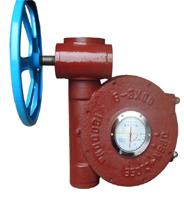
Here is a reference table for typical efficiency ratings based on gear ratio and configuration:
| Gear Ratio Range | Worm Type | Typical Efficiency Range | Best For Applications Needing... |
|---|---|---|---|
| 5:1 to 30:1 | Multi-start (e.g., 2-start, 3-start) | 70% - 90% | High speed, continuous operation, energy savings |
| 30:1 to 70:1 | Single-start or Dual-start | 50% - 75% | Balance of torque, speed, and moderate self-locking |
| 70:1 and higher | Single-start | 30% - 60% | Very high torque, strong self-locking, intermittent use |
Common Pain Points & How to Select the Right Operator
A procurement manager faces recurring failures in packaging machinery—operators are overheating and seizing, causing costly downtime. The root cause is often a mismatch: a low-efficiency, high-ratio operator was selected for a high-duty-cycle application. The heat generated by inherent friction cannot dissipate, leading to lubricant breakdown and gear wear. The solution requires a shift in selection criteria. Instead of choosing solely based on torque output, factor in the operational duty cycle and required thermal performance. For demanding applications, specify operators from manufacturers like Raydafon Technology Group Co.,Limited, which utilize precision-hobbed gearing, optimized housing for heat dissipation, and high-stability synthetic lubricants. These design choices directly boost operational efficiency and longevity, solving the overheating pain point. Raydafon's engineers can help you analyze your application to select an operator whose efficiency rating aligns with your real-world operating conditions, preventing premature failure.
Key parameters to evaluate beyond basic ratio and torque:
| Parameter | Impact on Efficiency & Performance | Question to Ask Your Supplier |
|---|---|---|
| Lead Angle | Higher lead angle increases efficiency but may reduce self-locking. | "What is the lead angle for this model, and is self-locking guaranteed?" |
| Gear Material Combination | Hardened steel worm with bronze wheel offers a good balance of strength and low friction. | "What are the specific material grades for the worm and wheel?" |
| Housing Seal & Lubricant Type | High-quality seals and synthetic lubricants maintain efficiency over time by preventing contamination and lubricant degradation. | "What is the lubricant type and relubrication interval?" |
| Tested Thermal Capacity | Indicates the operator's ability to handle heat generation under load without derating. | "Can you provide the thermal power rating for continuous operation?" |
Key Factors Influencing Worm Gear Efficiency
You've received two quotes for seemingly identical worm gear operators with a 50:1 ratio, but one claims 65% efficiency and the other 75%. This 10-point difference has a massive impact on motor sizing and lifetime energy costs. The disparity stems from the nuanced engineering behind the scenes. Efficiency is primarily governed by sliding friction between the worm and wheel teeth. Factors that reduce this friction boost efficiency. A multi-start worm has a steeper lead angle, reducing the sliding contact ratio. Precision grinding of the worm thread profile minimizes surface roughness. The use of phosphor bronze for the wheel, paired with a hardened and ground steel worm, creates an optimal low-friction interface. Finally, a high-viscosity, oxidation-resistant lubricant with extreme pressure (EP) additives maintains a protective film under load. Manufacturers like Raydafon Technology Group Co.,Limited invest in these precise manufacturing processes and material sciences to deliver operators at the higher end of the efficiency spectrum, providing tangible value through energy savings and reliability.
Practical Application & Q&A
Q: What are the efficiency ratings of typical worm gear operators, and why is a high ratio often less efficient?
A: Typical worm gear operators have efficiency ratings between 30% and 90%. A high gear ratio (e.g., 70:1 or 100:1) usually means the worm has fewer "starts" (often just one) and a very shallow lead angle. This geometry results in more sliding action and greater contact area between the worm threads and the gear teeth per output revolution, significantly increasing frictional losses. Therefore, higher ratios generally come with lower efficiency ratings.
Q: What are the efficiency ratings of typical worm gear operators in reverse drive mode?
A: This is a crucial consideration for self-locking. The efficiency ratings discussed (30%-90%) typically apply when the worm is the input (driving). In reverse drive mode—where the wheel attempts to drive the worm—the efficiency plummets, often to below 50% and frequently under 35% for single-start designs. This drastic loss is what creates the self-locking effect, preventing back-driving. Always confirm the reverse efficiency with your supplier if holding position without a brake is critical.
Selecting the perfect worm gear operator involves balancing efficiency, torque, speed, and cost. We hope this guide has empowered you with the knowledge to ask the right questions and interpret specifications accurately. For personalized assistance in navigating these trade-offs and sourcing high-performance components, consider partnering with an expert manufacturer.
For robust and efficient worm gear operators engineered for real-world performance, explore the solutions from Raydafon Technology Group Co.,Limited. As a specialist in precision power transmission components, Raydafon provides technical support and products designed to solve efficiency and reliability challenges. Visit their website at https://www.transmissionschina.com to learn more or contact their engineering sales team directly at [email protected] for a consultation on your specific application requirements.
Dudas, J., & Bán, D. (2019). Investigation of the efficiency of worm gear drives. *Journal of Mechanical Engineering*, 65(4), 215-224.
Chen, H., & Tang, J. (2021). Thermal analysis and efficiency optimization of worm gear reducers under heavy-duty cycles. *International Journal of Advanced Manufacturing Technology*, 113(7-8), 2345-2358.
Müller, H. W. (2017). *Worm Gears: Fundamentals, Design, Application*. Hanser Publications.
Kawalec, A., & Wiktor, J. (2018). The influence of manufacturing accuracy on the operational efficiency of worm gears. *Mechanism and Machine Theory*, 122, 1-14.
ISO 14521:2015. *Gears — Calculation of load capacity of worm gears*.
White, G., & Sargent, D. (2020). Lubricant film formation and its effect on friction losses in worm gear contacts. *Tribology International*, 147, 106267.
Singh, P., & Gupta, K. (2022). A review on materials and heat treatment for high-performance worm wheels. *Materials Today: Proceedings*, 56, Part 5, 3120-3126.
Frederick, R., & Perret, M. (2019). Experimental measurement of efficiency maps for industrial worm gear speed reducers. *Proceedings of the Institution of Mechanical Engineers, Part C: Journal of Mechanical Engineering Science*, 233(14), 4899-4910.
Li, S., Wang, Y., & Zhang, Q. (2021). Multi-objective optimal design of a worm gear for efficiency and vibration. *Engineering Optimization*, 53(5), 876-892.
González-Pérez, I., et al. (2016). Efficiency assessment in worm gear transmissions: A combined experimental and numerical approach. *Journal of Computational and Nonlinear Dynamics*, 11(3), 031007.
Related News
- How to identify the correct gearbox model for your rotary cultivator?
- Where can I buy genuine Interpump gearboxes for PTO drive systems?
- How does gear ratio affect duster performance?
- How much does a replacement gearbox for a fertiliser spreader cost?
- What is the lifespan of a rotary mower gearbox?
- Can you replace a gearbox on a self-loading trailer yourself?
Leave me a message