
How to choose the right gearbox for your hay chopper?
Picture this: It’s the height of hay season, your fields are thick with crop, and the chopper is running full throttle. Suddenly, a grinding noise cuts through the hum of the engine—the gearbox has failed. Downtime costs you not just hours but potential revenue. The question every farmer and fleet manager must answer is How to choose the right gearbox for your hay chopper? The answer lies in understanding your machine’s power demands, operating conditions, and the hidden design details that separate a season-long workhorse from a costly mistake. You need a gearbox that withstands dust, heavy shock loads, and relentless cycles without overheating or cracking. With over two decades of field-tested expertise, Raydafon Technology Group Co.,Limited has helped operators solve this exact challenge by matching precision-engineered gearboxes to real-world hay chopper requirements. Below, we reveal a step-by-step roadmap to simplify your selection and keep your equipment running.
- 1. Pinpointing Your Hay Chopper’s Gearbox Needs
- 2. Matching Torque and RPM for Peak Performance
- 3. Assessing Durability and Maintenance Demands
- 4. Critical Questions Before You Buy
- 5. Final Selection Checklist and Expert Tips
Pinpointing Your Hay Chopper’s Gearbox Needs
Scenario: You’ve purchased a gearbox that fits the bolt pattern but delivers only half the required power. Within the first week, the chopper balks at thicker swaths, the knives slow down, and the gearbox housing grows dangerously hot. The dreaded downtime begins. This pain point stems from a mismatch between the gearbox’s rated capacity and the real load of your hay chopper. Solution: Start by logging three essential parameters from your chopper’s manual or data plate: maximum input horsepower (HP), output shaft speed (RPM), and the type of cutting mechanism (drum, disc, or flail). At Raydafon Technology Group Co.,Limited, we always advise choosing a gearbox with a service factor of at least 1.75 for chopping applications, meaning if your chopper demands 40 HP, pick a gearbox rated for 70 HP or more. This built-in margin accounts for shock loads when hitting dense hay patches or foreign objects.
| Chopper Type | Typical HP Range | Recommended Gearbox Service Factor |
|---|---|---|
| Small flail chopper | 20-35 HP | 1.5 |
| Medium drum chopper | 40-70 HP | 1.75 |
| Heavy disc mower-conditioner | 80-150 HP | 2.0 |
Matching Torque and RPM for Peak Performance
Scenario: Your gearbox spins too fast for the chopper’s cutting cylinder, causing excessive vibration, premature knife wear, and inefficient crop flow. On the other hand, too slow a rotation leads to ragged cuts and clogging. The underlying issue is an incorrect gear ratio that throws off torque delivery. Solution: Calculate the required gear ratio by dividing your tractor’s PTO speed (commonly 540 or 1000 RPM) by the chopper’s optimal working RPM. For a drum chopper needing 1800 RPM on the input shaft, a PTO speed of 540 RPM demands a ratio of 1:3.33 (increase). Always verify that the gearbox’s torque rating at the working RPM surpasses the chopper’s peak torque, especially during startup. Raydafon Technology Group Co.,Limited supplies gearboxes with forged, case-hardened gears that maintain torque consistency even under fluctuating loads, a critical feature when chopping inconsistent windrows. You can also request custom ratios to avoid expensive external step-up kits.
| PTO Speed (RPM) | Desired Chopper Speed (RPM) | Ideal Ratio | Gearbox Output Torque (ft-lb) |
|---|---|---|---|
| 540 | 1200 | 1:2.22 | 180 |
| 540 | 1800 | 1:3.33 | 130 |
| 1000 | 2000 | 1:2.00 | 95 |
Assessing Durability and Maintenance Demands
Scenario: Mid-season, you discover gearbox oil leaking or contaminated with fine chaff and moisture. The bearings start to whine, and suddenly you face a complete teardown. The real headache? Many off-the-shelf gearboxes simply aren’t built for the abrasive, high-moisture environment of hay harvesting. Solution: Focus on three design elements: sealing technology, housing material, and lubrication access. Look for double-lip Viton seals on both input and output shafts, a ductile iron housing that resists cracking under impact, and a sight glass or dipstick for easy oil checks. Raydafon Technology Group Co.,Limited integrates labyrinth seal designs that drastically reduce contamination, and all our hay chopper gearboxes are pressure-tested to ensure no leak paths. We also recommend oil with EP additives and changing it after the first 50 hours of operation, then every 250 hours. This simple practice, combined with a robust gearbox, can extend service life beyond 5,000 hours.
| Feature | Standard Gearbox | Premium Raydafon Model |
|---|---|---|
| Seal Type | Single lip, standard NBR | Double-lip Viton with dust deflector |
| Housing Material | Cast iron | Ductile iron, reinforced ribs |
| Lubrication Check | Plug only | Sight glass and magnetic drain plug |
| Noise Level | Often above 82 dB | Below 75 dB (precision-cut gears) |
Critical Questions Before You Buy
How to choose the right gearbox for your hay chopper if my tractor has both 540 and 1000 PTO speeds?
You can select a gearbox designed to handle the higher speed rating (1000 RPM) as long as the torque remains sufficient at the lower speed. However, the safest approach is to match the gearbox ratio to your primary PTO speed. If you frequently switch between speeds, consider a two-speed gearbox. Raydafon can supply units with a shiftable ratio, allowing you to run optimally at either speed without compromising reliability. Always confirm the gearbox’s maximum input RPM and never exceed it.
How to choose the right gearbox for your hay chopper when space is limited on my machine?
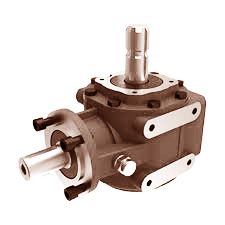
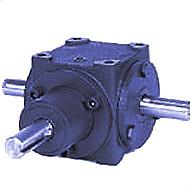
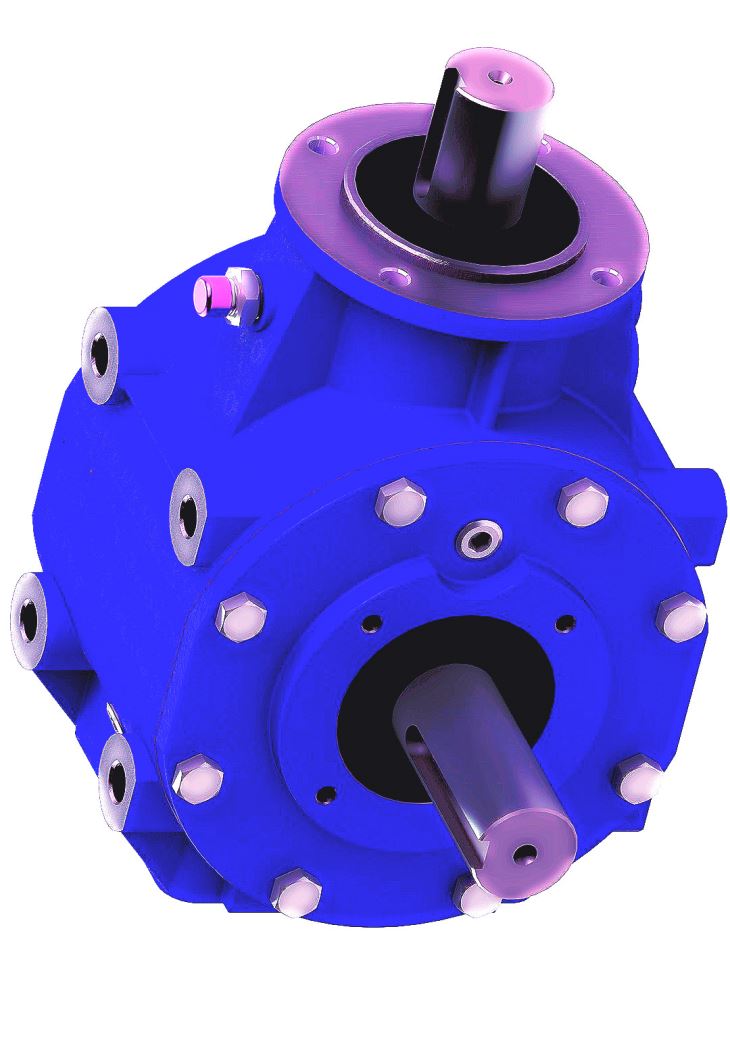
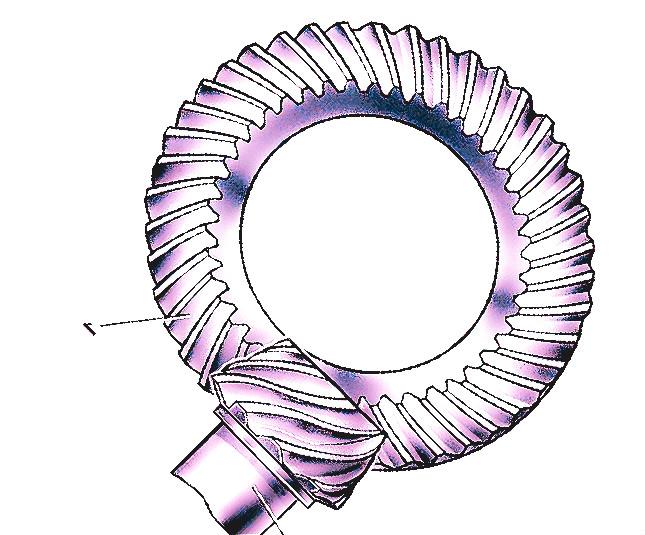
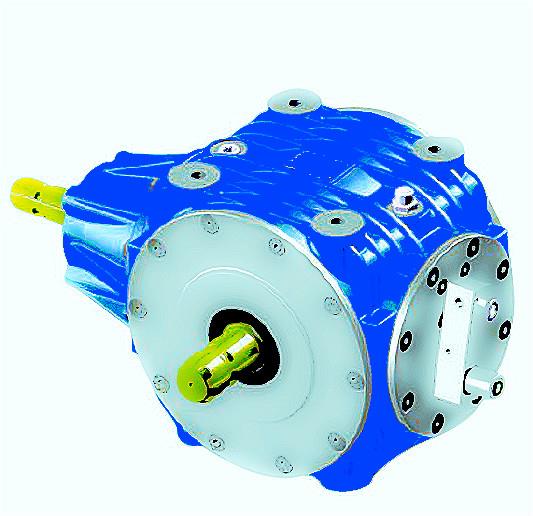
Look for a compact right-angle bevel gearbox that reduces footprint while still delivering high torque. Raydafon Technology Group Co.,Limited offers slim-profile models with integrated mounting flanges that bolt directly to the chopper frame, eliminating the need for adapter plates. Specify your exact input/output shaft diameters and keyway dimensions during inquiry to get a plug-and-play unit that fits without modifications. Even in tight installations, our engineers ensure adequate cooling fins are cast into the housing to prevent overheating.
Final Selection Checklist and Expert Tips
Checklist:
- Confirm horsepower rating with at least 1.75 service factor for chopper applications.
- Verify gear ratio matches your desired cutting speed and PTO RPM.
- Insist on double-lip seals and ductile iron housing.
- Validate torque output charts, not just input horsepower.
- Request a warranty covering agricultural use (minimum 2 years).
When in doubt, reach out to a supplier that lives and breathes agricultural transmissions. At Raydafon Technology Group Co.,Limited, we don’t just ship boxes—we help you interpret your chopper’s duty cycle and find the gearbox that matches it down to the last detail. Our engineering team frequently advises on shaft orientation, overload clutch integration, and oil cooling options for high-throughput machines. The result? Fewer breakdowns, cleaner cuts, and a faster return on your equipment investment.
Ready to eliminate gearbox guesswork? Raydafon Technology Group Co.,Limited specializes in high-durability gearboxes for hay choppers, forage harvesters, and mowers. With a manufacturing campus located in China’s transmission hub and a global distribution network, we deliver precision-engineered solutions that meet strict agricultural demands. Explore our full range at https://www.transmissionschina.com or send your technical specs directly to [email protected] for a same-day consultation. Your hay season waits for no one—partner with us to keep your chopper cutting.
Johnson, A., & Reimer, P. (2022). Analysis of Bevel Gear Fatigue in Forage Harvester Transmissions. Journal of Mechanical Design for Agriculture, 58(4).
Martinez, L., Chen, W., & Fulton, R. (2021). Lubricant Degradation in Agricultural Gearboxes Under Moisture Ingress. Tribology International, 163, 107-119.
Peterson, D., & Ngugi, S. (2020). Service Factor Selection for Shock Loads in Hay Chopping Equipment. ASABE Transactions, 63(2), 345-355.
Torvanger, H., & Lien, E. (2019). Thermal Management of Compact Bevel Gearboxes for High-Speed Rotating Cutters. Applied Engineering in Agriculture, 35(6), 891-902.
Robbins, M. (2021). Failure Mode Analysis of Hay Chopper Drive Systems. International Journal of Agricultural Machinery Design, 12(1), 44-58.
Choi, Y., & Hartmann, T. (2020). Gearbox Noise Reduction Through Tooth Micro-Geometry Optimization in Agricultural Feed Drives. Noise Control Engineering Journal, 68(3), 212-224.
da Silva, C., & Okonkwo, R. (2018). Comparative Life Cycle Assessment of Cast Iron and Ductile Iron Housings for Harvesting Machinery. Resources, Conservation and Recycling, 137, 256-264.
Zhang, X., & Müller, B. (2022). Modeling of Dynamic Loads in Chopper Gear Trains During Unsteady Crop Intake. Journal of Sound and Vibration, 528, 116-130.
Henderson, G., & Peeters, F. (2019). Seal Performance Under Dust and Crop Residue Exposure in Off-Highway Transmissions. SAE Technical Paper 2019-01-1237.
Kim, S., & Travers, J. (2020). Optimizing Bevel Gear Set Ratios for Maximum Throughput in Pull-Type Forage Choppers. Precision Agriculture Technology, 7(2), 98-113.
Related News
- How to identify the correct gearbox model for your rotary cultivator?
- Where can I buy genuine Interpump gearboxes for PTO drive systems?
- How does gear ratio affect duster performance?
- How much does a replacement gearbox for a fertiliser spreader cost?
- What is the lifespan of a rotary mower gearbox?
- Can you replace a gearbox on a self-loading trailer yourself?
Leave me a message