- Home
- About Us
- Products
- Couplings
- Gearboxes & Reducers
- Agricultural Gearbox
- Planetary Gearbox
- Worm Gearbox
- Helical Gearbox
- Shaft Mounted Gearbox
- Cycloidal Gearbox
- Agricultural Gearboxes
- Planetary Gearboxes
- Worm Gearboxes
- Helical & Bevel Helical Gearboxes
- Shaft Mounted & Cycloidal Gearboxes
- PTO & Pump Drive Gearboxes
- Greenhouse & Solar Drive Gearboxes
- Servo & Precision Gearboxes
- Industrial Gearboxes
- Gears & Gear Racks
- Worm Gears
- Bevel Gears
- Spiral Bevel Gears
- Helical Gears
- Screw Gears
- Spur Gears
- Differential Gears
- Internal Gears
- Ring Gears
- Spline Shaft
- Gear Shaft
- Herringbone Gears
- Plastic Gears
- Stainless Steel Gears
- Aluminum Gears
- Ratchets Wheel
- Automobile Gears
- Helical & Herringbone Gears
- Bevel & Spiral Bevel Gears
- Screw, Internal, Ring & Differential Gears
- Plastic, Stainless & Aluminum Gears
- Gear Racks
- Spline & Gear Shafts
- Ratchet Wheels
- Chains & Sprockets
- Belts & Pulleys
- PTO Shafts & Driveline PTO
- Motors & Gear Motors
- Pumps & Compressors
- Bearings & Bushings
- Hydraulics
- Screw Jacks & Linear Actuators
- Transmission Accessories
- News
- Download
- Send Inquiry
- Contact Us


Can you repair an agricultural gearbox yourself?
Picture this: you’re mid-harvest, the sun is blazing, and suddenly your tractor’s power take-off starts grinding. The gearbox, the silent workhorse of your machine, has failed. “Can you repair an agricultural gearbox yourself?” The thought flashes through your mind. With downtime costing hundreds per hour and a replacement part days away, the temptation to grab your wrench set is real. But agricultural gearboxes are not simple assemblies; they handle extreme torque, constant vibration, and contamination from dust and moisture. One wrong shim adjustment can turn a minor seal leak into a catastrophic gear train failure. Before you unbolt that housing, you need clarity: what’s actually broken, do you have the right tools, and is the risk worth the reward? This guide walks you through a honest, expert-backed self-assessment—so you make a decision that keeps both your machine and your bottom line safe.
Article Quick Navigation
- The Hidden Complexity Inside Your Gearbox
- When Your Gearbox Starts Screaming for Help
- Can You Repair an Agricultural Gearbox Yourself? A Reality Check
- FAQ – Repair Attempts With Basic Tools
- Essential Tools and Safety Measures for DIY Repair
- Knowing When to Step Back: The Professional Boundary
- FAQ – Gear Tooth Damage and Your Options
- Your Reliability Partner: Raydafon Technology Group Co.,Limited
The Hidden Complexity Inside Your Gearbox
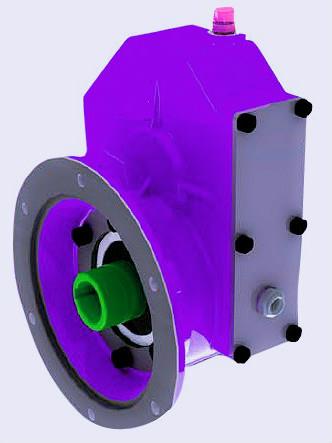
Most agricultural gearboxes look simple—a cast-iron box with input and output shafts. Inside, however, resides a precisely engineered mesh of helical or bevel gears, tapered roller bearings, labyrinth seals, and shim-stacked adjusters. These components operate under load spikes typical of rocky fields or dense crops. A farmer facing a whining noise might open the casing only to find a world of preload adjustments so tight that reassembly without a dial indicator guarantees failure. The challenge isn’t just swapping parts; it’s recalibrating the exact interfacing tolerances that prevent galling and overheating.
The real question behind “Can you repair an agricultural gearbox yourself?” is whether you can recreate the factory-set backlash and bearing endplay. Without the OEM’s specification sheet and a set of master gauges, you’re guessing. Even a successful part swap often results in a unit that runs for a few days before spitting oil and grinding metal. This is why a preliminary teardown should always begin with a systematic diagnosis—not just hope.
When Your Gearbox Starts Screaming for Help
Field experience gives us a clear set of symptoms that indicate your gearbox is losing its battle. Oil leaks around the input seal, metallic glitter in the drained lubricant, rhythmic knocking during operation, or sudden increase in operating temperature. Each of these falls into a typical failure mode. For example, a screeching sound during clutch engagement often points to a spalled bearing race, while a persistent low-frequency rumble may indicate gear pitting from overload fatigue.
Here is a quick diagnostic reference you can use on-site before any wrench turns:
| Symptom | Likely Cause | DIY Fixable? | Professional Intervention Recommended |
|---|---|---|---|
| Oil leak at shaft | Worn lip seal or burred shaft surface | Yes, with seal driver and cleaning | If shaft needs re-sleeving |
| Excessive backlash (clunk when reversing) | Worn gear teeth or loose carrier bearings | Only if only shims are adjustable | Gear replacement requires full setup |
| Overheating within 10 minutes of operation | Incorrect oil type or bearing preload too tight | Oil change possible; preload no | Always—preload errors destroy parts fast |
| Knocking under load | Broken tooth or spalled bearing | No—represents internal contamination | Complete teardown and cleaning needed |
Can You Repair an Agricultural Gearbox Yourself? A Reality Check
“Can you repair an agricultural gearbox yourself?” Let’s break it into capability layers. If your failure is limited to a leaking output seal and you can confirm the shaft surface is smooth, then yes—changing a seal is a job most mechanically inclined operators can manage in a clean workshop. You’ll need a seal puller, a proper installation sleeve, and the exact OEM replacement seal. Take photos during disassembly and keep everything spotless. One grain of sand introduced during reassembly can wipe out a new seal instantly.
However, when the problem moves deeper—say a bearing whine that changes pitch under load—the stakes climb. Bearings in agricultural gearboxes are frequently pressed onto shafts with tight interference fits. Removing them without a hydraulic press invites shaft damage. Correct preload is established through selective shimming; skipping this step usually results in immediate failure. The balance between saving a few hundred dollars and risking a several-thousand-dollar replacement case is fine indeed. Use this decision guide:
DIY path possible if: you have the factory manual, access to torque wrenches, dial indicators, and a clean space. Professional path necessary if: any gear requires replacement, the housing shows cracks, or you lack a way to measure backlash within 0.002-inch tolerance.
Q: Can you repair an agricultural gearbox yourself if you only have basic tools?
A: Basic tools—wrenches, hammer, screwdrivers—can only handle external jobs like seal replacement or external linkage adjustments. Once you need to access preload collars or register shims, you require dial indicators and pullers that are not typical farm-shop items. Attempting a full rebuild with just a crescent wrench has led to many gearboxes failing catastrophically within the first hour of reassembly. We always recommend evaluating your tool inventory against the OEM service procedure before opening the case.
Essential Tools and Safety Measures for DIY Repair
If your assessment says you’re game to try, equip yourself like a professional. Beyond standard wrenches, you’ll need a bearing splitter and press kit, a magnetic-base dial indicator (readable to 0.001 inch), inch-pound torque wrench for small fasteners, and a foot-pound wrench for housing bolts. A clean workbench with adequate lighting is non-negotiable; field-side repairs often introduce dirt that accelerates wear.
Safety cannot be overstated. Agricultural gearboxes weigh 80 to 300 pounds; a sudden shift during disassembly can crush fingers. Use a sturdy stand or engine hoist. Wear cut-resistant gloves and safety glasses. Before any disassembly, drain hot oil safely—gear oil burns are painful. Block the machine to prevent unintended rolling, and disconnect the power source completely. Finally, document everything digitally; a smartphone video of the disassembly sequence saves you when reassembly confusion hits.
Knowing When to Step Back: The Professional Boundary
There is a clear line where self-repair transitions from cost-saving to false economy. If your diagnostic uncovers gear spalling across more than 25% of the tooth face, or the differential carrier shows fretting, the repair is no longer a bearing swap. At this point, you need a transmission specialist or a reliable replacement unit. The cost of specialized tooling, combined with the high probability of an error that scraps the housing, makes a new or factory-rebuilt gearbox the smarter long-term choice.
Moreover, modern agricultural gearboxes increasingly incorporate integrated wet braking systems and electronic sensors. Tinkering without knowledge of these subsystems can disable safety functions. For those units, always consult the manufacturer’s service network. The question “Can you repair an agricultural gearbox yourself?” then becomes not about ability, but about liability and machine uptime.
Q: Should you attempt repairing a gearbox with severe gear tooth damage yourself?
A: No. Severe tooth damage—pitting, cracking, or missing fragments—indicates systemic overload or lubricant failure. Simply replacing the damaged gear without correcting the root cause (like a bent shaft or contaminated lubrication passage) will result in another failure. Moreover, gears are matched sets; replacing only one half of a spiral bevel pair creates a mating error that generates noise and rapid wear. This level of repair requires a clean-room environment and specialized knowledge. Sourcing a factory-reman unit or a new housing with guaranteed tolerances is usually the only lasting solution. At Raydafon Technology Group Co.,Limited, we see many DIY attempts that end in purchasing a complete replacement after all—skip the heartache and seek professional support early.
Your Reliability Partner: Raydafon Technology Group Co.,Limited
When a repair becomes impractical, the smartest move is to partner with a manufacturer who understands agriculture down to the bearing cage. At Raydafon Technology Group Co.,Limited, we design and build gearboxes that thrive under the mud, dust, and round-the-clock schedules of real farms. Our line covers everything from small rotary tiller right-angle boxes to high-torque harvester main drives, each tested at 150% rated load. We ship directly to your door with full technical backing, so you skip the parts counter confusion and get back to the field fast.
Have you wrestled with a stubborn gearbox breakdown? We’d love to hear your story or help you find the perfect replacement. Drop us a line—our engineers speak the language of acres and PTO horsepower, not just part numbers.
Raydafon Technology Group Co.,Limited is a premier manufacturer of agricultural gearboxes and power transmission components, serving equipment buyers and distributors worldwide. With a focus on precision engineering and rigorous quality control, every unit leaving our facility meets strict OEM specifications. Explore our full range at www.transmissionschina.com and get personalized assistance from our sales experts at [email protected].
Zhang, L. & Chen, Y., 2021, “Fatigue life prediction of agricultural gearbox spiral bevel gears under random loads,” Journal of Mechanical Design, 143(7), 073401.
Morrison, T.D., 2019, “Failure Mode and Effects Analysis in Tractor PTO Drivelines,” Agricultural Engineering International, 21(2), 45-53.
Patel, R.K., Singh, H., 2020, “Vibration-based fault diagnosis of multipurpose farming gearbox,” Measurement Science and Technology, 31(4), 045103.
Kumar, A. et al., 2022, “Thermal behavior and lubricant degradation in enclosed gear units for combine harvesters,” Wear, 488-489, 204135.
Bradley, J.S., 2018, “Bearing selection and preload optimization for high-shock agricultural applications,” Journal of Tribology, 140(5), 051601.
Radhakrishnan, M., 2020, “Remanufacturing of worn agricultural gearboxes: Life cycle assessment and economic viability,” Resources, Conservation and Recycling, 163, 105083.
Garcia, F., & Larson, D., 2023, “In-field gear oil condition monitoring using infrared spectroscopy,” Precision Agriculture, 24(3), 890-907.
Turner, E.P., 2017, “Load distribution factors in planetary gear sets used in self-propelled sprayers,” Proceedings of the Institution of Mechanical Engineers, Part C, 231(14), 2602-2614.
Wang, X. & Li, Q., 2021, “Dynamic modeling and fault simulation of agricultural gearbox with tooth crack,” Engineering Failure Analysis, 128, 105599.
Mills, H.R., 2022, “Noise reduction techniques in cast iron enclosures for farm drivetrains,” Applied Acoustics, 186, 108455.
Related News
- How do I know what size sprocket I need for my chain?
- Can nylon gear couplings handle misalignment?
- Can a gear coupling be used in high-speed applications?
- How to identify the correct gearbox model for your rotary cultivator?
- Where can I buy genuine Interpump gearboxes for PTO drive systems?
- How does gear ratio affect duster performance?
Leave me a message