Other
- View as
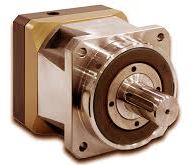
Planetary Drive
In a planetary gearbox, many teeth are engaged at once, which allows high speed reduction to be achieved with relatively small gears and lower inertia reflected back to the motor. Having multiple teeth share the load also allows planetary gears to transmit high levels of torque. The combination...
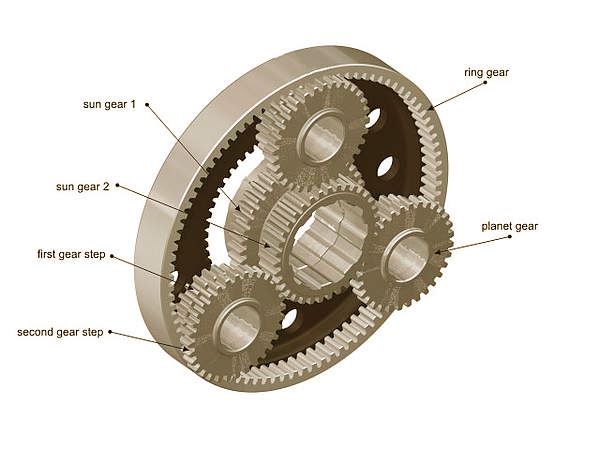
Planetary Gear System
PLANETARY GEAR SYSTEM A planetary transmission system (or Epicyclic system as it is also known), consists normally of a centrally pivoted sun gear, a ring gear and several planet gears which rotate between these. This assembly concept explains the term planetary transmission, as the planet gears...
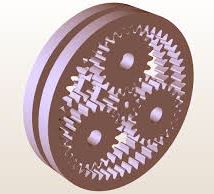
Planetary Gear Reduction
On the surface, it may seem that gears are being “reduced” in quantity or size, which is partially true. When a rotary machine such as an engine or electric motor needs the output speed reduced and/or torque increased, gears are commonly used to accomplish the desired result. Gear “reduction”...
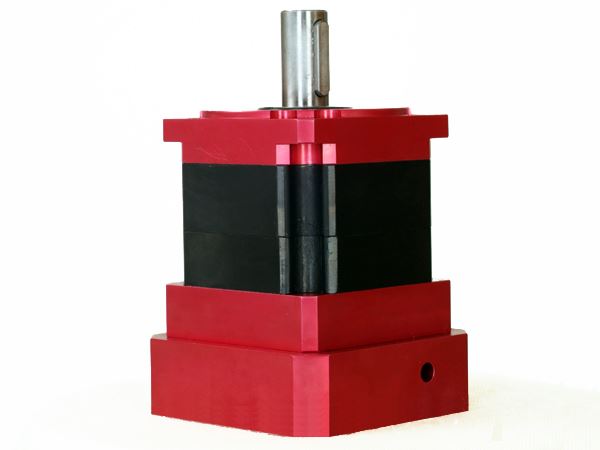
Planetary Reduction
Many “gears” are used for automobiles, but they are also used for many other machines. The most typical one is the “transmission” that conveys the power of engine to tires. There are broadly two roles the transmission of an automobile plays : one is to decelerate the high rotation speed emitted...
Planetary Speed Reducer
The planetary speed reducer & gearbox is a kind of transmission mechanism. It utilizes the speed transducer of the gearbox to reduce the turnover number of the motor to the required one and obtain a big torque. How does a planetary gearbox work? We can learn more about it from the structure....
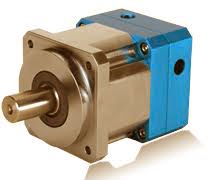
Planetary Gearhead
Precision Planetary Gearheads The primary reason to use a gearhead is that it makes it possible to control a large load inertia with a comparatively small motor inertia. Without the gearhead, acceleration or velocity control of the load would require that the motor torque, and thus current,...