Gear Rack
- View as
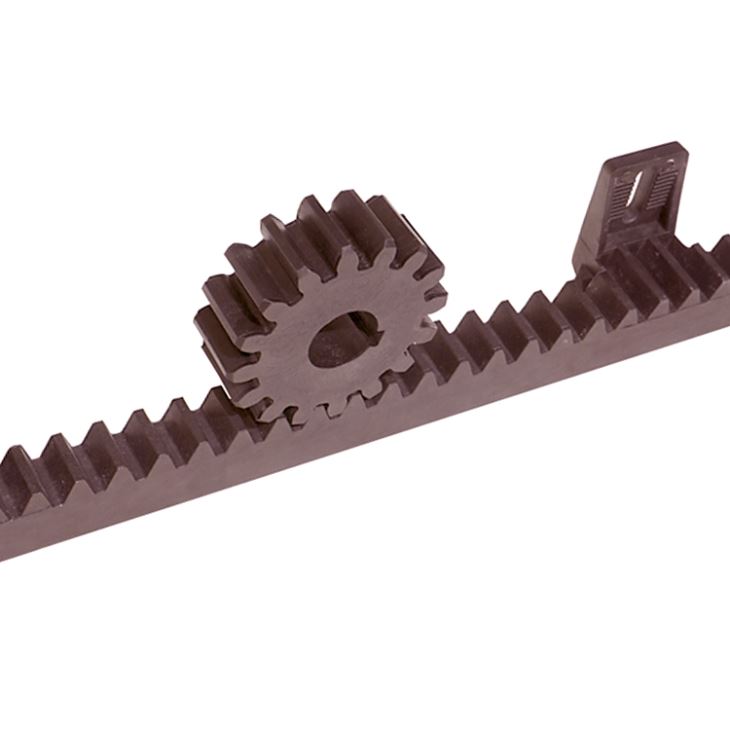
Nylon Gear Rack
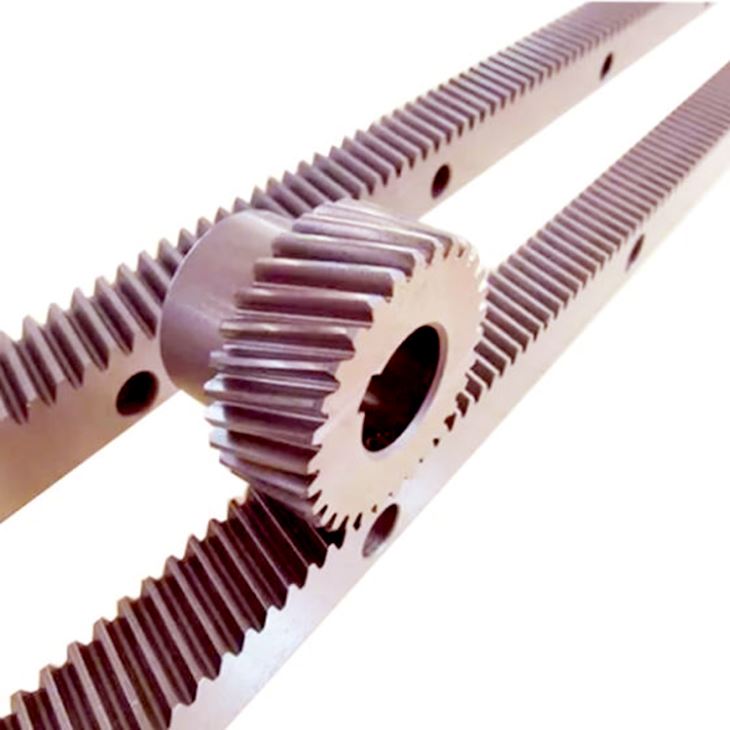
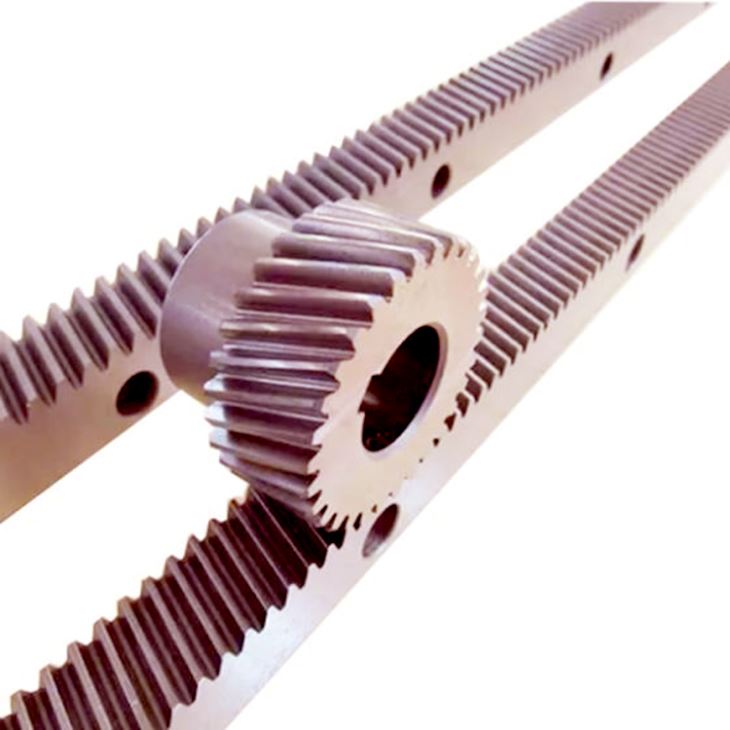
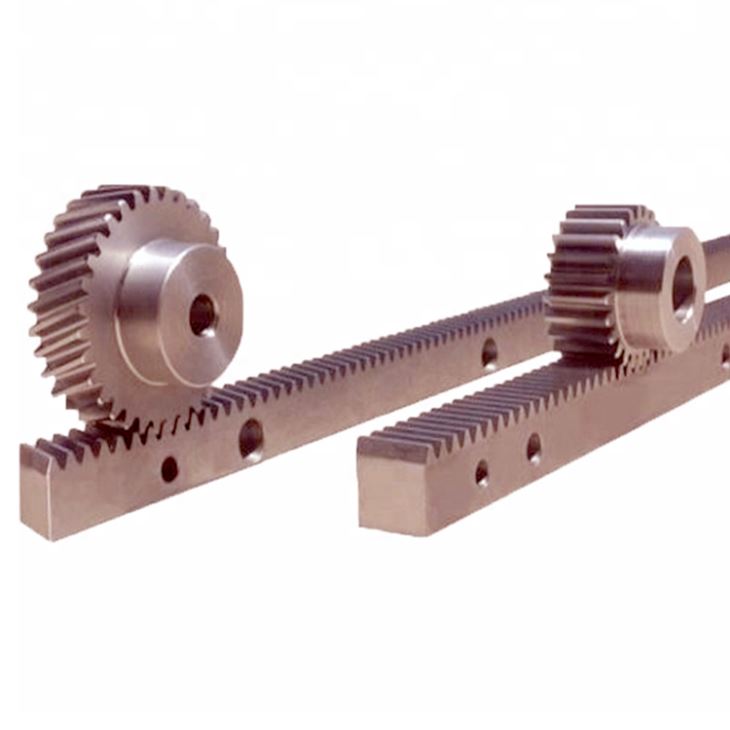
Gear racks are utilized to convert rotating movement into linear motion. A gear rack has straight teeth cut into one surface of a square or round section of rod and operates with a pinion, which is a small cylindrical gear meshing with the gear rack. Generally, gear rack and pinion are collectively called “rack and pinion”. There are many ways to use gears.
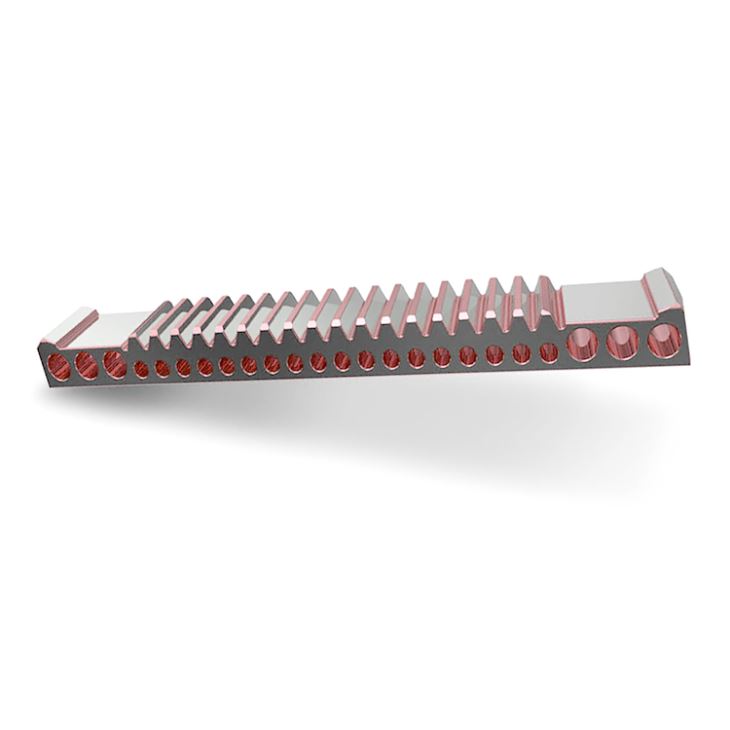
Gear Rack For Aerospace Industry
Strong Line of Gear Racks utilize carburized case-hardening process to optimize strength of rack, including tooth flanks and root, mounting holes, and back and side surfaces. This allows back surface to be used with cam follower roller bearings for guiding axis. Racks are precision ground on teeth and all sides to achieve accurate pitch deviation and parallelism. With max holding force, mounting holes insure rack remains stationary under high forces.
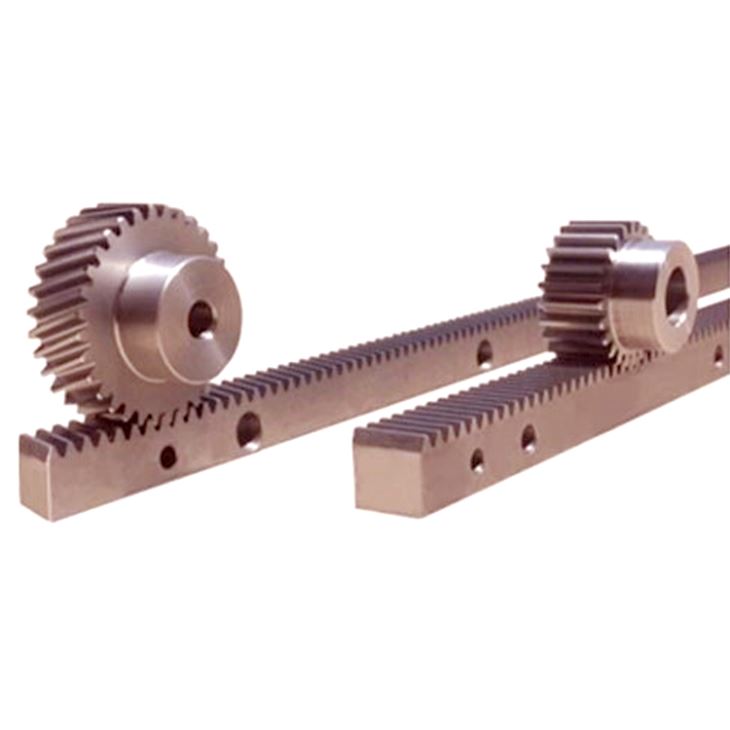
Gear Rack For Machine Tool Industry
These systems are well-established linear drive mechanisms, providing high-speed travel over extremely long lengths. They are frequently used in large gantry systems for material handling, machining, welding and assembly, especially in the automotive, machine tool, and packaging industries.
Gear Rack For Woodworking Industry
A split-pinion and servo-worm reducer were used with the integrated rack to provide a precision axis drive. The manufacturer was able to achieve very accurate results in their finished parts.
Gear Rack For Material Handling Industry
Often, gear rack is modified to fit specific applications. This may include drilling and tapping mounting holes, cutting to specific lengths or matching ends of two pieces of rack to create a continuous length longer than stock.
Gear Rack For Construction Machinery
This is important in all kinds of mechanical transmission parts, tooth surface contact stress and friction under during operation, tooth root bending stress are, sometimes to withstand impact.So the gear has good comprehensive mechanical properties, generally choose forged steel blank.