- Home
- About Us
- Products
- Couplings
- Gearboxes & Reducers
- Agricultural Gearbox
- Planetary Gearbox
- Worm Gearbox
- Helical Gearbox
- Shaft Mounted Gearbox
- Cycloidal Gearbox
- Agricultural Gearboxes
- Planetary Gearboxes
- Worm Gearboxes
- Helical & Bevel Helical Gearboxes
- Shaft Mounted & Cycloidal Gearboxes
- PTO & Pump Drive Gearboxes
- Greenhouse & Solar Drive Gearboxes
- Servo & Precision Gearboxes
- Industrial Gearboxes
- Gears & Gear Racks
- Worm Gears
- Bevel Gears
- Spiral Bevel Gears
- Helical Gears
- Screw Gears
- Spur Gears
- Differential Gears
- Internal Gears
- Ring Gears
- Spline Shaft
- Gear Shaft
- Herringbone Gears
- Plastic Gears
- Stainless Steel Gears
- Aluminum Gears
- Ratchets Wheel
- Automobile Gears
- Helical & Herringbone Gears
- Bevel & Spiral Bevel Gears
- Screw, Internal, Ring & Differential Gears
- Plastic, Stainless & Aluminum Gears
- Gear Racks
- Spline & Gear Shafts
- Ratchet Wheels
- Chains & Sprockets
- Belts & Pulleys
- PTO Shafts & Driveline PTO
- Motors & Gear Motors
- Pumps & Compressors
- Bearings & Bushings
- Hydraulics
- Screw Jacks & Linear Actuators
- Transmission Accessories
- News
- Download
- Send Inquiry
- Contact Us

Gearboxes & Reducers
- View as
Inline Planetary Gearbox
Right angle gearboxes (worm and planetary) are rugged and built for 90° turns. Inline reducers (parallel shaft and planetary) are an ideal match for motors with high input speeds, or when gearmotor efficiency is important. Contact our technical sales staff for help determining which gearbox...
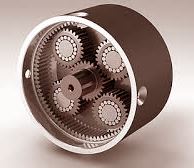
Epicyclic Gear Drive
Epicyclic Gearing In an epicyclic or planetary gear train, several spur gears distributed evenly around the circumference run between a gear with internal teeth and a gear with external teeth on a concentric orbit. The circulation of the spur gear takes place in analogy to the orbiting of the...
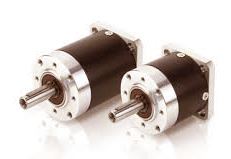
Nema Planetary Gearbox
The Raydafon brand of NEMA 34 standard planetary gearboxes is now available. The new IP86 series joins the company's recently released IP43 and IP57 series of NEMA 17 and 23 sizes. The IP series of true planetary gearboxes has hardened gears throughout. Single-piece output shaft and...
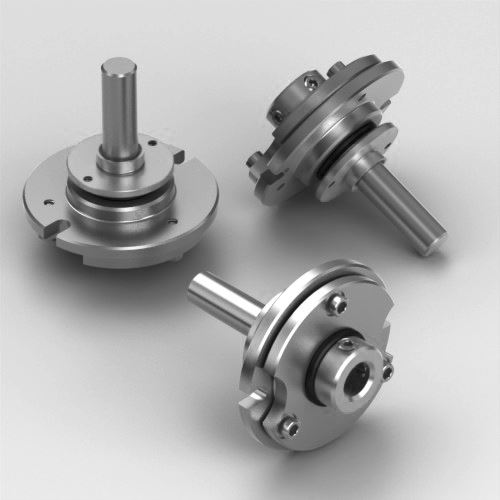
Planetary Reduction Drive
The planetary reduction drive is based on an classic but ingenious design. It is based on a system of ball bearings rolling between two surfaces while housed within a rotating bushing. The planetary reduction drive is often used to enhance the fine-tuning control of a variable capacitor. For...
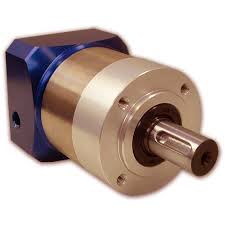
Servo Planetary Gearbox
The Gear Reducer is the perfect solution for servomotor applications such as packaging machines, gantries, injection molding machines, pick and place and linear slides. Offered in concentric shaft, rightangle solid shaft and right angle hollow shaft designs with modular adaptor flanges and...
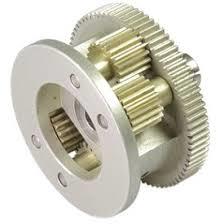
Reduction Planetary Gearbox
To achieve high reduction ratios, a series of reduction gears are commonly placed inline, either plain small driver/large driven, or planetary. For a planetary gearbox to achieve 1000:1 reduction, four sets of gearboxes are needed (typical ratio per gearbox being 4 to 6). Driving the ring gear...